


Introduction
Traders in DeFi have been restricted by the networks that are meant to make them free. Liquidity is divided between Ethereum, Solana, and other blockchains, and each of them has its tools, gas fees, and restrictions.
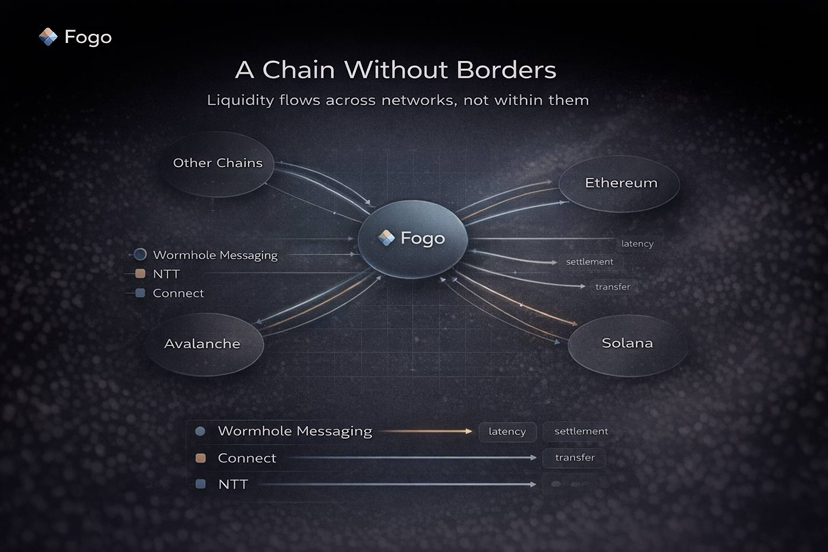
When I originally heard about Fogo I was given a chain that boasted of speed, but it occurred to me whether it was capable of resolving the larger issue of connecting different chains with one another. I have been tracking the project over months, and I have come to the realization that the primary aim of Fogo is not only making transactions faster; it is establishing a physical cross-chain network in which traders are able to change between ecosystems with ease.
Here we will discuss how Fogo is developing that vision through tangible infrastructure and an attitude that blockchains are not distinct.
Why Cross-Chain Matters
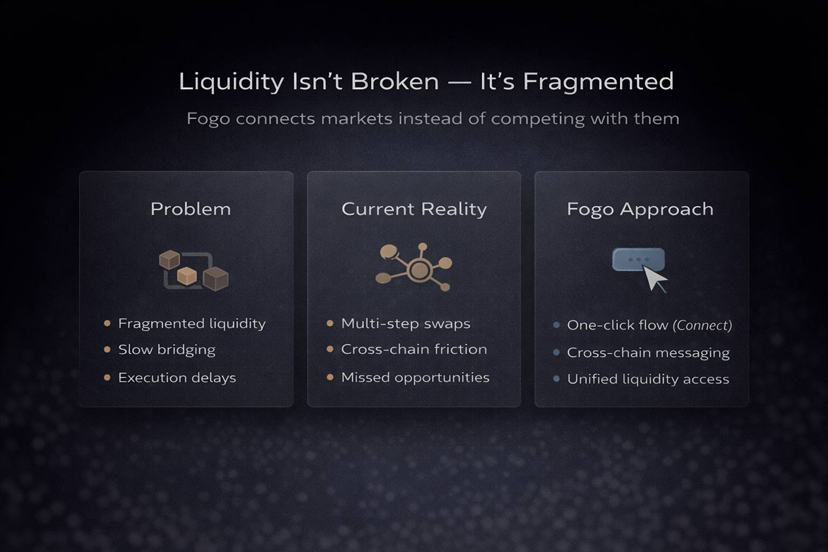
Trading requires liquidity, which is separated into chains that are incompatible in DeFi. Swaps typically require wrapping tokens, multiple bridges or reliance on custodial services. Every step is a cost and risk addition. When a trader wishes to lock a position on Avalanche and hedge on Ethereum, they have to transfer the funds manually which could take minutes or hours which negates the speed advert on decentralized exchanges. I have been in volatile markets where this frustration occurs, by the time the money gets on another chain, the window has passed. A trader-oriented chain such as Fogo has to deal with this problem. Instead of establishing a closed system, Fogo incorporates a strong cross-chain system to allow assets and data to move around.
Wormhole: The Backbone of the Interoperability of Fogo.
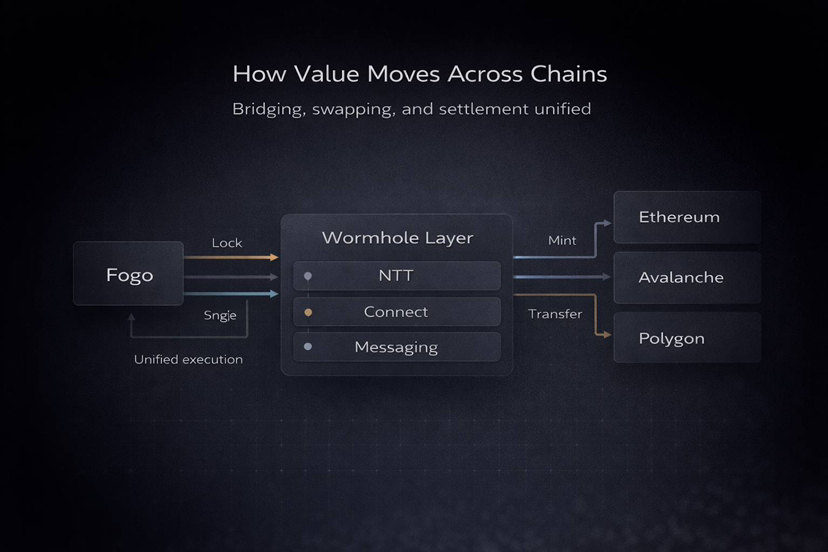
Native Token Transfers (NTT)
NTT also enables users to lock FOGO tokens in a custody agreement and wrap tokens in other chains. Once returned the wrapped tokens can be unwrapped to obtain the original FOGO. A custodial contract which contains the locked tokens controls the process.
Connect aggregator
The Connect service of Wormhole combines bridging, swapping and unwrapping simply into a single transaction. To illustrate, a trader can sell profits in FOGO to USDC on Fogo and have the latter transferred to Ethereum with the button press. To individuals accustomed to intricate bridging mechanisms, this is comparable to transferring money within a centralized exchange even though it is retained.
Cross chain queries and messaging. Wormhole queries enable other contracts on other chains to request data of Fogo and vice versa. Messaging may also activate operations like liquidations, placing orders or checking collateral within the networks. Consider a Foga position being vetted by an Ethereum lending protocol before a loan is granted to it; it can already happen.
Settlement and developing tools
In the case of builders, the settlement layer of Wormhole can handle sophisticated flow such as auctions or clearing houses across multiple chains. It is easier to integrate with a TypeScript SDK. This is significant: in case Fogo is seeking front-end groups and arbitrageurs, the cross-chain kit should be developer-friendly.
With these features added Fogo is not just a fast chain, it is a place where liquidity and data can flow. In my opinion, the aspect of the project that revolves around the utilization of a bridge that has been tested through a battle instead of constructing a new bridge reflects a realistic mind.
Beyond Bridges: Composable Finance Beyond Chains.
Cross Chain transfer is not the end. Composability in the real sense implies that programs on a single chain can cause action in another as well as respond to real-time behavior. Messages in Wormhole allow Foge contracts to make calls to other networks and we can make calls as well. New opportunities have been opened:
Cross‑chain insurance
Consider a policy of Avalanche securing a Fogo position. The Fogo assets could be automatically liquidated in order to safeguard the insurer when the position collateral falls below a threshold.
Global order books
The exchange that is decentralized may pool the bids between Fogo and Ethereum and match orders on the chain that has the most advantageous price. The background settlements might occur via cross-chain messages.
Multi‑chain credit markets
A borrower can pledge on Polygon by borrowing on Fogo. Oracles were able to withdraw price feeds on various networks and cause chain-wide margin calls.
These concepts are not mere concepts. The Innovative Finance Day at Fogo Fest 2025 indicated how finance can be transformed by the use of cross-chain tools. Some of the speakers at DoubleZero discussed a parallel internet that would be based on open protocols and applications can execute anywhere rather than on a single chain. Another project presented at the Pyth Network was Lazer, a high-speed price oracle delivering real-time feeds directly to Foge. The aggregator demonstrated by Meso makes it simpler to transfer money in bank accounts to on-chain assets because it simplifies KYC and fiat on-ramps. All these innovations are based on the concept of cross-chain messages, and they will receive the support of the collaboration of Fogo and Wormhole.
Reliability assurance: Multi-Local Consensus and Edge Caching
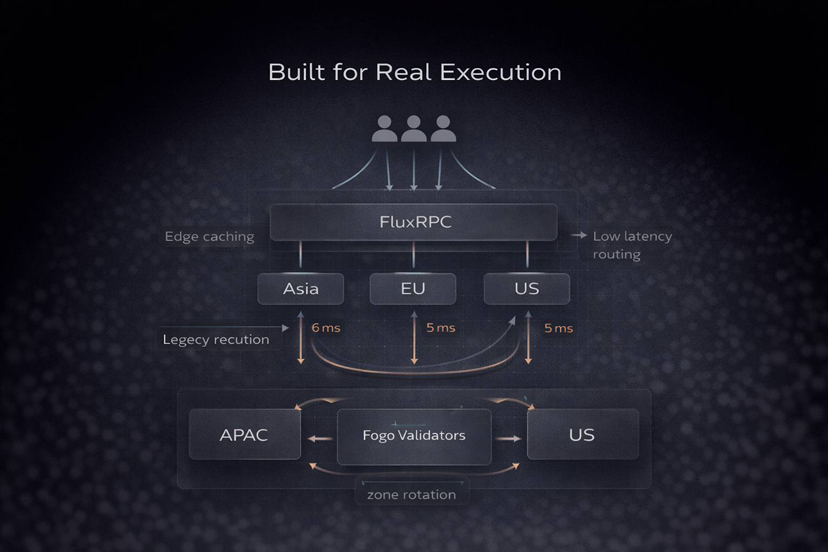
Interoperability is pointless in case it is unreliable. The designers of Fogo understand that the traders require stable execution and minimal downtime. Then the chain incorporates concepts of Solana- Proof of History and Tower BFT, but with an additional twist, which is multi-local consensus. The validators are divided into geographic areas (APAC, Europe, North America) and they change their leadership every eight hours or so. Having the validators on high-performance data centres reduces the network latency and rotating zones prevent local outages. Stated succinctly, Fogo will be a combination of the expediency of immediate assessors and the strength of global delivery.
There are problems with this architecture. According to the Fogo documentation, every zone has an approximate operating distance of 90,000 blocks or approximately one hour and subsequently applies consensus to the next area. The first testnet processes were interrupted by switching zones. In its review of the team, it was noted that edge caching and RPC routing had to be enhanced in order to maintain connectivity. These issues demonstrate the complexity of the system, but also demonstrate that the Fogo engineers are addressing actual issues rather than sweeping them under the carpet.
In addition to consensus, the FluxRPC layer by Fogo isolates the RPC services and the validator network. It makes use of edge caching and load balancing, hence the requests are sent by nearby data centers and the validators are not exposed to denial-of-service attacks. State of the blockchain can be streamed live in real time and listened to by traders and developers without being overloaded by pending transactions. Such a robust cross chain architecture and effective RPC is enough to make me think that Fogo is not theory but practice.
Incentive Coordination between Chains.
Interoperability is not enough to bring liquidity; incentives are important. The Blaze program by Fogo allows users to stake ETH, stETH or FOGO to other chains, including Ethereum and earn points, which may be converted into rewards in future. Promotion: The program is advertised using Wormhole Portal Earn and has led to massive inflows since the end of 2025. The points do not ensure money, but they will encourage early entry and cross-chain utilization. Moreover, the governance tokens of Fogo are given out in order to support the long-term alignment. Tokens of core contributors are completely locked until September 2025 with a 12 month cliff. Tokens of institutional investors will unlock in September 2026; approximately 63.74 percent of tokens will be initially locked. Most of the supply will therefore be unable to be sold in the market when the hype is starting.
Summary: A Chain of Many Chains
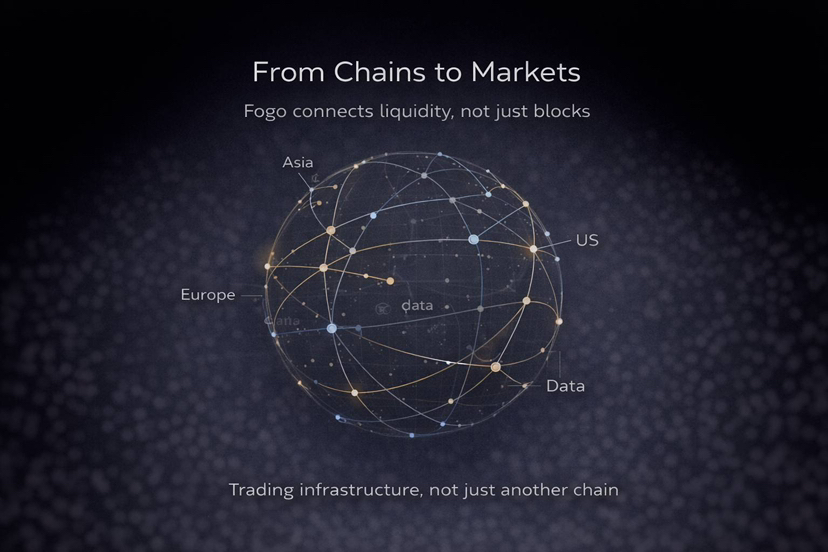
Fogo is appealing to me as a trader because it does not promise a TPS, but considers the blockchain world to be one economy. Fogo aims to have cross-chain moves to be as effortless as sending a message by constructing a bridge in the Wormhole messaging and settlement layers. The concepts presented at Fogo Fest 2025, such as stateless applications, quick oracles, and one-stop on-ramps are indications of the future in which your trading is no longer constrained by the location of your assets. The issues remain: zone switches and bridge safety, but the fact that Fogo has decided to work with what is already there and designed over real traders makes it stand out. With the abundance of hype in the market, the cross-chain vision of Fogo appears to be strong and ambitious: a chain without borders that is made to satisfy those who will not be content with one network.


