
The industry treats latency as a performance metric. It should be treated as a governance mechanism. The assumption that blockchains first secure themselves through economic penalties and only then optimize for speed is so ingrained that few question it. Fogo, a high-performance Layer 1 built around the Solana Virtual Machine, quietly inverts that hierarchy. Its most unconventional design decision is not raw throughput, but the architectural commitment to deterministic, low-variance execution timing as a first-order security constraint rather than a secondary optimization.
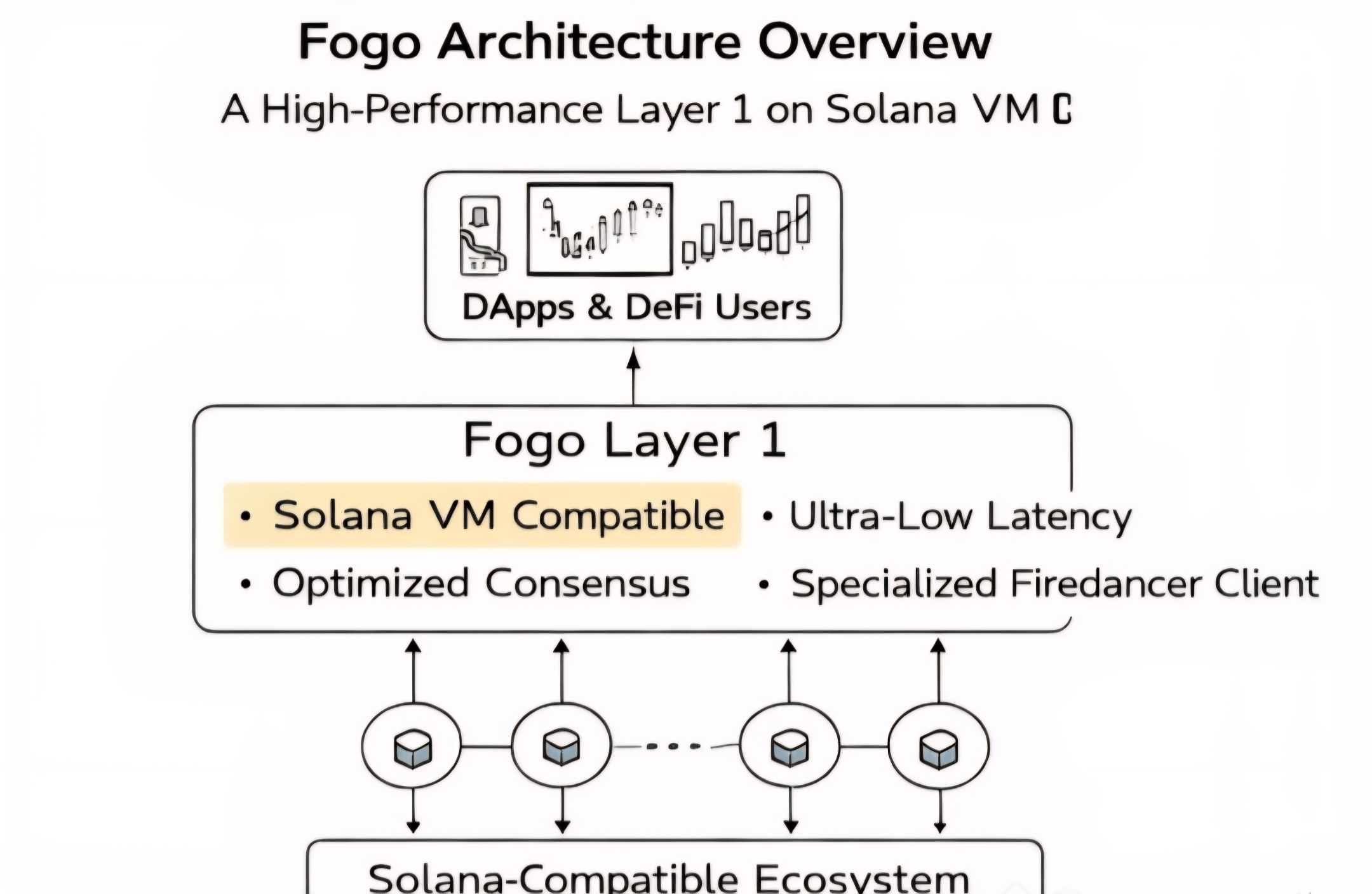
Traditional systems like Bitcoin prioritize probabilistic finality, accepting variable confirmation times as a cost of decentralization. Ethereum, even after its transition to proof-of-stake, retains latency heterogeneity shaped by proposer schedules and network conditions. In both cases, liveness tolerates irregularity. The network continues so long as blocks eventually arrive. Fogo’s design philosophy diverges: it minimizes variance in execution and confirmation time at the consensus layer, treating unpredictability not merely as inconvenience but as systemic risk.
 Under a coordination-theory lens, this shift is profound. Distributed systems fail not only from adversarial attack, but from coordination breakdown. Variable latency increases coordination costs between validators, application builders, and users. When confirmation times fluctuate, actors hedge. Validators overprovision hardware. MEV strategies intensify. Applications build compensating mechanisms like optimistic assumptions or delayed settlement buffers. Each hedge adds complexity, and complexity compounds fragility.
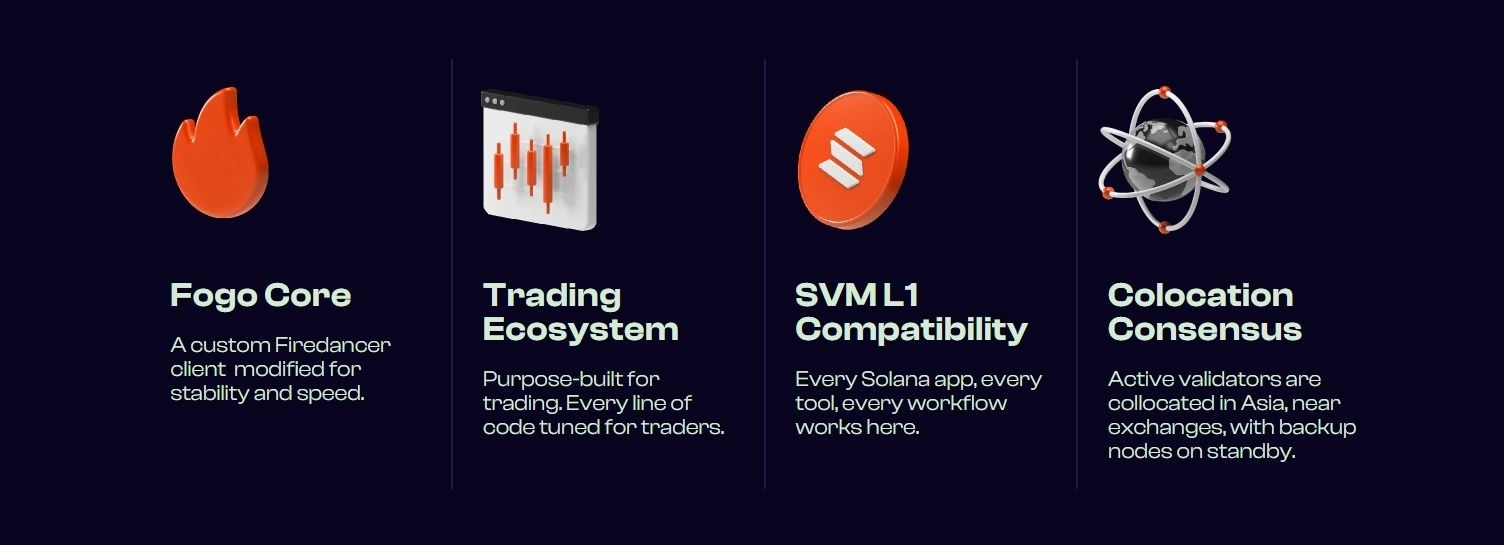
Fogo’s alignment with the Solana Virtual Machine is not simply a compatibility choice. The SVM’s parallel execution model reduces state contention by design. By narrowing execution variance and enforcing predictable scheduling, Fogo lowers the coordination burden across the network. Validators are incentivized not merely to remain online, but to maintain deterministic performance envelopes. In effect, speed becomes a shared contract among participants.
Most observers interpret high throughput as marketing shorthand for scalability. They miss the second-order effect: predictable latency compresses the strategy space available to validators. In systems where block times vary widely, validators can exploit timing asymmetries—delaying propagation, selectively including transactions, or optimizing around mempool opacity. Deterministic execution shrinks these asymmetries. The more uniform the network’s rhythm, the less room there is for temporal arbitrage.
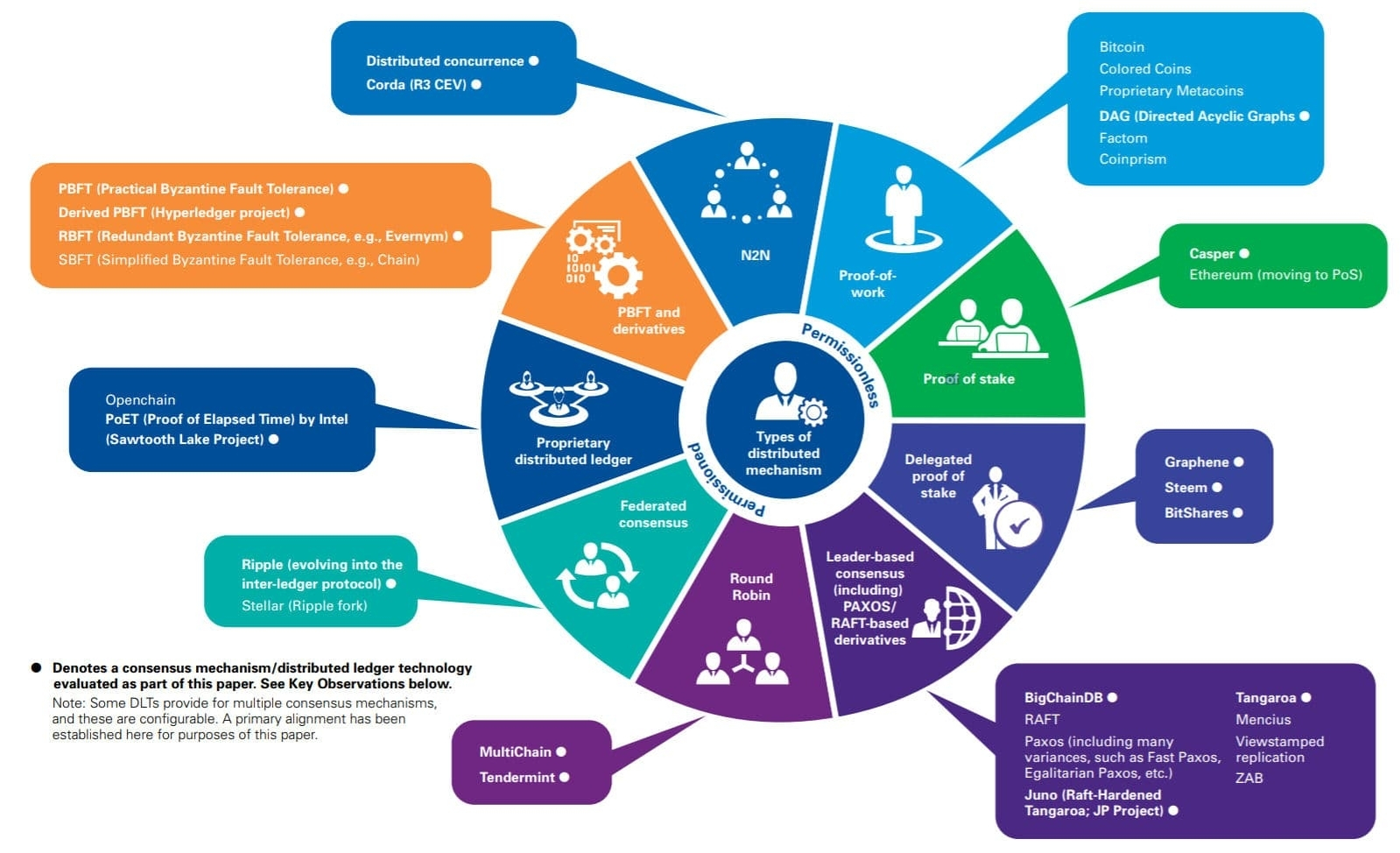
Compare this with Ethereum’s proposer-builder separation, where latency differentials create specialized roles and a stratified validator economy. Or consider Avalanche, which achieves fast finality through repeated subsampled voting but still depends on probabilistic convergence across gossip layers. In both designs, coordination overhead scales with network conditions. Fogo’s tighter execution cadence attempts to reduce that overhead at the architectural root.
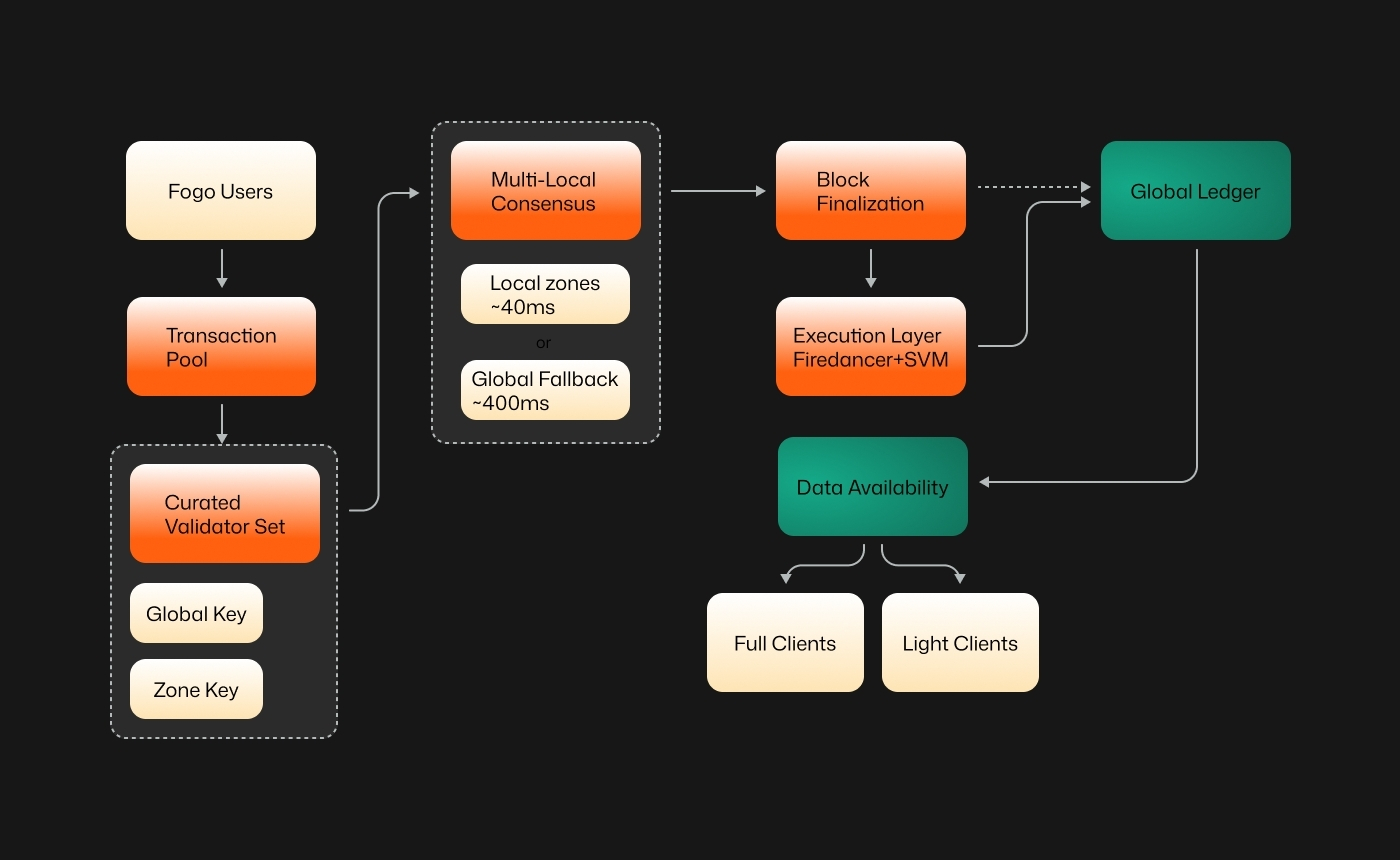
This does not eliminate failure modes; it reshapes them. A system optimized for deterministic low latency becomes more sensitive to hardware heterogeneity and network jitter. The validator set may implicitly favor operators with superior infrastructure, raising barriers to entry. While traditional slashing-based security models penalize equivocation or downtime, Fogo’s model indirectly penalizes performance inconsistency. The risk is subtle centralization pressure: if predictable timing is mandatory, validators in regions with unstable connectivity may be structurally disadvantaged.
There are also liveness trade-offs. Systems that tolerate wide latency variance can degrade gracefully under stress. A network engineered around narrow timing assumptions may experience sharper cliffs. If a sufficient portion of validators cannot meet deterministic thresholds, consensus could stall rather than slow. In fault-tolerance theory, this resembles a system optimized for nominal conditions rather than worst-case resilience.
Yet the economic alignment shifts in meaningful ways. When latency is stable, applications can rely on immediate state transitions without constructing elaborate fallback logic. This reduces coordination complexity at higher layers, potentially increasing effective decentralization at the application tier even if validator requirements rise. The simplification at one layer may offset concentration at another. Coordination costs migrate rather than disappear.
Why is this innovation misunderstood? Because speed is discussed superficially. Throughput numbers dominate discourse, obscuring timing variance as a structural parameter. Engineers recognize jitter as a systems concern, but crypto culture often reduces performance to transactions per second. Fogo’s design implies that variance itself is an attack surface. When temporal unpredictability shrinks, adversarial strategy shrinks with it.
From a systems perspective, predictability functions as a constraint that channels behavior. Validators optimize for steady participation rather than opportunistic timing games. Users interact with infrastructure that behaves more like a synchronous database than an eventually consistent ledger. The philosophical tension lies in whether blockchain should emulate the internet’s best-effort delivery model or approximate coordinated distributed computing.
The weaknesses are real. Hardware demands may concentrate power. Deterministic scheduling may prove brittle under extreme network partitions. Reduced temporal slack can magnify minor disruptions into consensus instability. These risks should not be dismissed as edge cases; they are inherent to the architectural bet.
Still, Fogo’s wager reframes the debate. Security may not solely arise from punishing bad actors or maximizing validator count. It may also emerge from minimizing the coordination uncertainty that enables adversarial play in the first place.
Reliability in distributed systems is often equated with uptime or fault tolerance. But perhaps reliability is better defined as the absence of exploitable unpredictability. A network that behaves consistently may, in the long run, prove more secure than one that merely survives.
