
🚨 Now that the attention of the broader crypto space is back on #PiNetwork , let's educate everyone on the industry-shifting product coming up on Pi.
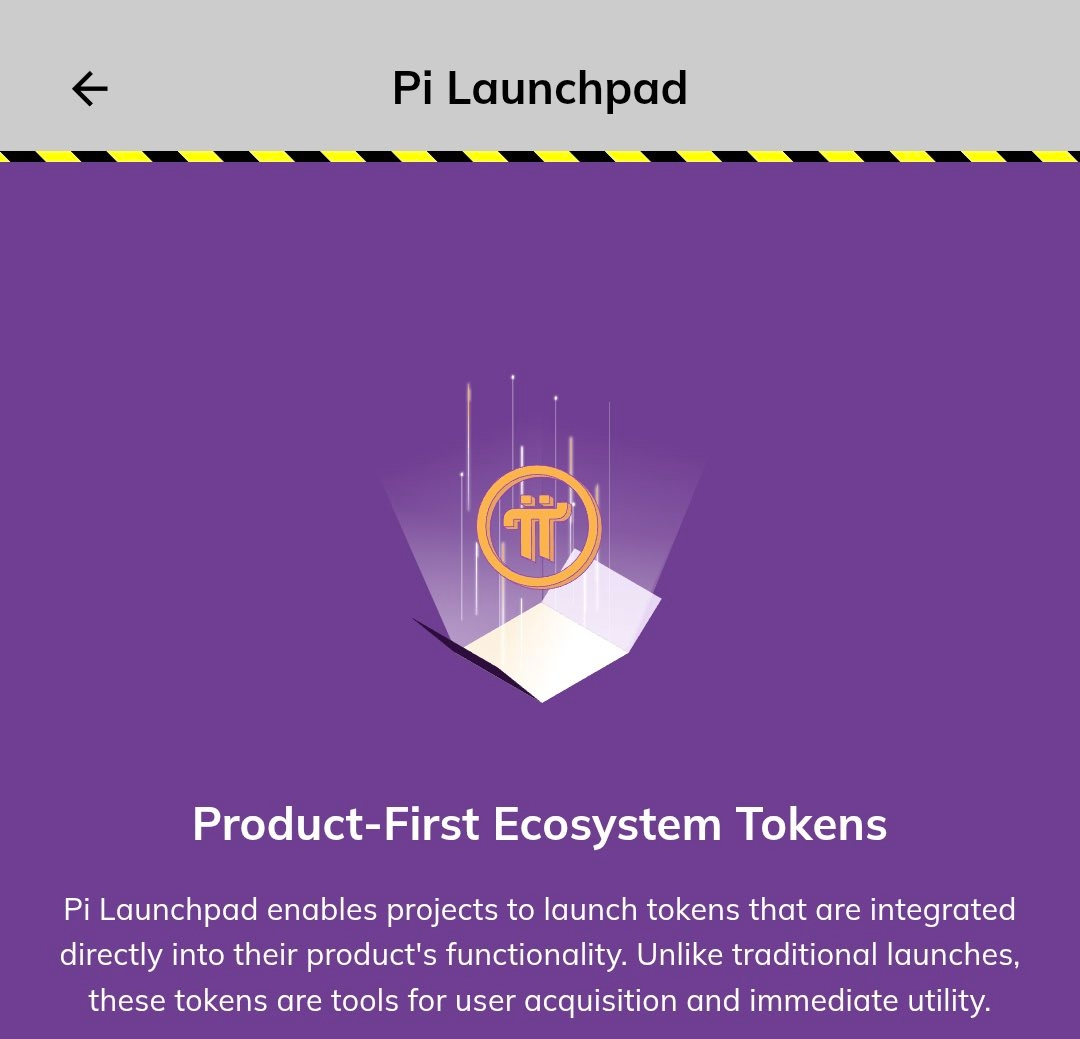
The $Pi Launchpad.
The design behind the Launchpad positions #PINetwork light years ahead of #Ethereum , #Solana , #BSC & every other chain. It changes the game entirely for crypto.
How?
While most chains let anyone create a token in minutes — often pure speculation, vaporware apps, pump-and-dump schemes, or quick rugs — the framework for token launch on Pi Launchpad flips the entire script.
Pi's new token framework is utility-first and user-acquisition-first. Tokens on Pi aren't designed to raise capital for founders. They're built to power real products and help projects acquire actual users for those products.
What exactly makes this framework revolutionary?
✅ Working product required first -
The Norm: Launch a roadmap and/or whitepaper, hype on twitter, and raise millions from presales/IDOs — then vanish, or deliver vaporware apps, or slowly rug and fade away. Founders fundraise first, build (maybe) later — if ever.
Pi's Framework: No token launch without a functional app already live. You prove your innovation, user traction, and product viability before any token exists. This aligns founders' incentives around actual utility and forces them to deliver value upfront.
✅ Immutable initial liquidity —
The Norm: Teams dump pre-mined tokens, rug-pull liquidity, or let whales manipulate price while retail gets wrecked.
Pi's Framework: Every Pi committed by participants goes straight into a permanent Liquidity Pool—locked from day one. No team wallets draining funds, no unlock schedules for founders to dump, no rugs possible. Price stability and health are ensured from the start because the pool cannot be exit liquidity for insiders.
✅ Meritocratic & engagement-driven —
The Norm: The best price deals go to whales, sniper bots, and early insiders. Real users end up buying high after the initial pump and holding their bags while privileged players exit first.
Pi's Framework: Users who actually use and engage with the app get prioritized/better deals during launch. No more bots sniping the pool first, no insider dumps from pre-mined allocations, and no whales gaming the system because the rules prioritize proven utility and genuine user activity. Real adoption and feedback loops now replace capital, speed, and connections.
✅ Tokens as user-acquisition- tools, not fundraising tools —
The Norm: Tokens primarily exist to raise capital for teams/founders (often to fund lifestyles, marketing, or quick exits). Utility is an afterthought (or never delivered), leading to misaligned incentives: price pumps on hype, then crashes when reality hits.
Pi's Framework: Tokens are used inside the product drive adoption, reward engagement, enable features, and iterate based on user behavior. Projects issue tokens to grow their user base (not to fundraise), and Pioneers (real users) can hold projects accountable: bad products mean low engagement/token value suffers. This flips the script — tokens support genuine innovation and long-term value creation, powered by Pi's massive community.
In conclusion, the Pi Launchpad solves the number 1 problem plaguing crypto today: the massive misalignment between token issuance and real-world utility.
It fixes every major Web3 disease in one framework:
Speculation over real utility → FIXED
Rug pulls & ghosted projects → FIXED
Dead tokens with zero users → FIXED
This is the kind of thoughtful, utility-first design the crypto space has been begging for, and Pi Network just created the blueprint. Pi isn't following the old playbook… it's rewriting it.
The full token design framework is public on GitHub for anyone who wants to dive deeper into its geniusness. Link below.
Happy Pi Day 2026 💜@Crypto Universe official @Cryptonews_Official #PiCoreTeam #Write2Earn #WriteToEarnUpgrade #BNB #BTC