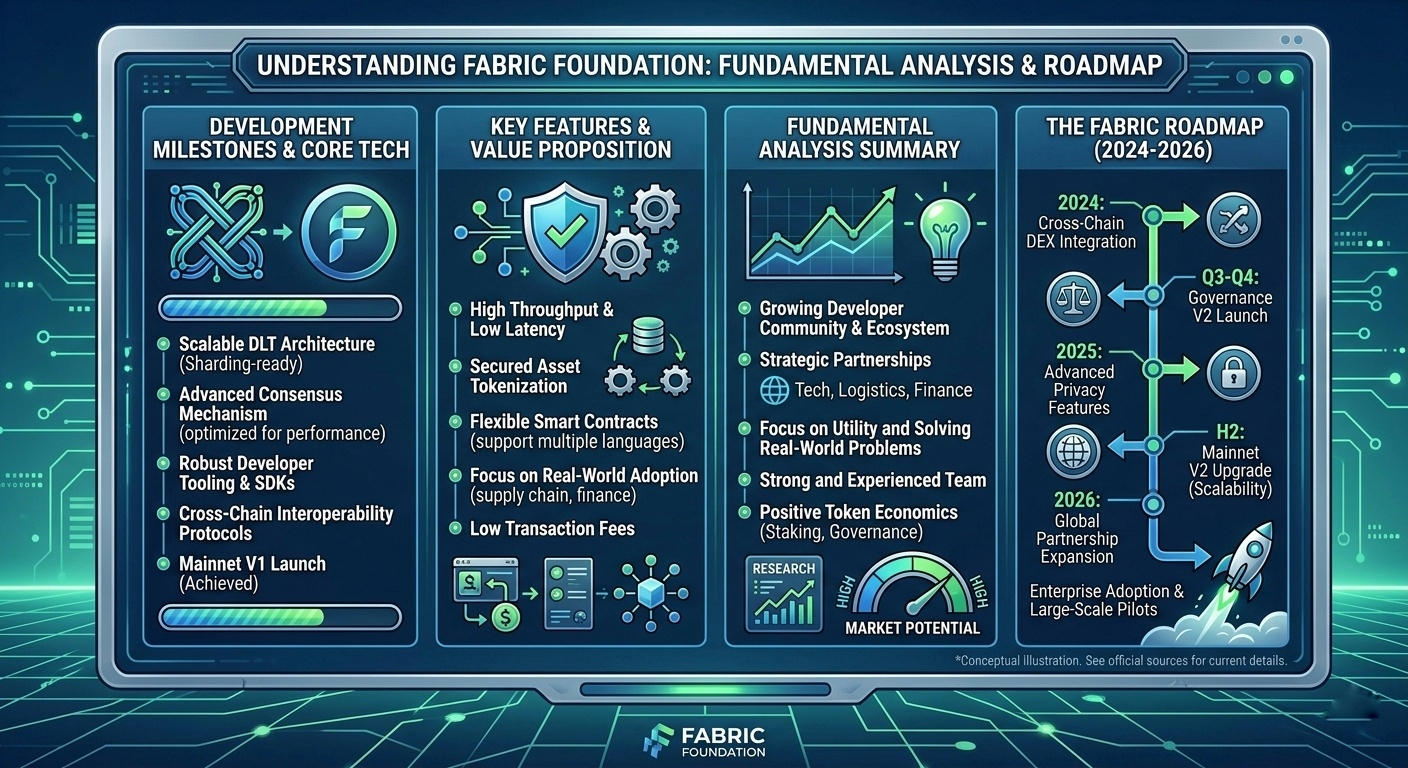
Fabric Protocol is a blockchain project focused on building the economic infrastructure for autonomous robots and AI systems. The project is driven by the @Fabric Foundation , a non-profit organization working on governance, coordination, and financial frameworks that allow intelligent machines to participate safely in the global economy.
Fabric Foundation
The ecosystem is powered by its native cryptocurrency $ROBO O Token, which enables payments, coordination, and governance across the network. The core idea behind Fabric is simple but ambitious: create a decentralized “robot economy” where robots can perform work, receive payments, and interact economically through blockchain technology.
Project Vision and Market Thesis
Fabric is built on the belief that AI and robotics will become a global workforce in the future. Robots are already being used in industries such as manufacturing, logistics, healthcare, and delivery services. However, the current infrastructure does not allow robots to function as independent economic participants.
For example, robots today cannot:
Hold bank accounts
Receive direct payments
Maintain verifiable identities
Autonomously coordinate work
Fabric attempts to solve these problems by creating a blockchain-based identity, payment, and coordination network for machines. Through this system, robots can have wallets, identities, and the ability to transact autonomously within decentralized markets.
CoinMarketCap
Technology and Core Infrastructure
1. On-Chain Identity for Robots
Fabric plans to create a blockchain registry where every robot receives a verifiable on-chain identity. This allows tracking of robot performance, ownership permissions, and operational history across industries.
Fabric Foundation
2. Autonomous Machine Payments
Through crypto wallets, robots can receive payments and pay for services such as energy, maintenance, cloud compute, or insurance automatically. Transactions on the network are settled using the ROBO token.
Bingx Exchange
3. Decentralized Robot Coordination
Fabric acts as a marketplace where robotic labor is matched with tasks. Companies or individuals can deploy robots, and tasks are allocated based on verified work completion. This model enables a decentralized coordination system for robot fleets across industries.
Bingx Exchange
Tokenomics and Utility
The ecosystem revolves around the $ROBO token, which has several utilities:
Payment for network transactions
Staking to coordinate robot deployment
Governance participation
Access to developer tools and services
The token has a fixed total supply of 10 billion, designed to support long-term ecosystem growth and incentives for participants.
Bingx Exchange
A portion of network revenue may also be used to buy @Fabric Foundation ROBO tokens from the market, potentially creating long-term demand pressure.
Bingx Exchange
Development Progress
Fabric is still an early-stage project, but several key developments have already occurred.
Token Launch and Exchange Listings
The #ROBO token launched in early 2026, gaining trading activity on multiple cryptocurrency exchanges. Listing events and promotional campaigns helped increase early market attention and liquidity.
AInvest
Airdrop and Community Distribution
The project launched a global airdrop program to distribute tokens and decentralize participation across the ecosystem.
AInvest
Infrastructure Deployment
The Fabric network is currently designed to operate initially on Base Network, a Layer-2 scaling solution connected to Ethereum, allowing lower transaction costs and faster processing.
CoinMarketCap
Roadmap and Future Plans
Phase 1 — Foundation and Token Launch
Publish whitepaper and technical research
Launch $ROBO token
Build initial developer and community ecosystem
Phase 2 — Core Infrastructure Development
Implement robot identity registry
Build machine-to-machine payment systems
Launch developer SDKs for robotics applications
Phase 3 — Ecosystem Expansion
Partnerships with robotics companies and AI developers
Deployment of real-world robotic fleets
Expansion of decentralized robot task marketplaces
Phase 4 — Dedicated Blockchain
Fabric ultimately plans to migrate from Base to its own Layer-1 blockchain, optimized specifically for machine-to-machine transactions and robotic coordination.
CoinMarketCap
Strengths of the Project
1. Strong Future Narrative
The project sits at the intersection of AI, robotics, and blockchain, three of the fastest-growing technology sectors.
2. Real-World Use Case
Unlike many speculative tokens, Fabric aims to connect crypto with physical robotics infrastructure.
3. Innovative Economic Model
The concept of a decentralized robot labor marketplace is unique and could become highly valuable if robotics adoption accelerates.
Risks and Challenges
Despite its ambitious vision, Fabric faces several risks.
Early Development Stage
Most of the ecosystem is still under development, meaning adoption will take time.
Execution Complexity
Integrating blockchain, AI, and physical robotics is technically difficult and requires partnerships with hardware manufacturers.
Market Volatility
With a relatively low circulating supply early in the project’s lifecycle, price volatility may remain high as new tokens enter the market.
AInvest
Overall Fundamental Evaluation
From a fundamental perspective, Fabric Protocol is a high-risk, high-potential project attempting to build the financial and coordination layer for the future robot economy.
If its technology successfully enables robots to operate as autonomous economic agents, Fabric could become a foundational infrastructure layer in the emerging machine-driven economy. However, the project is still in its early stages, and its long-term success will depend heavily on real-world robotics adoption and ecosystem development.