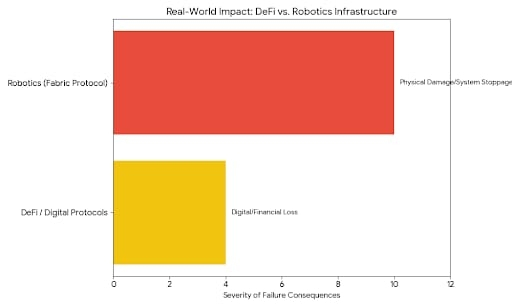
I’m watching the infrastructure side of crypto more than the price charts lately. I’m waiting to see which systems actually hold together when things get messy. I’m looking at the pressure points that show up when traffic spikes and automation goes wild. I’ve been around long enough to see the same breakdowns repeat. I focus on the operational layer, because that’s usually where things fail first.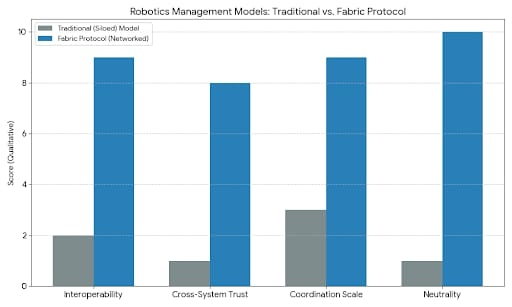
Most blockchain networks were never really built like production infrastructure. One machine ends up doing too many jobs at once. The same node might validate blocks, store history, answer API requests, power wallet queries, and feed explorers. It works fine when activity is calm. But when load increases, those roles start competing for the same resources.
Fabric Protocol takes a different approach. The core idea is separating responsibilities instead of stacking everything together. Through verifiable computing and agent-native infrastructure, the protocol treats robotic agents, computation, and ledger security as different workloads rather than forcing them into the same box.
Once those boundaries exist, the system becomes easier to operate. Validators focus on maintaining consensus and keeping the ledger correct. Data providers manage storage and serve historical state. Compute layers run verifiable workloads that robotic systems or autonomous agents depend on. Access layers handle the requests coming from applications and machines interacting with the network.
This separation matters most when things start breaking.
Operational failures rarely begin with consensus. They usually start on the edges. A popular application suddenly sends a wave of traffic to public endpoints. Caches begin missing more often. Clients automatically retry requests when responses slow down. Before long the retries create more load than the original traffic.
Then the cascade begins.
Disk queues grow while indexers fall behind the chain. API responses slow down. Explorers stop updating properly. Wallets begin showing strange numbers. Transactions appear missing. Confirmations look stuck on screen even though blocks are still being produced normally.
For users, it looks like the chain itself is failing. Traders see confirmations that won’t move. Developers see inconsistent data. Trust starts to erode even though consensus may still be working exactly as intended.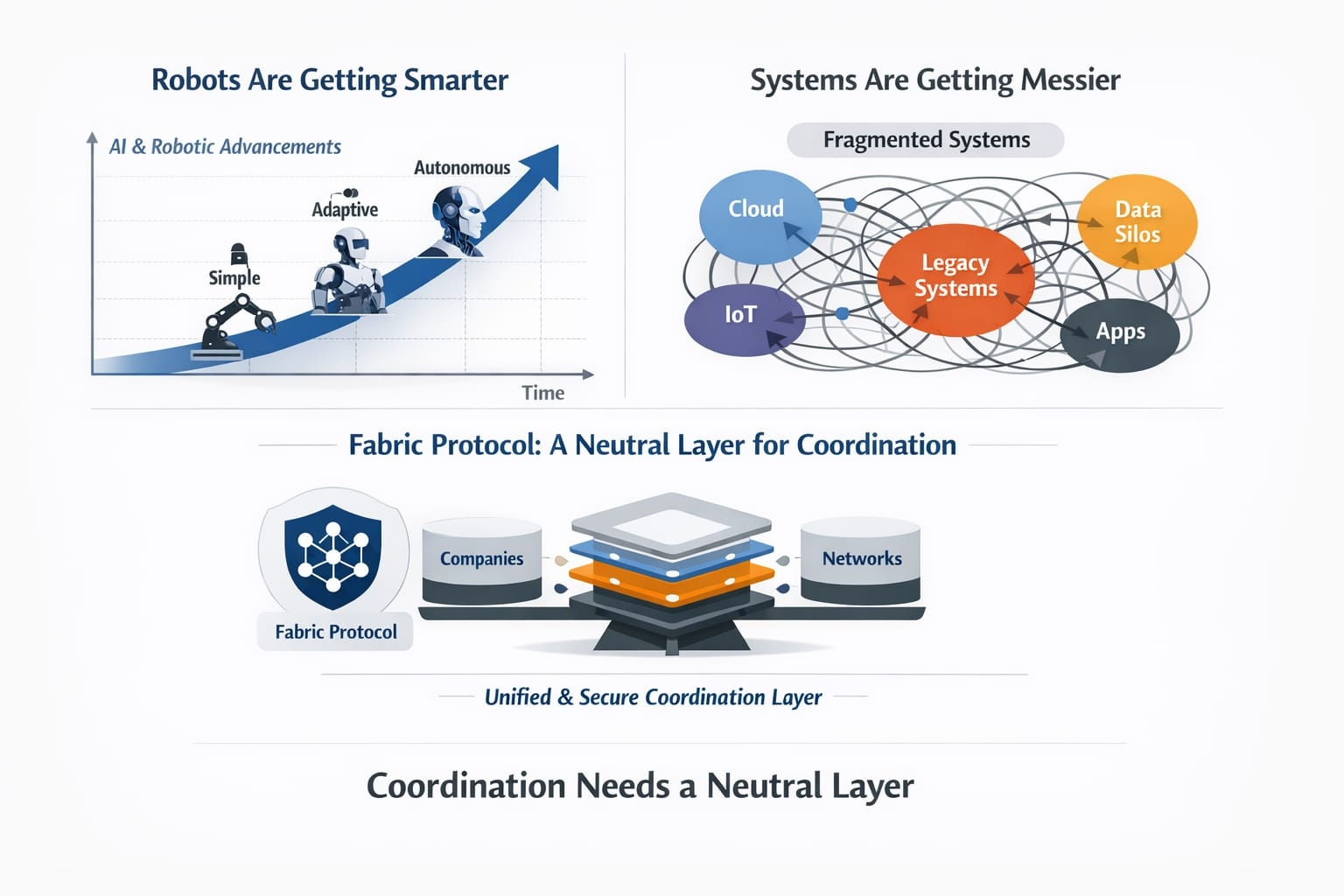
Fabric Protocol tries to contain that kind of failure by drawing clear boundaries between system layers. Verifiable computing handles agent execution separately from core ledger validation. Data coordination still happens through a public ledger, but the workloads surrounding it remain modular.
That structure changes how the system scales. Extra query traffic can be absorbed through caching layers and load-balanced access points. Rate limits and filtering can slow down automated retry storms. Ingestion services can stay separate from query systems so indexing pressure does not block reads. Nodes that fall behind can catch up through controlled synchronization rather than flooding the network. Storage and indexing strategies can evolve without interfering with consensus.
None of this removes complexity. It simply makes the pressure easier to control.
New challenges appear once the layers are separated. Applications must trust the access providers that deliver data. Different providers may index the chain at slightly different speeds, which means the same request might return slightly different results depending on where it is sent. Latency becomes visible. Default endpoints can quietly centralize power because developers prefer the easiest option. Operators constantly have to balance infrastructure diversity with developer convenience.
Fabric Protocol doesn’t pretend these problems disappear. It just places them in layers where they can be observed and managed.
Systems that survive long enough usually share one trait. They start with clear boundaries and strict constraints, so when pressure arrives one struggling component cannot choke the rest of the network.