
Okay so I was reading about Fabric Protocol last night... and honestly my first reaction was just “here we go again”. Another tech thing. Another network. Another promise that machines and AI and robots will magically work together if we just slap a protocol on top of it. We’ve seen this movie before. Too many times.
2026 has been wild for this stuff. Every week there’s some “AI agent network”, some “robot chain”, some startup claiming their token will run half the machines on Earth. Most of it… let's be real… total noise. Whitepapers full of big words. Cool diagrams. Zero real machines doing anything useful. Just vibes.
So yeah… I went into Fabric expecting the same mess.
But the idea itself? It's actually kinda interesting.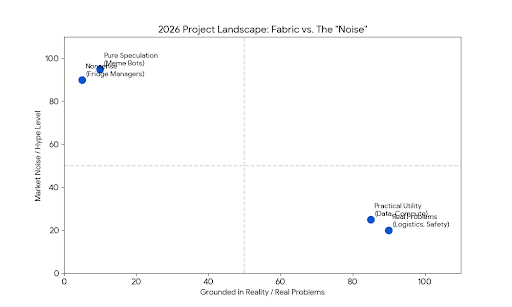
Simple thing. Robots today are basically stuck in their own little bubbles. One company builds warehouse robots… another builds delivery bots… someone else builds farm machines… and none of them really talk to each other. Different software. Different data. Different systems. Everything locked away behind corporate walls.
It's messy.
And honestly it's kinda stupid when you think about it. Machines are getting smarter every year but the infrastructure around them still feels like 2005 software architecture. Silos everywhere. Nothing connects cleanly.
Fabric is basically trying to fix that. That's it.
Not building robots. Not selling hardware. Just building a network where robots, AI systems, and developers can coordinate through shared infrastructure. Data verification. Computation checks. Some rules that machines can actually follow.
That's the pitch.
And weirdly... it makes sense.
Tiny thought though. Adoption.
Because we've seen this before. Good idea. Clean architecture. Then nobody uses it. Happens all the time in crypto and tech. People love shiny new protocols until they actually have to change their existing systems.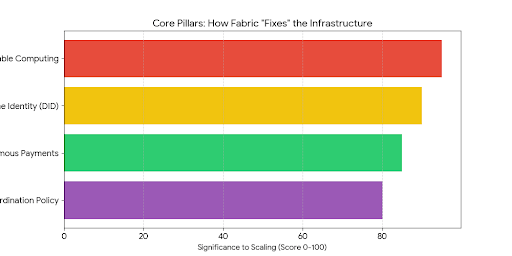
Companies hate doing that.
Still… the problem Fabric is looking at is very real. Robots are spreading everywhere now. Warehouses, hospitals, farms, airports. Some cities even have delivery robots rolling around sidewalks like confused little shopping carts.
It's happening fast.
But the coordination layer? Barely exists.
Each company runs its own stack. Their own rules. Their own data pipelines. If two systems need to interact someone has to manually glue everything together and pray it doesn't break.
That's not gonna scale forever.
Wait, I almost forgot to mention... the whole "verifiable computing" part of Fabric. Sounds fancy but it's actually pretty basic when you strip away the tech talk. It just means if a robot says it did something… the system can check it. Like actually verify it instead of just trusting the company that built the robot.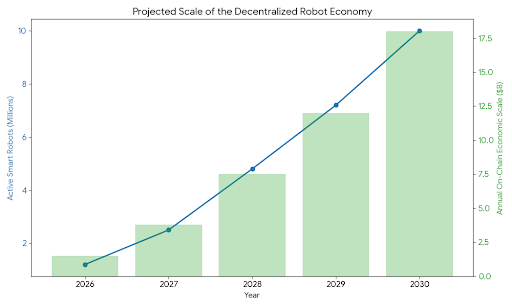
Which… honestly… should already exist.
Think about delivery robots in cities. Or factory machines. Or drones checking infrastructure. If those things are operating around people, someone somewhere needs to know they're following the rules.
Right now we mostly just trust companies. Which is… yeah… not always a great system.
Fabric tries to build a shared ledger where certain actions can be verified. Not every tiny movement obviously… that would be insane… but important things. Policies. Data sources. Computations.
Basically a public record layer for machines.
Short sentence here.
It's logical.
Now does that mean Fabric will actually become the standard? No clue. That's the risky part. Infrastructure projects live or die based on adoption, not ideas.
And robotics companies aren't exactly known for embracing outside protocols quickly. These companies move slow. Hardware cycles are long. Software stacks get messy fast.
So yeah… there's a chance Fabric ends up as another clever protocol that developers talk about but nobody serious integrates.
Wouldn't be the first time.
But I will say this… compared to half the garbage floating around the AI and crypto space right now, this actually targets a real problem. Not imaginary ones.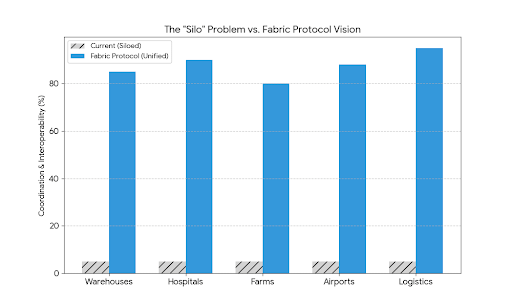
Let me rephrase that...
Most projects today invent problems just so they can sell a token. That's the ugly truth of 2026. "Decentralized AI agents that manage your fridge." "Autonomous meme trading bots." Absolute nonsense.
Fabric at least looks at something practical. Robots are coming whether people like it or not. Logistics companies are investing billions. Factories are automating faster every year. Cities are experimenting with delivery machines and inspection drones.
Those machines will eventually need shared infrastructure.
Otherwise it turns into chaos.
Picture thousands… maybe millions… of autonomous machines all running different rule systems, different coordination logic, different data standards. That's a nightmare.
Fabric is basically trying to build the plumbing before that future arrives.
Still early though.
Very early.
The protocol might be solid… the ideas might be spot-on… but the real test is whether robotics companies, developers, and researchers actually plug into it instead of building their own systems like they always do.
Because tech history is brutal.
Good ideas fail all the time. And sometimes boring infrastructure ends up becoming the thing everyone relies on ten years later.
Fabric could go either way.
Right now though… in a market drowning in AI hype and robot buzzwords… it's weirdly refreshing to see something that at least feels grounded in an actual problem instead of pure speculation.
Not perfect.
But not nonsense either.