
Understanding the Public Ledger Concept
When people hear “public ledger,” they often think about cryptocurrency transactions. But a public ledger is simply a shared, tamper-resistant record that anyone can verify. Fabric Protocol applies this concept beyond finance and into the world of intelligent machines.
Imagine a notebook placed in the center of a room where everyone can see what’s written, but no one can secretly erase previous entries. That’s the basic idea behind a blockchain-based public ledger. Fabric Protocol uses this structure to coordinate robotic systems and AI agents.
Instead of machines operating behind closed doors, their key actions can generate verifiable proofs recorded on-chain. This does not mean exposing private data. It means confirming that rules were followed.
By introducing a public ledger model, Fabric Protocol shifts automation from hidden processes to transparent systems.
Why Intelligent Machines Need Transparency
As robots and AI systems become more advanced, they begin making decisions with real-world impact. From manufacturing to logistics and healthcare, automation is moving into critical environments. With that growth comes a demand for accountability.
Think about an autonomous delivery robot navigating busy streets. People want confidence that it follows safety rules. Transparency helps build that confidence.
Fabric Protocol’s public ledger model allows important compliance proofs to be recorded securely. Instead of trusting internal logs, stakeholders can verify that predefined standards were met.
Transparency does not mean surveillance. It means creating systems where accountability is measurable. This shift strengthens trust between humans and machines.
In a world increasingly powered by automation, visible rules and verifiable actions matter.
How Fabric Protocol Connects Machines to the Ledger
Fabric Protocol acts as a coordination layer between intelligent machines and blockchain infrastructure. When a robot completes a critical task, it can generate a cryptographic proof. That proof is then anchored to the public ledger.
Imagine finishing a safety inspection and receiving a stamped certificate. You don’t need to show every step of the inspection, just the verified result. Fabric Protocol applies a similar principle.
Machines do not upload all raw data to the blockchain. Instead, they share proofs that confirm compliance or task completion. This keeps systems efficient while preserving privacy.
By connecting robotics to a public ledger, Fabric Protocol creates a shared source of truth. If disputes arise, stakeholders can refer to an immutable record.
This connection transforms automation into something more transparent and accountable.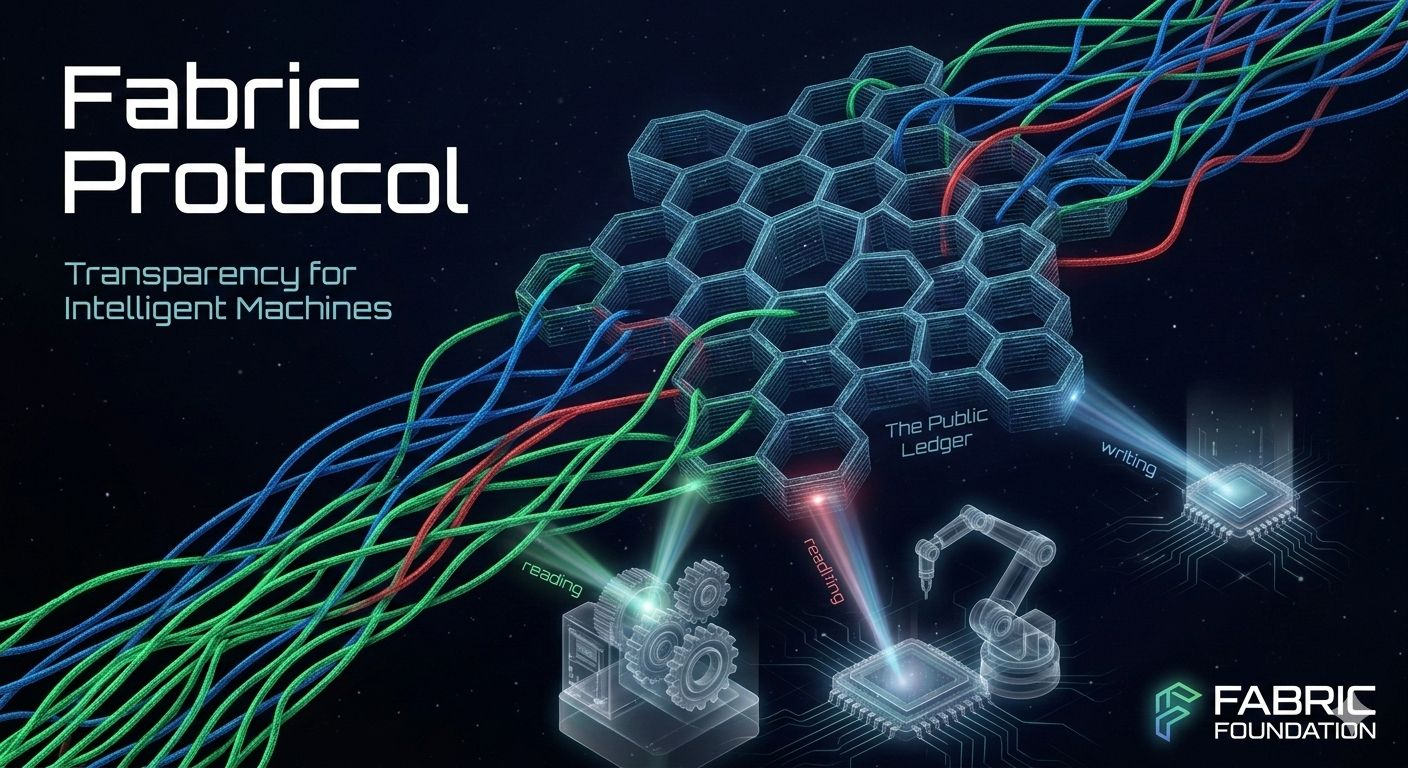
Verifiable Computing Made Practical
Verifiable computing is central to Fabric Protocol’s model. In simple terms, it allows machines to prove they performed computations correctly. It’s like submitting homework with an official answer key attached.
Consider a robotic arm assembling components in a factory. After completing a batch, it generates proof that assembly followed approved specifications. That proof is recorded on-chain.
This approach reduces reliance on blind trust. Instead of assuming a system behaved correctly, operators can verify compliance through cryptographic confirmation.
Verifiable computing also supports audits. When regulators or supervisors need confirmation, the ledger provides clear records.
Importantly, this system protects sensitive information. Only compliance proofs are shared, not detailed proprietary data.
By combining robotics with verifiable computing, Fabric Protocol enhances operational integrity.
Governance Through Transparent Records
Governance defines how rules are set and updated. Fabric Protocol integrates governance mechanisms directly into its public ledger model. Policy changes and protocol updates can be recorded transparently.
Imagine a sports league updating its rulebook. Every change is documented so players understand the new standards. Fabric Protocol applies this concept to intelligent machines.
If safety thresholds change or operational guidelines evolve, those updates can be logged on-chain. Stakeholders can verify when and how adjustments were made.
This transparent governance reduces uncertainty. It ensures that automation evolves within clearly documented frameworks.
Structured governance is especially important as AI systems grow more autonomous. Clear records create clarity in decision-making.
Fabric Protocol treats governance as infrastructure, not an afterthought.
Modular Design for Flexible Transparency
Technology never stands still. New AI models, better sensors, and updated regulations continuously reshape the landscape. Fabric Protocol addresses this through modular infrastructure.
Think of modular design like building with interchangeable blocks. If one component needs improvement, it can be upgraded without dismantling the entire system.
In the context of public ledgers, this means verification modules, governance layers, and computation frameworks can evolve independently. Transparency remains intact while innovation continues.
Modular design also reduces risk. Updates can be introduced gradually and tested carefully.
This flexibility supports long-term adoption. Industries need systems that can adapt without sacrificing accountability.
Fabric Protocol’s modular architecture ensures that transparency remains consistent even as technology advances.
Real-World Scenarios of Ledger Transparency
Let’s bring this concept to life with practical examples.
In manufacturing, robotic systems could log proof of quality checks after each production cycle. Supervisors can verify compliance without interrupting operations.
In logistics, autonomous vehicles could confirm adherence to route and safety standards. Recorded proofs provide an auditable trail.
In healthcare, robotic assistants might generate confirmation that sterilization protocols were followed. These records strengthen confidence in sensitive environments.
Each scenario demonstrates how public ledger transparency can enhance accountability.
Fabric Protocol positions blockchain not just as a financial tool but as coordination infrastructure for automation.
This expands the use case of Web3 technology into tangible, real-world systems.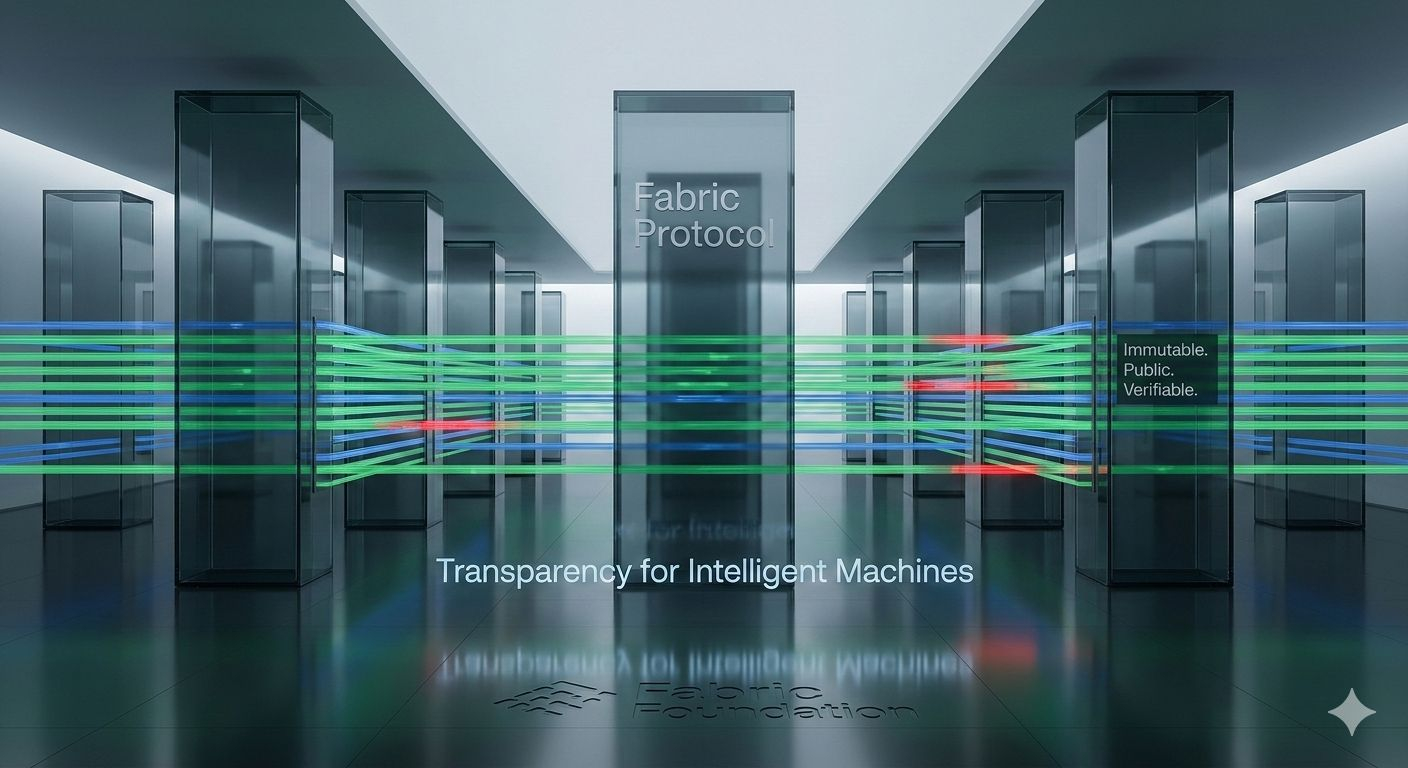
Balancing Openness and Privacy
One common concern about public ledgers is privacy. Fabric Protocol addresses this by using cryptographic proofs instead of raw data sharing.
Think of showing a security badge instead of revealing your entire personal file. The badge confirms authorization without exposing sensitive details.
Similarly, machines can confirm rule compliance without sharing proprietary algorithms or confidential information.
This balance is essential. Transparency builds trust, but privacy protects operational integrity.
Fabric Protocol’s model ensures that intelligent machines operate within verifiable frameworks while respecting data boundaries.
Responsible innovation requires both openness and discretion.
Education and Responsible Participation
As with any emerging technology, understanding is key. Fabric Protocol’s public ledger model represents an innovative approach to automation, but it should be explored thoughtfully.
This article is for educational purposes only and does not provide financial advice. Individuals should conduct their own research before engaging with any blockchain ecosystem.
Web3 innovation thrives on informed communities. By learning how public ledgers coordinate intelligent machines, users gain insight into the broader direction of decentralized technology.
Fabric Protocol demonstrates how blockchain can extend beyond digital assets into operational infrastructure.
Education strengthens confidence, and confidence supports responsible adoption.
The Bigger Picture for Web3
Web3 is often described as a movement toward decentralization and transparency. Fabric Protocol aligns with these principles by applying them to robotics and AI.
Instead of limiting blockchain to token transfers, it uses public ledgers to coordinate intelligent systems. This broadens the narrative of what Web3 can achieve.
When automation operates within transparent frameworks, trust increases. And when trust increases, adoption becomes more sustainable.
Fabric Protocol’s public ledger model illustrates how decentralized infrastructure can support real-world collaboration.
It emphasizes structured governance, verifiable computation, and modular flexibility.
These elements contribute to a more mature Web3 ecosystem.
Looking Ahead: Transparency as the Foundation
Automation will continue to shape industries worldwide. The challenge is ensuring that intelligent machines operate within accountable systems.
Fabric Protocol addresses this by embedding transparency into its design. Public ledger records create clarity, while verifiable computing supports integrity.
By connecting robotics to blockchain infrastructure, it transforms how we think about automation. Machines become participants in structured, transparent networks.
This approach moves beyond hype and focuses on infrastructure. It highlights the importance of trust in technological progress.
As Web3 evolves, real-world coordination will play a growing role.
Fabric Protocol’s public ledger model shows that transparency is not just a feature—it is the foundation of responsible automation.
When intelligent machines operate within verifiable, transparent systems, innovation gains credibility and communities gain confidence.
In the future of Web3, the projects that prioritize clarity, accountability, and shared trust will define the next era of digital and physical collaboration.