
When CreatorPad first launched, I joined Vanar Official from day one. At that time, I wasn’t chasing leaderboard positions or reward pools.
My main intention was to understand how Vanar was positioning itself in an increasingly competitive blockchain environment.
Since then, my daily routine quietly evolved around it studying The Vanar’s infrastructure, ecosystem direction, and the AI-ready positioning. Over time, what started as curiosity slowly turned into genuine long-term interest which sounds good .
Most Layer 1 projects market scalability through speed, TPS numbers, or lower transaction fees. But while observing Vanar, I started noticing a different narrative forming.
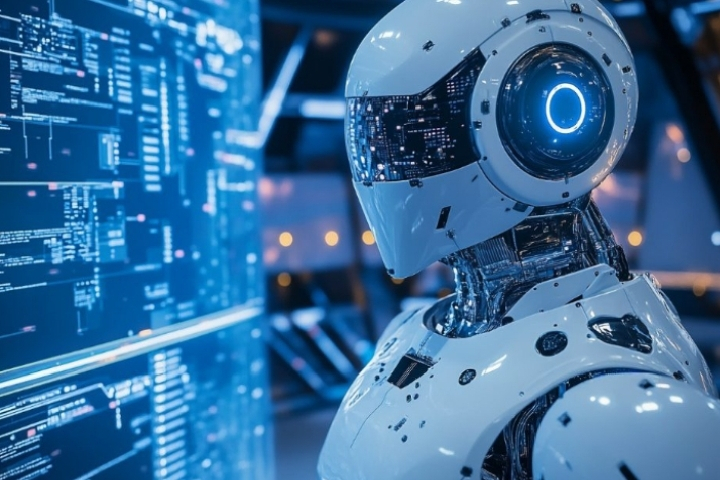
Instead of simply focusing on performance metrics, Vanar appears to be building infrastructure designed for autonomous digital interaction — particularly AI-driven economies.
This distinction matters more than it first appears.
Traditional blockchain networks are still heavily dependent on human-initiated interaction. Users manually approve transactions, monitor wallets, adjust gas fees, and react to network congestion.
But AI systems operate differently. They require a consistent execution environments, the predictable latency, and cross-chain accessibility without manual supervision.
Vanar’s “AI-ready” approach which seems to me that it's directly target this structural limitation.
During my CreatorPad participation, I focused on understanding how Vanar integrates the real-time execution infrastructure with cross-chain compatibility, especially its positioning on Base. Cross-chain accessibility is no longer just a convenience feature. For AI-driven services, it becomes infrastructure necessity because autonomous systems cannot operate efficiently across fragmented liquidity and disconnected execution layers.
Vanar appears to be attempting to solve that fragmentation.
Another element that gradually caught my attention is how Vanar frames payments as part of AI infrastructure rather than simply financial transactions.
As AI agents evolve, they will require native settlement capabilities to operate autonomously — whether purchasing data, executing micro-transactions, or interacting with decentralized applications without human intervention.
Most blockchain discussions still treat payments as a user utility. Vanar’s architecture suggests payments may become machine-to-machine operational layers.
CreatorPad itself reinforced this learning process for me. Unlike many campaign structures that reward raw activity or trading volume, CreatorPad emphasizes content quality, ecosystem understanding, and organic engagement. That scoring approach pushed me to focus more on research depth, ecosystem relevance, and structured analysis rather than surface-level promotion.
Over by the time pass , I realized that this model mirrors the way how real blockchain ecosystems grow sustainably. Projects that reward understanding over noise tend to build stronger long-term communities. CreatorPad unintentionally trained me to analyze infrastructure narratives more deeply instead of simply tracking market sentiment.
Another important observation from my daily Vanar research is the difficulty new Layer 1 networks face in the AI era. Launching another high-speed chain is no longer enough. The market is gradually shifting toward infrastructure that can support autonomous economies, data-driven interaction layers, and machine-level execution reliability.
Vanar seems to be positioning itself around readiness rather than marketing narratives. That difference is subtle but structurally significant.
My ongoing involvement with Vanar is not driven by short-term competition or reward incentives. It is driven by the opportunity to observe how next-generation blockchain infrastructure is being designed to support AI-driven digital economies.
Consistency in CreatorPad taught me that strong ecosystems are rarely built through sudden hype phases. They are built through continuous iteration, technical clarity, and community members who invest time in understanding the deeper vision behind the technology.
And in my daily observation, Vanar continues to present itself as a project which is quietly building toward that infrastructure future. And I also want to mention that plasma and kite is also quietly building right now.
