I want to revisit the October 10th crash. Not emotionally. Not conspiratorially.
But mechanically. Because the sequence of events raises serious structural questions.


Timeline Matters
On October 6, Binance publicly announced changes to how it would price BNSOL and wBETH, effective October 14.
That announcement unintentionally created a window:
Oct 10–14
A period where thin order books, collateral valuation, and oracle mechanics were in transition.
Four days is a long time in leveraged markets.
And on October 10, the market experienced one of the most concentrated liquidation cascades of the year.
The 40-Minute Window
Between approximately 21:36–22:16 UTC, extreme dislocations occurred but primarily on Binance.
Observed prints:
USDe dropped to $0.6567 on Binance, while other venues held $0.90–$0.95.wBETH collapsed to around $430 (~88% deviation from ETH parity), but only on Binance.
BNSOL flushed to roughly $34.9 (~82% drawdown).
These were not market-wide repricings. They were venue-specific distortions.
When collateral is marked using distressed local books, and those assets are used across futures, margin, and loan systems, liquidation engines can cascade internally.
In simple terms: Thin liquidity + forced collateral repricing = systemic auto-liquidation loop.
Binance later compensated users (~$283M reported) and accelerated the oracle adjustment from Oct 14 to Oct 11.
That tells us two things:
The pricing mechanism was vulnerable.
The issue was significant enough to warrant rapid correction.
Pre-Event Capital Movements
In the 24–48 hours prior, more than $10B moved across exchanges.
Notable activity:
Large USDT/USDC inflows into exchange hot wallets around 05:30–06:30 UTC on Oct 10.
USDe-related flows tied to Binance-labeled wallets (publicly tagged addresses).
Heavy capital movement before structural stress events is not proof of coordination but it is notable.
Liquidity does not randomly cluster before volatility.
Coinbase did not list USDe, wBETH, or BNSOL — the assets most impacted.
During the same window:
Coinbase’s cbETH peg held.
Binance’s wBETH collapsed.
Coinbase moved 1,066 BTC from cold to hot shortly before the cascade.
There is also speculation that some large flows unable to fill on Coinbase were routed externally via market makers. This suggests cross-venue liquidity dynamics were in play.
Where Were the Market Makers?
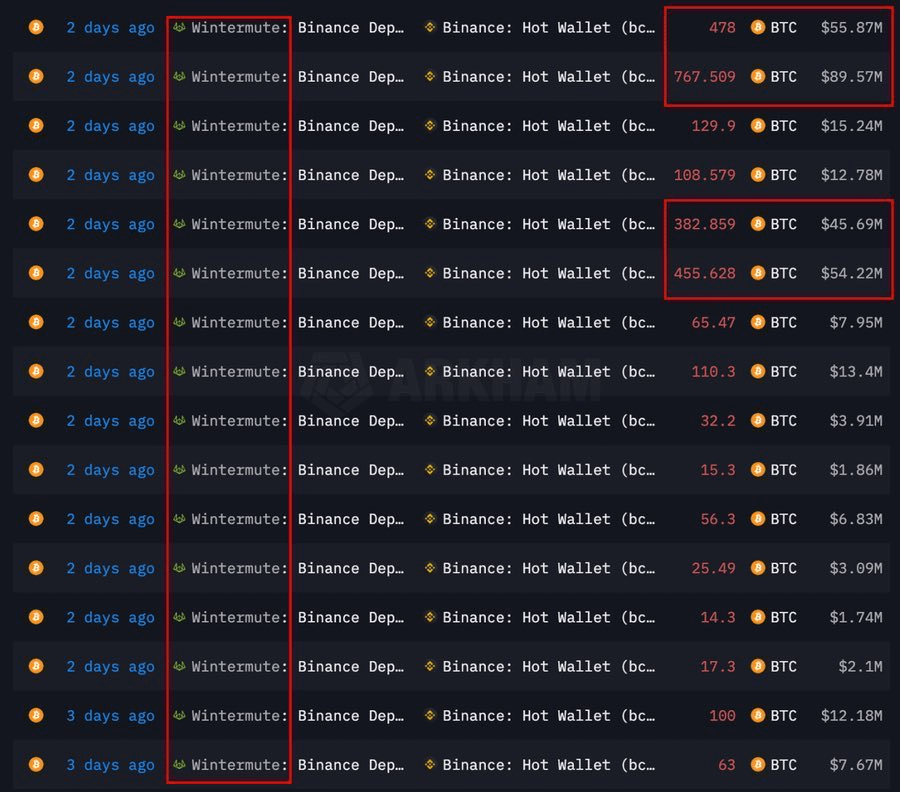
Two of the largest known crypto MMs Wintermute and Jump appeared largely inactive in the three assets that experienced extreme dislocations.
No visible footprint in USDe, wBETH, or BNSOL books during the peak stress window.
When major liquidity providers step back from thin pairs and those pairs are used as collateral references fragility increases dramatically.
If bids disappear while collateral is marked to local books, liquidation engines can effectively “eat themselves.”
In the final two hours before the cascade:
A newly scaled account reportedly built up to ~$1.1B notional BTC/ETH short exposure.
One ETH short addition occurred roughly one minute before a major macro headline.
Estimated PnL: ~$160–200M.
Public wallet addresses tied to this pattern have been circulated.
Is that coincidence?
Possibly.
Is it statistically interesting?
Absolutely.
Large directional positioning immediately before structural failures always deserves scrutiny.
The core question is not:
“Was Binance behind it?”
The real question is:
Was the system designed in a way that allowed thin, venue-specific liquidity to dictate collateral pricing across highly leveraged products?
If so, that is a structural vulnerability regardless of intent.
The Broader Implication
This event highlights something bigger: Centralized exchanges combine:
Spot order books
Derivatives engines
Margin systems
Lending desks
Internal collateral marking
When those systems rely on localized pricing during thin liquidity, cascading liquidations become possible. Not because someone presses a button.
But because reflexivity is embedded in the design.
Rumors and FUD often exaggerate. But structural weaknesses, when observed repeatedly, are not irrational paranoia they are risk assessment.
The 10/10 event was either
A liquidity vacuum that exposed fragility
A perfectly timed exploitation of known mechanics
Both possibilities deserve serious analysis. In leveraged markets, transparency is not optional.
It is foundational. And until pricing, collateral logic, and liquidation engines are fully understood and stress-tested, skepticism is not conspiracy. It’s prudence.
#Binance #MarketAnalysis #CryptoAnalysis $BTC $ETH