I keep coming back to the same uneasy thought whenever I watch the blockchain industry talk about freedom and ownership: what does ownership actually mean if everyone can see everything you do?
That question has been sitting quietly beneath the surface of crypto for years, almost like an unresolved contradiction. On one hand, systems like Bitcoin and Ethereum were celebrated because they replaced opaque financial institutions with open, verifiable ledgers. Anyone could check the rules. Anyone could verify transactions. Trust didn’t depend on banks or governments anymore; it depended on mathematics and distributed consensus. At the time, that felt revolutionary. Transparency became the moral foundation of the entire ecosystem.
But the longer you look at it, the stranger it becomes.
Because transparency, when pushed to its absolute extreme, starts to look a lot like surveillance.
Every transaction on a public blockchain leaves a permanent trace. Wallet addresses, timestamps, transaction flows none of it disappears. The ledger remembers everything. At first this didn’t seem like a problem because wallet addresses were pseudonymous. They were just long strings of characters, detached from real-world identities. But the moment a single address becomes associated with a person, a company, or even a social media account, the illusion of anonymity collapses. Suddenly the entire transaction history connected to that address becomes visible.
Not partially visible.
Completely visible.
Imagine applying that level of transparency to traditional finance. Picture a world where anyone could open a public database and examine every payment a company has ever made, every supplier it works with, every payroll transfer, every internal treasury movement. Competitors would dissect financial strategies. Investors could analyze internal capital flows in real time. Even curious strangers could watch spending patterns like spectators following a live broadcast of someone’s bank account.
It’s hard to imagine any serious business willingly operating under those conditions.
And yet that’s essentially how many blockchain systems work today.
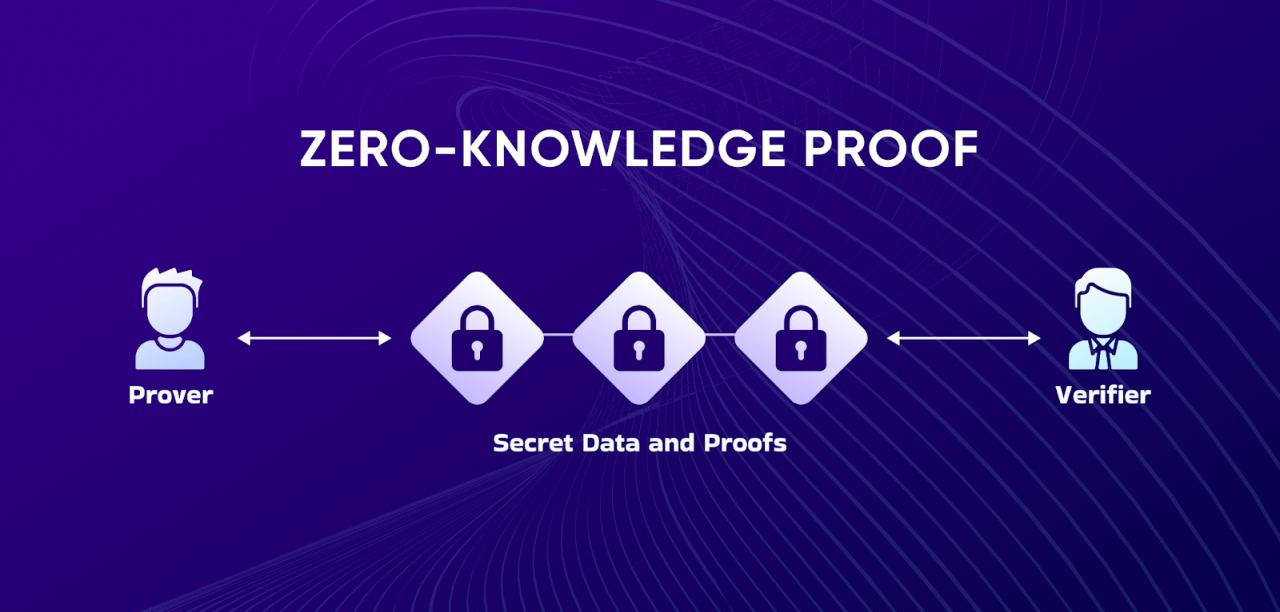
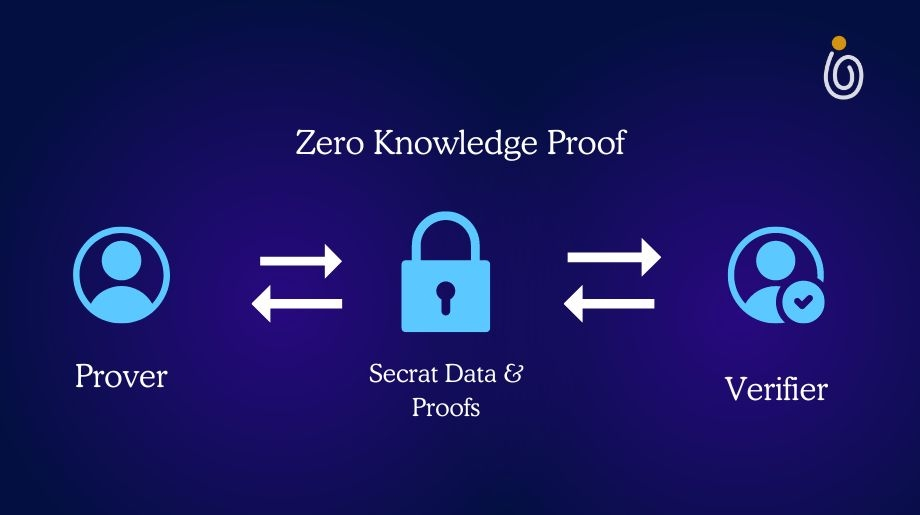
This tension between transparency and privacy has gradually pushed developers toward one of the most fascinating areas of modern cryptography: zero-knowledge proofs. The phrase itself sounds intimidating, like something buried deep inside an academic research paper, but the core concept is surprisingly elegant. A zero-knowledge proof allows one party to prove that a statement is true without revealing the underlying information that makes it true.
It’s almost counterintuitive.
Normally, proving something requires showing evidence. Evidence reveals details. Zero-knowledge systems flip that logic. Instead of revealing the data itself, the system generates a cryptographic proof that the data satisfies certain conditions. The verifier checks the proof, confirms that the statement is valid, and never learns anything about the hidden information behind it.
In other words, truth can be confirmed without exposure.
That single idea changes how blockchain networks can be designed. Traditional blockchains achieve verification by publishing every detail of every transaction to a public ledger. Zero-knowledge systems introduce a different approach: transactions can remain private while still being mathematically verifiable. The network doesn’t need to see the data itself; it only needs to confirm that the rules were followed.
And once you start thinking about decentralized systems through that lens, the implications become enormous.
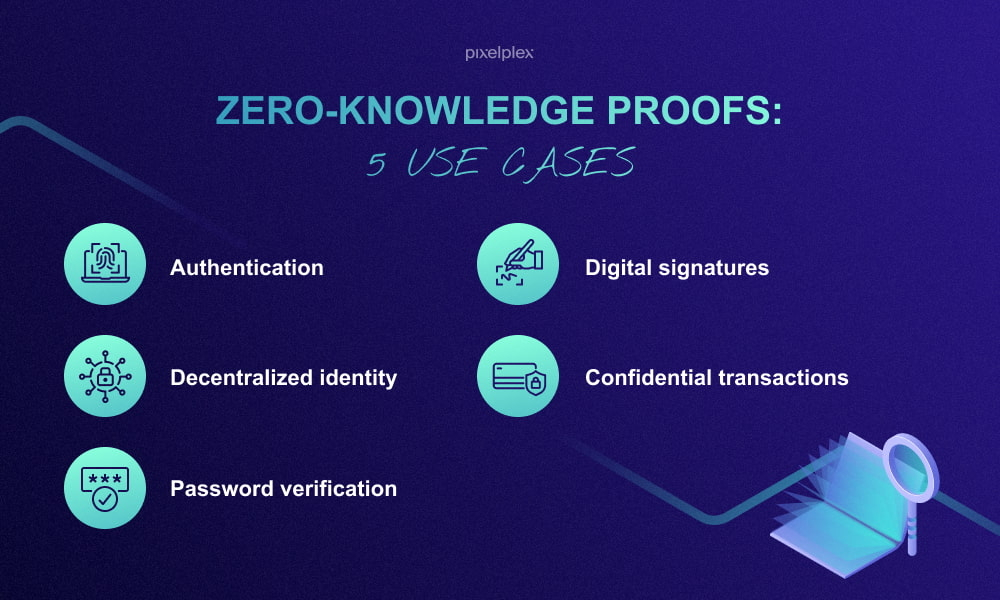
A transaction could be validated without revealing the exact amount transferred. A decentralized application could confirm that a user meets specific requirements without collecting personal information. Even digital identity systems could evolve into something far more privacy-preserving. Instead of uploading passports, addresses, or personal records to centralized databases, individuals could generate cryptographic proofs confirming certain attributes.
Over eighteen years old.
Eligible voter.
Verified resident.
Creditworthy borrower.
Proofs replace documents.
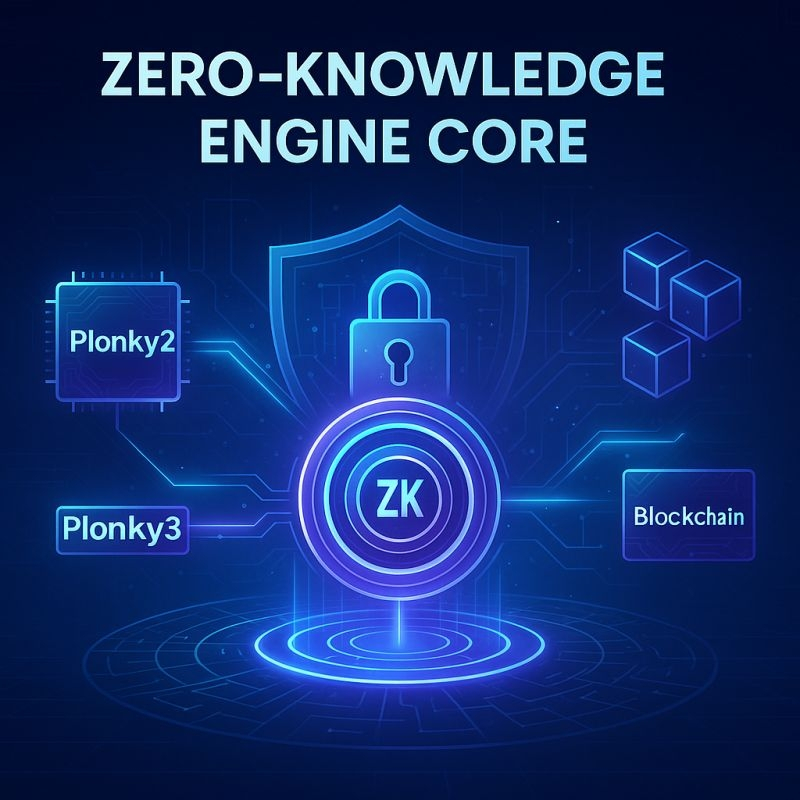
That shift doesn’t just tweak how blockchains operate it fundamentally alters how information moves through digital systems. And perhaps not surprisingly, much of the experimentation around this idea is happening within the ecosystem surrounding Ethereum. Developers have been building infrastructure known as zero-knowledge rollups, which function as layer-two networks that process large volumes of transactions outside the main chain and then submit cryptographic proofs verifying that everything was executed correctly.
Projects like zkSync and StarkNet are pushing that architecture forward. Instead of requiring the main network to verify thousands of individual transactions, these systems bundle them together and produce a single proof that confirms the entire batch is valid. One proof can represent thousands of operations.
The efficiency gains are significant. Fees drop. Throughput increases. The network becomes more scalable.
But focusing only on scaling misses the deeper transformation taking place.
Zero-knowledge technology doesn’t just make blockchains faster it reshapes the relationship between data and trust. The modern internet runs largely on data extraction. Platforms collect user information, analyze it, monetize it, and sometimes mishandle it in ways that expose millions of people to breaches or surveillance. Privacy becomes something users gradually surrender in exchange for convenience.
Web3 was supposed to offer an alternative.
Yet if decentralized systems simply move user activity onto fully transparent ledgers, the privacy problem isn’t solved. It’s merely relocated. Instead of corporations holding your data, the entire world can see it. That’s not exactly an improvement.
Zero-knowledge systems approach the problem differently. They don’t merely reduce how much data is shared they redesign systems so that sharing sensitive data often becomes unnecessary. Verification happens mathematically rather than through disclosure.
Of course, none of this comes easily.
The mathematics behind modern proof systems such as zk-SNARKs and zk-STARKs took decades of academic research to develop. Implementing them at scale is an enormous engineering challenge. Generating proofs can require substantial computational resources. Developers must learn entirely new programming frameworks designed specifically for zero-knowledge circuits. Even small mistakes in implementation can create vulnerabilities.

It’s not just difficult.
It’s brutally difficult.
In many ways, building zero-knowledge infrastructure resembles assembling a complex machine while it’s already running at full speed. New compilers, new proof systems, new development environments everything is evolving simultaneously while billions of dollars of digital assets move through these networks.
That reality makes some observers cautious. The technology is advancing rapidly, but it’s still young compared to foundational blockchain systems that have been tested for more than a decade. Infrastructure gaps remain. Developer tooling continues to improve. The ecosystem is still figuring itself out.
But then again, experimentation has always been part of the crypto industry’s DNA. The space evolves through open trials, visible failures, and the occasional breakthrough that reshapes expectations.
Zero-knowledge technology feels like it might belong in that last category.
Not because it’s fashionable trends come and go quickly in crypto but because the underlying problem it addresses is becoming more urgent every year. Digital infrastructure now touches finance, healthcare, logistics, governance, identity systems, and countless other domains where sensitive information plays a central role.
Pure transparency cannot responsibly handle all of those use cases.
Privacy isn’t an optional feature in those environments.
It’s a requirement.
Which brings the conversation full circle. The promise of blockchain was never just about decentralization; it was about control control over assets, control over identity, control over data. But genuine control requires the ability to decide when information is shared and when it remains private.
Zero-knowledge proofs introduce that possibility.
Not perfectly. Not yet. But clearly enough to change the direction of blockchain development. If the technology continues evolving the way it has over the past few years, the future of decentralized networks may look very different from the transparent systems that defined the early era of crypto.
Verification will still exist.
Trust will still exist.
But the constant exposure of personal and financial data might gradually fade into the background, replaced by systems that confirm truth without forcing people to reveal everything about themselves.
Quietly.
Almost invisibly.
Which, in the end, is exactly how good privacy technology is supposed to work.
@MidnightNetwork
#night $NIGHT