
The cryptocurrency market has always moved in cycles, often driven by innovation, macroeconomic changes, regulatory developments, and shifting narratives among investors. At the beginning of 2026, one particular narrative has captured significant attention across the industry: the dramatic resurgence of privacy-focused cryptocurrencies. While the broader market continues to evolve with developments in decentralized finance, real-world asset tokenization, and artificial intelligence integrations, privacy coins have emerged as one of the most powerful sectors during the early months of the year.
Among these assets, Monero has taken center stage by breaking above the significant psychological and historical resistance level of 550 dollars per coin. This move not only represents a new all-time high but also signals a potential structural shift in the way investors evaluate privacy-preserving technologies within the blockchain ecosystem. Some trading platforms recorded temporary spikes up to 599 dollars, marking a dramatic moment for long-term supporters of the privacy movement.
At the same time, a new project named Midnight has begun attracting substantial attention across the market. Built as a privacy-focused blockchain within the Cardano ecosystem, Midnight is scheduled to launch in the first quarter of 2026. The project has already generated strong interest due to its technical architecture, its compliance-focused privacy design, and the support of major technology infrastructure providers such as Google Cloud. Its native token, NIGHT, has quickly become one of the most closely watched potential new entrants in the privacy coin sector.
The convergence of these developments is not accidental. Instead, it reflects a broader shift in the global conversation around financial privacy, data ownership, and regulatory balance in digital systems.
The Breakout of Monero and the Return of Privacy Narratives
Monero has long been regarded as the flagship privacy cryptocurrency. Since its launch in 2014, it has focused on providing users with strong transactional privacy through advanced cryptographic techniques. These include ring signatures, stealth addresses, and confidential transactions, which together ensure that transaction participants and amounts remain hidden from public view.
For many years, Monero’s technological commitment to privacy created both admiration and controversy. Supporters argued that financial privacy is a fundamental human right, while critics raised concerns about potential misuse in illicit activities. As a result, several centralized exchanges delisted Monero and other privacy coins during regulatory crackdowns in various jurisdictions.
Despite these challenges, Monero’s development community continued improving the protocol. Over time, the project demonstrated remarkable resilience. Instead of fading away, it gradually strengthened its position among users who valued financial confidentiality.
The price breakout in early 2026 can be interpreted as a reflection of several converging forces.
First, the increasing global concern over digital surveillance has made privacy a more mainstream topic. Governments and corporations are collecting unprecedented amounts of user data, raising questions about personal autonomy and financial independence.
Second, the growth of blockchain analytics tools has made transactions on transparent blockchains easier to track. While this transparency can be beneficial for compliance and auditing, it also exposes user behavior in ways that many individuals find uncomfortable.
Third, institutional investors are increasingly exploring diversified crypto portfolios. While they previously focused primarily on assets like Bitcoin and Ethereum, many are now examining niche sectors such as privacy coins, decentralized identity solutions, and zero-knowledge technology platforms.
When Monero surpassed the previous all-time high of 517 dollars established in 2021, it represented more than just a technical breakout. It symbolized renewed confidence in privacy technology as an essential component of the future financial system.
The Market Reaction and the Strength of the Breakout Trend
Price movements in cryptocurrency markets often reflect underlying sentiment shifts long before mainstream narratives catch up. The rapid rise of Monero to levels between 550 and 599 dollars within a short period indicates strong buying pressure and growing interest among both retail and professional investors.
In several markets, the asset recorded single-day gains ranging between 15 and 20 percent. Such movements typically occur when a major resistance level is breached after a long consolidation period.
For traders, the significance of this breakout lies in the structural formation it creates on long-term price charts. When an asset breaks above a historical high that has held for multiple years, it often enters what analysts call price discovery. In this phase, the market begins exploring new valuation ranges because no previous resistance levels exist above the breakout zone.
In addition, liquidity flows tend to follow momentum. Once a sector begins outperforming the rest of the market, capital from other areas often rotates into that sector in search of higher returns.
This dynamic has played a significant role in the early 2026 surge of privacy coins. Compared with many other cryptocurrencies that experienced moderate growth during the same period, privacy-focused assets have demonstrated stronger relative performance.
Midnight: A New Generation Privacy Blockchain
While Monero’s breakout reflects the strength of established privacy technologies, the emergence of Midnight represents the next phase of innovation in this sector.
Midnight is designed as a privacy-focused blockchain built within the broader Cardano ecosystem. Its primary goal is to provide programmable privacy that allows developers and institutions to build applications where sensitive data remains protected while still meeting regulatory requirements.
This concept is often described as selective disclosure or compliant privacy.
Traditional privacy coins typically prioritize maximum anonymity, which can sometimes create tension with regulators who require transparency for auditing and anti-money-laundering purposes. Midnight attempts to solve this problem by introducing mechanisms that allow certain data to remain private while still enabling authorized entities to verify compliance when necessary.
This design could potentially open the door for privacy-preserving applications across industries that previously hesitated to adopt blockchain technology due to regulatory concerns.
The Role of Google Cloud and Strategic Infrastructure Support
One of the factors that has amplified interest in Midnight is its collaboration with large technology infrastructure providers. Google Cloud has been involved in supporting blockchain networks through data services, infrastructure hosting, and analytics solutions.
The presence of such partnerships signals increasing engagement between traditional technology companies and the blockchain industry. Infrastructure support from established cloud providers helps ensure scalability, reliability, and developer accessibility.
For new blockchain platforms, this kind of technical backing can significantly accelerate ecosystem growth. Developers are more likely to build applications when the underlying infrastructure is stable and supported by robust tooling.
In Midnight’s case, the integration with enterprise-grade cloud infrastructure may help attract developers working in sectors such as finance, healthcare, and government data systems.
These industries often require strict privacy protections while simultaneously maintaining auditability and compliance.
Privacy Technology and the Compliance Challenge
One of the most important questions facing privacy coins today is how they can coexist with global regulatory frameworks. Governments around the world are increasingly implementing rules designed to prevent money laundering, terrorist financing, and other illicit activities.
While these regulations are intended to protect financial systems, they can sometimes conflict with the principles of privacy and decentralization.
Projects that can successfully balance these competing demands may have a significant strategic advantage.
The concept of compliance-friendly privacy involves several key elements. First, users must retain control over their personal data. Second, sensitive information should not be publicly exposed on blockchain ledgers. Third, systems must allow authorized oversight when required by law.
Technologies such as zero-knowledge proofs, secure multiparty computation, and advanced cryptographic commitments are increasingly being used to achieve these goals.
Midnight’s architecture aims to integrate these technologies in a way that allows developers to create applications where privacy and regulatory compatibility coexist.
If successful, this approach could dramatically expand the range of real-world use cases for privacy-focused blockchains.
Applications Across Finance, Healthcare, and Government
The potential applications of privacy-preserving blockchain systems extend far beyond cryptocurrency trading.
In finance, institutions handle enormous volumes of sensitive data, including transaction records, personal identification information, and proprietary trading strategies. Traditional blockchains expose much of this data publicly, making them unsuitable for many institutional use cases.
Privacy-enabled blockchains allow financial entities to leverage decentralized infrastructure while maintaining confidentiality.
Healthcare represents another critical sector where privacy is essential. Medical records contain highly sensitive personal information that must be protected under strict regulatory frameworks. Blockchain-based systems could improve data interoperability between hospitals and research institutions, but only if privacy protections are strong enough.
Privacy-preserving blockchains can enable secure data sharing while ensuring that patient information remains confidential.
Government applications also present significant opportunities. Public institutions manage identity systems, tax records, voting mechanisms, and various forms of sensitive citizen data. Secure decentralized systems could improve transparency and efficiency while protecting personal information from unauthorized access.
By enabling selective disclosure, privacy blockchains could allow governments to verify compliance without exposing complete datasets to the public.
Why Privacy Is Becoming a Global Priority
The renewed interest in privacy coins is closely tied to broader societal trends. Over the past decade, the digital economy has expanded dramatically. Individuals now conduct much of their daily activity online, from financial transactions to social communication.
However, this shift has also created new risks.
Data breaches, surveillance concerns, and the misuse of personal information have become increasingly common. High-profile incidents involving large technology companies have raised awareness about how personal data is collected, stored, and monetized.
At the same time, artificial intelligence systems are becoming more powerful. These technologies rely heavily on large datasets, further increasing the demand for data privacy safeguards.
Blockchain technology originally emerged as a tool for creating transparent and trustless financial systems. While transparency is valuable, it must be balanced with privacy in order to protect individual rights.
Privacy coins represent one attempt to achieve this balance.
The Strategic Importance of Privacy in the Crypto Market
From an investment perspective, sectors within the cryptocurrency market often rotate based on emerging narratives.
During previous cycles, decentralized finance platforms, non-fungible tokens, and layer two scaling solutions captured the majority of investor attention.
In 2026, privacy appears to be gaining momentum as a dominant narrative.
Several factors contribute to this shift.
Regulatory pressure is increasing globally, forcing projects to design systems that can operate within legal frameworks.
Institutional adoption is expanding, creating demand for privacy solutions that can protect proprietary financial information.
Technological breakthroughs in cryptography are making advanced privacy techniques more efficient and scalable.
These trends suggest that privacy coins may play an increasingly important role in the future structure of the crypto ecosystem.
The Market Outlook for the Coming Years
The early surge of privacy coins in 2026 may represent only the beginning of a broader trend.
If projects like Midnight successfully deliver their promised technology and attract developer ecosystems, the sector could experience significant growth over the next several years.
At the same time, established projects like Monero will likely continue evolving. The privacy coin landscape may become more diverse, with different protocols serving different use cases.
Some networks may focus on maximum anonymity for individuals. Others may prioritize compliance-friendly privacy for institutional adoption.
Together, these approaches could create a layered ecosystem where privacy technology becomes a fundamental component of digital infrastructure.
The Role of Community and Long-Term Development
One of the defining characteristics of successful blockchain projects is strong community support.
Monero’s longevity is largely due to its dedicated developer community and loyal user base. Even during periods of low market attention, contributors continued improving the protocol and maintaining the network.
New projects entering the privacy space must build similar communities if they hope to achieve long-term success.
Developer engagement, educational initiatives, and open-source collaboration will be essential factors in determining which privacy platforms ultimately thrive.
Conclusion
The beginning of 2026 has marked a pivotal moment for privacy coins within the cryptocurrency industry. Monero’s breakout above 550 dollars has reignited global attention on the importance of financial privacy. Meanwhile, the upcoming launch of Midnight introduces a new generation of blockchain architecture designed to balance privacy with regulatory compliance.
Together, these developments highlight a broader shift in the digital economy. As societies become increasingly data-driven, the demand for secure, privacy-preserving technologies will continue growing.
Privacy coins are no longer a niche concept limited to a small segment of crypto enthusiasts. They are rapidly evolving into a foundational layer of the future financial system.
Investors, developers, and institutions alike are beginning to recognize the strategic importance of privacy technology. The strong performance at the start of 2026, combined with the groundwork laid throughout 2025, suggests that privacy coins could become one of the defining sectors of the cryptocurrency market in the years ahead.
As innovation continues and new projects emerge, the balance between transparency, privacy, and compliance will shape the next phase of blockchain development. Those platforms capable of achie ving this balance may ultimately lead the industry into its next era of growth.@MidnightNetwork 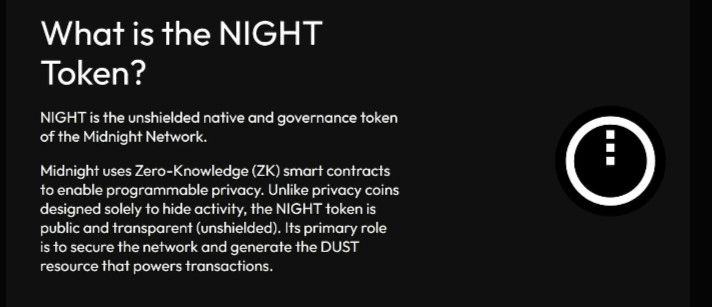 @MidnightNetwork $NIGHT #night
