
I’ve noticed something interesting about the way privacy is discussed in the Web3 world. On one side, people talk about transparency as one of blockchain’s greatest strengths. Public ledgers allow anyone to see transactions, verify activity, and confirm that systems are operating as expected. On the other side, there is a growing concern that too much transparency can expose sensitive information.
Financial activity, identity patterns, and organizational behavior can all become visible in ways that were never intended. That tension between openness and confidentiality is what made me curious about Midnight Network and its idea of what it calls rational privacy.
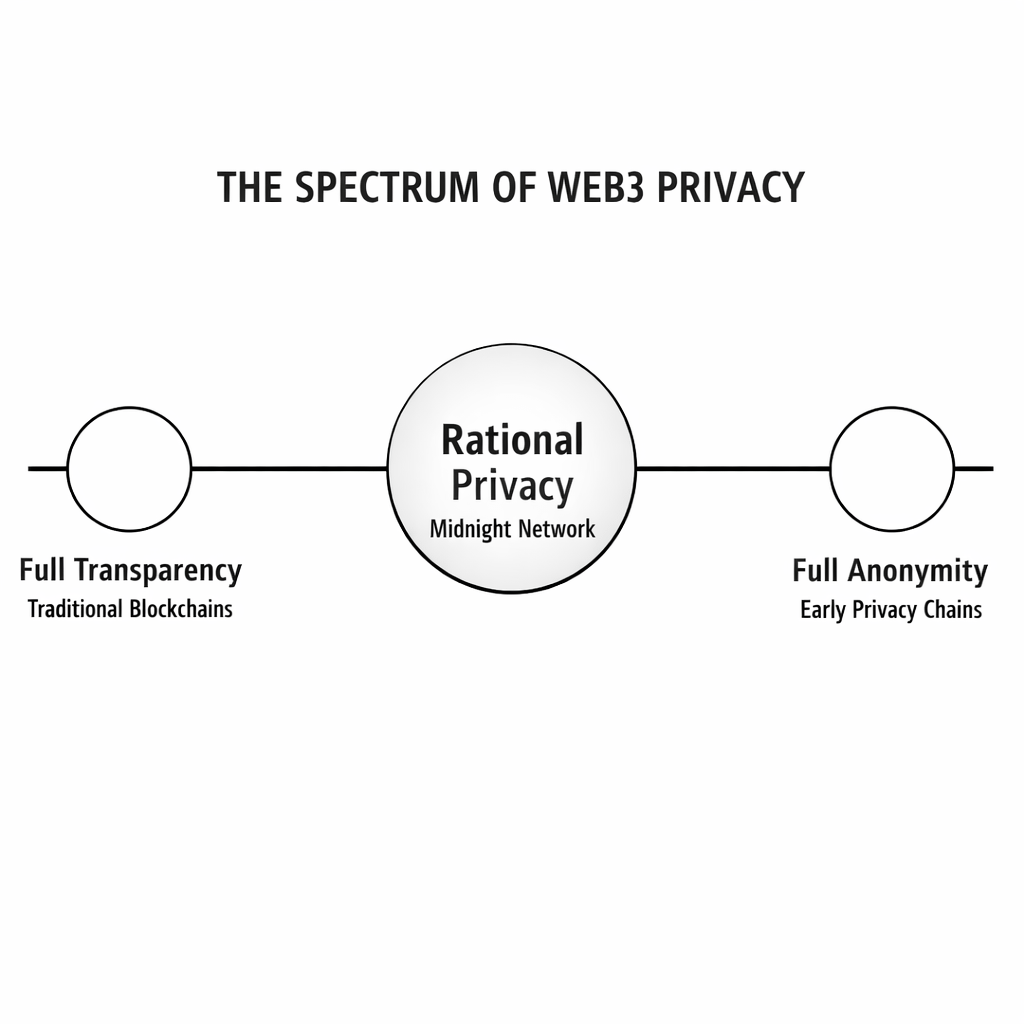
At first glance, the concept sounds straightforward. Rational privacy suggests a balance between transparency and confidentiality rather than choosing one extreme over the other. Instead of making everything public or everything hidden, the system attempts to reveal only the information that actually needs to be verified.
The more I thought about it, the more the idea began to make sense.
Traditional blockchains lean heavily toward transparency. Every transaction, wallet interaction, and smart contract event can often be viewed on public explorers. This openness is valuable for auditing and trust. Anyone can independently confirm that the system is behaving according to its rules.
But transparency has limits.
For individuals and organizations using blockchain systems in the real world, exposing every financial interaction may not always be practical. Businesses negotiating contracts, institutions handling sensitive data, or individuals protecting their financial privacy may not want every detail of their activity permanently visible.
Historically, privacy-focused blockchains attempted to solve this problem by hiding most transaction information entirely. While that approach protects confidentiality, it can create new concerns. Regulators, businesses, and institutions sometimes struggle to interact with systems that reveal almost nothing about how transactions occur.
This is where the idea of rational privacy inside Midnight Network starts to look different.
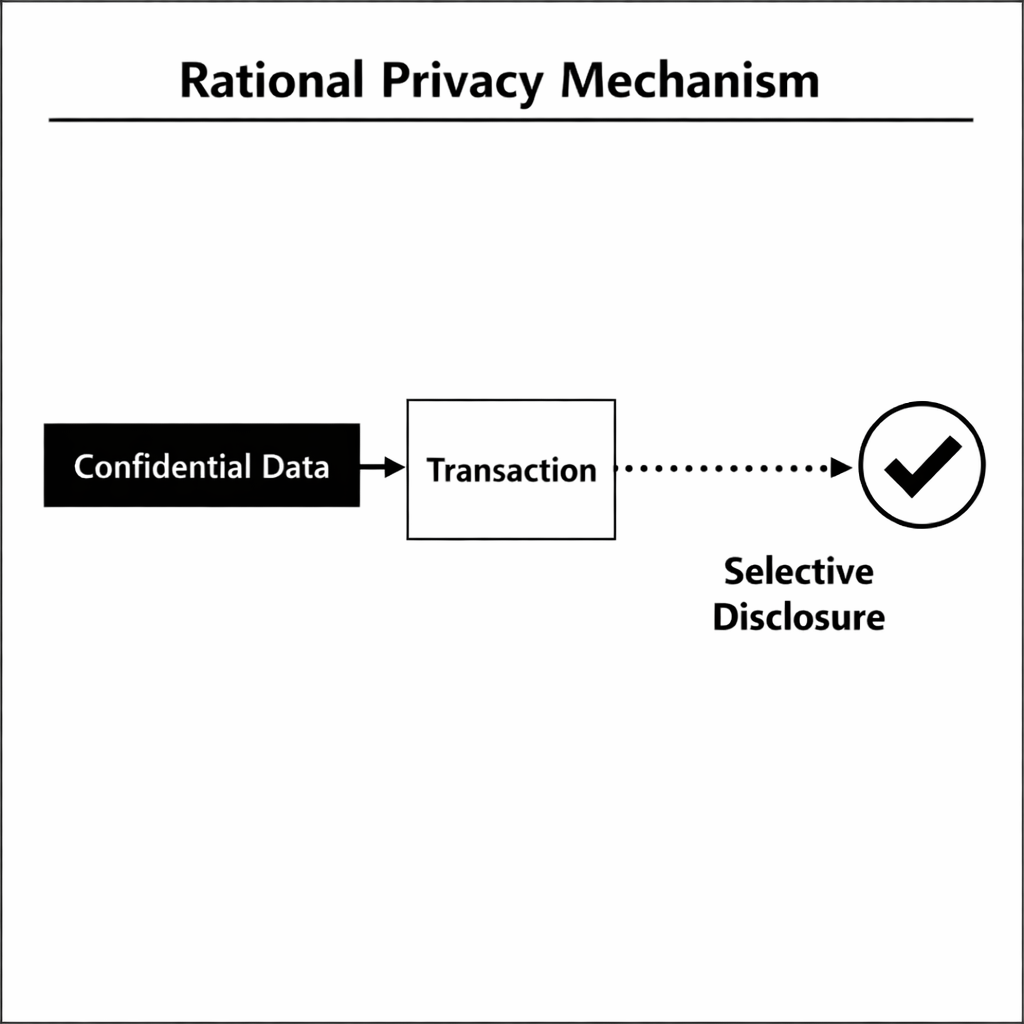
Instead of treating privacy as a binary choice, the architecture attempts to allow selective disclosure. Transactions can remain confidential while still allowing specific elements to be verified when necessary. A network participant might prove that a transaction meets certain rules without revealing all the underlying details.
From my perspective, this approach reflects a growing realization inside Web3 infrastructure.
Pure transparency works well for open networks, but many real-world applications require some level of confidentiality. Financial systems, supply chains, and enterprise platforms often rely on data that cannot simply be exposed on public ledgers.
Still, I try to approach these ideas with a healthy amount of caution.
Balancing transparency and privacy is not a trivial technical problem. Systems that hide too much information can become difficult to audit. Systems that reveal too much information can undermine the privacy they aim to protect. Designing infrastructure that navigates this balance requires careful cryptographic design and thoughtful governance.
There is also the question of adoption.
Privacy-focused infrastructure often faces challenges when integrating with existing blockchain ecosystems. Developers must learn new tools, institutions must understand new compliance frameworks, and users must trust systems that operate differently from the transparent ledgers they are accustomed to.
That said, the direction Midnight Network appears to explore feels increasingly relevant.
Web3 is slowly moving beyond purely experimental environments and into areas where institutions, enterprises, and individuals expect infrastructure to support real economic activity. In those contexts, privacy is not just a feature; it becomes a requirement for many types of applications.
What interests me most about Midnight Network is that it does not frame privacy as opposition to transparency. Instead, it attempts to redefine how those two ideas interact. Transparency remains possible where verification is needed, while confidentiality protects the information that should remain private.
Whether rational privacy ultimately becomes a common design principle in Web3 is still uncertain. Infrastructure ideas often take years to mature before they become widely adopted.
For now, I see Midnight Network less as a final solution and more as an exploration of how blockchain systems might evolve beyond the early debate between full transparency and full anonymity. As Web3 continues to intersect with real-world systems, the ability to balance those two forces may become one of the most important design challenges in decentralized technology.