
The Moment Before Confidence
Anyone who has used a system handling sensitive information knows the feeling. Its not dramatic just a brief pause before clicking confirm. A quick double check of the summary. A passing thought: will this work the way I expect.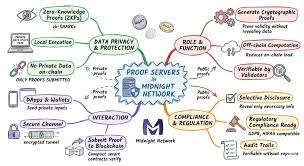
This hesitation isnt really about technology. Its psychological. Users are quietly assessing whether the infrastructure behind the screen deserves their trust.
In decentralized networks these moments happen constantly because responsibility sits more directly with users. Unlike traditional banking interfaces that hide complexity behind polished surfaces blockchain systems expose their mechanics: transaction fees confirmations wallet interactions. When these systems are clear and predictable users adapt quickly. When confusing hesitation becomes habit.
This is where Midnight Network becomes interesting. Built by Input Output Global it tackles a persistent design challenge: how to offer both privacy and regulatory compliance without overwhelming people. The network isnt simply about hiding data. Its about letting participants interact confidently knowing sensitive information stays protected while rules are verifiably followed.
What Makes Midnight Different
Midnight relies on zero knowledge proof technology. In theory zero knowledge proofs let one party prove something is true without revealing the underlying information. A user could demonstrate compliance with financial regulations for instance without exposing transaction details.
From a systems perspective this solves a coordination problem. Public blockchains prioritize transparency but full visibility creates privacy risks for individuals and organizations alike. Midnight treats data as a controlled resource rather than permanent public record. Verified information stays selectively private useful for confidential applications like compliance identity verification and privacy preserving smart contracts.
But theory and human behavior rarely align neatly.
Where Systems Lose People
Even thoughtful cryptographic design can confuse users. Privacy mechanisms often add steps or unfamiliar terminology. First time users may find it counterintuitive that transactions can be validated without revealing details.
This creates a gap between mathematical certainty and human intuition. People trust what they can see. When information is deliberately hidden even for good reasons some feel uncertain. Others mistake privacy for anonymity assuming invisibility rather than controlled disclosure.
Trust rarely comes from reading technical documentation. It emerges gradually through repeated interactions that behave exactly as expected.
The Fragile Foundation of Trust
Consistency builds trust. When transactions always work as intended users internalize the systems logic. Hesitation fades.
But trust erodes quietly. If fees fluctuate unpredictably. If confirmation times vary. If privacy features introduce unexpected friction. Users develop workarounds or avoid certain functions entirely. Over time these small adaptations reshape how the network actually operates.
Midnights success will depend not just on cryptography but on how seamless its workflow feels during everyday use.
Three Principles for Sustaining Confidence
First: Predictability. Users must understand how transactions behave under normal conditions. Privacy features shouldnt introduce uncertainty about fees timing or validity. A consistent system reduces mental load and strengthens trust.
Second: Comprehensible transparency. Even in privacy focused environments people need to grasp whats happening. This doesnt mean exposing sensitive data but it does mean presenting system logic clearly through interfaces summaries and feedback. Without this confidence erodes.
Third: Reliability at scale. Networks may work smoothly for small transactions but falter under high volume or institutional use. Midnights privacy mechanisms must remain efficient as complexity grows.
Different Users Different Signals
Participants experience the network differently.
Novice users care about safety and clarity: is my transaction secure. Did it go through. Will my data stay private.
Advanced traders focus on execution speed fee structures and liquidity. Privacy matters only if it doesnt slow them down.
Institutional operators prioritize auditability compliance and integration. Midnights selective disclosure appeals to them but only if practical verification tools exist.
Each group interprets trust through different signals.
Beyond the Hype Cycle
Early adoption often gets measured by token activity market attention or announcements. These generate momentum but reveal little about infrastructure resilience. Long term stability depends on node reliability developer engagement and consistent protocol performance.
Many blockchain projects thrive during speculative cycles then falter under real operational pressure. Midnights true test will come when its privacy preserving infrastructure is embedded in everyday workflows not occasional experimentation.
How Design Shapes Behavior
Digital systems subtly shape how people act. Fee structures influence transaction sizes. Interface layouts guide what people check before confirming. Confirmation mechanics affect how quickly people decide.
A well designed privacy layer could normalize verifiable proofs over raw data disclosure. Poor design might push users toward simpler less secure alternatives undermining the networks purpose.
The Risk of Elegance Over Usability
Theres a common pitfall: prioritizing theoretical elegance over practical use. Overly complex privacy mechanisms discourage adoption. Incompatible verification processes drive institutions back to centralized systems. Difficult integration stalls developer growth even when the underlying technology is strong.
These misalignments emerge slowly as users quietly adapt to avoid friction.
Infrastructure and Trust
All infrastructure financial technological social rests on trust. Midnight Networks design tries to balance competing needs: transparency for verification privacy for real world application. Zero knowledge proofs provide the mathematical foundation.
But long term success depends on human behavior. On whether users after hundreds of quiet interactions stop hesitating and act confidently within the system.
The architecture matters. But what finally builds trust is the accumulated weight of transactions that simply work predictably privately and without second thought.
@MidnightNetwork #night $NIGHT
