
Whenever oil prices climb, the traditional economy immediately feels the pressure. Transportation costs rise, production becomes more expensive, and supply chains grow more fragile.
But in a future where robots become the primary global workforce, a more important question emerges: what is the real fuel of the robot economy?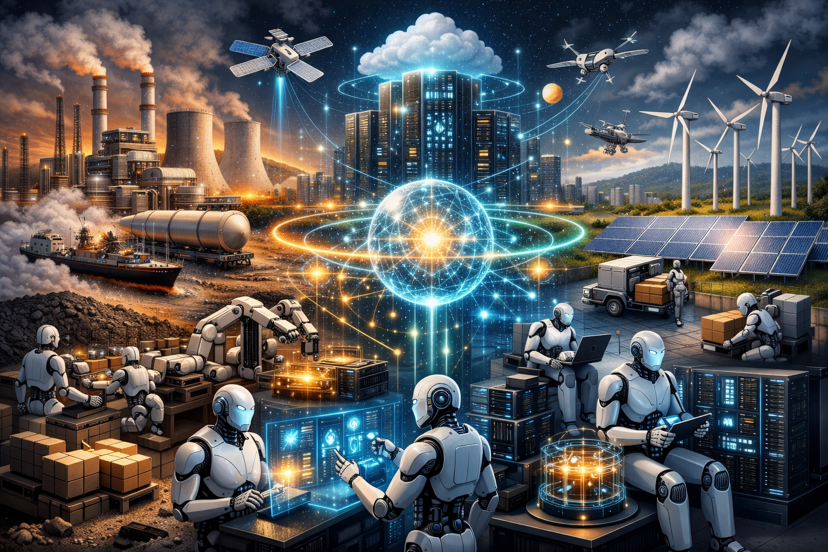
In today’s economic system, energy and production infrastructure are still largely organized in centralized models. This makes resource allocation less flexible and highly vulnerable to fluctuations in energy prices. If robots scale into a massive global workforce, this issue will become even more visible. Millions of robots will require electricity to operate, data to learn, and compute power to make decisions. If each organization runs robots in isolated systems, the waste of energy and resources could be enormous.
Imagine a world where delivery robots, agricultural robots, and maintenance robots operate across cities and farms. Some robots may even maintain solar infrastructure or help harvest new forms of energy. These robots would not operate independently. Instead, they would connect to a shared network where skills, data, and computing resources are distributed across the system. When one robot learns how to repair a device or optimize a process, that capability could propagate across the entire network.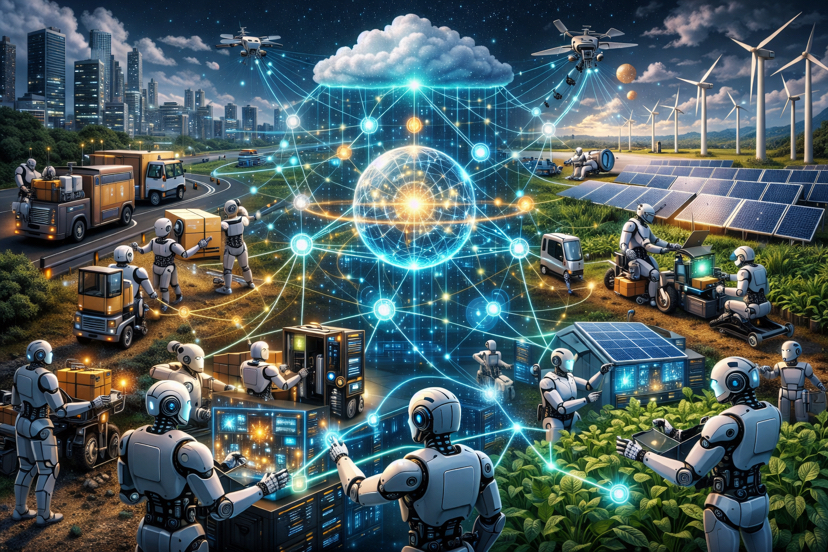
This leads to a new concept called the machine economy. It is a system where robots not only perform work but also participate directly in economic activities. In such a system, energy and compute are no longer closed resources. They become part of an open marketplace where both humans and machines can supply and utilize resources.
This is the vision that Fabric Protocol is building. Fabric creates a decentralized infrastructure where robots, AI, and humans can coordinate through a shared network. Robots can receive tasks, access computing resources, and utilize energy from distributed sources across the network.
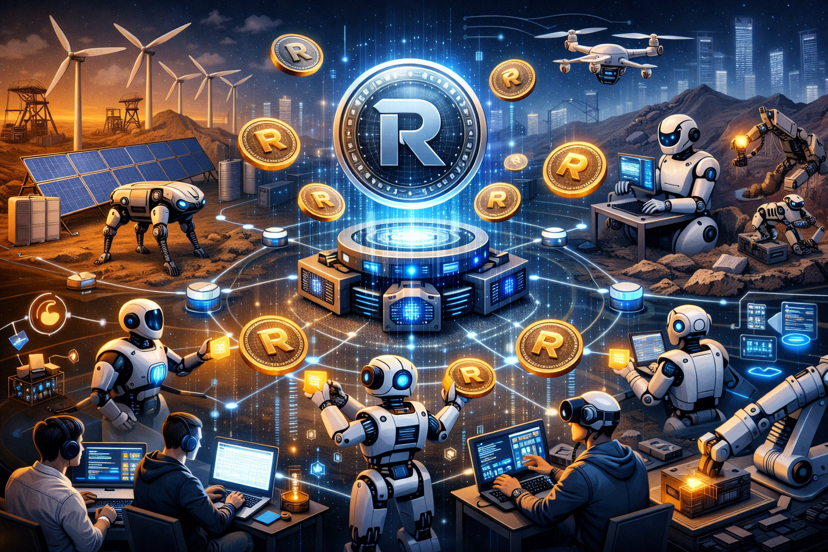
In this model, robots are no longer just tools of automation. They become economic agents capable of accessing energy, utilizing data, and exchanging value directly within the network. These transactions can be settled using the ROBO token, allowing robots and network nodes to exchange value seamlessly. Humans can contribute data, computing power, or develop robotic skills and receive rewards from the network.
As more robots and developers join, the network could evolve into a shared global robotics infrastructure. Such a system could optimize the use of energy and resources at planetary scale.
Rising oil prices constantly remind us that energy is the foundation of every economy. But in the robot era, the real question may not simply be how much energy we have. It may be whether we have an economic system intelligent enough to coordinate energy, data, and labor across both humans and machines.
Throughout economic history, every era has been shaped by a new form of energy infrastructure or coordination system. Oil powered the industrial age. Electricity powered the digital age. The robot economy may require something different. It may require a network capable of coordinating energy, data, and intelligence at planetary scale.
@Fabric Foundation #ROBO $ROBO #Fualnguyen
