
As we move through 2026, the intersection of Artificial Intelligence and physical hardware is no longer a concept limited to science fiction. We are witnessing the birth of a "Robot Economy," where autonomous machines operate as independent economic agents. At the heart of this transformation is the Fabric Foundation (@FabricFND), a non-profit dedicated to building the open-source infrastructure required for this new era.
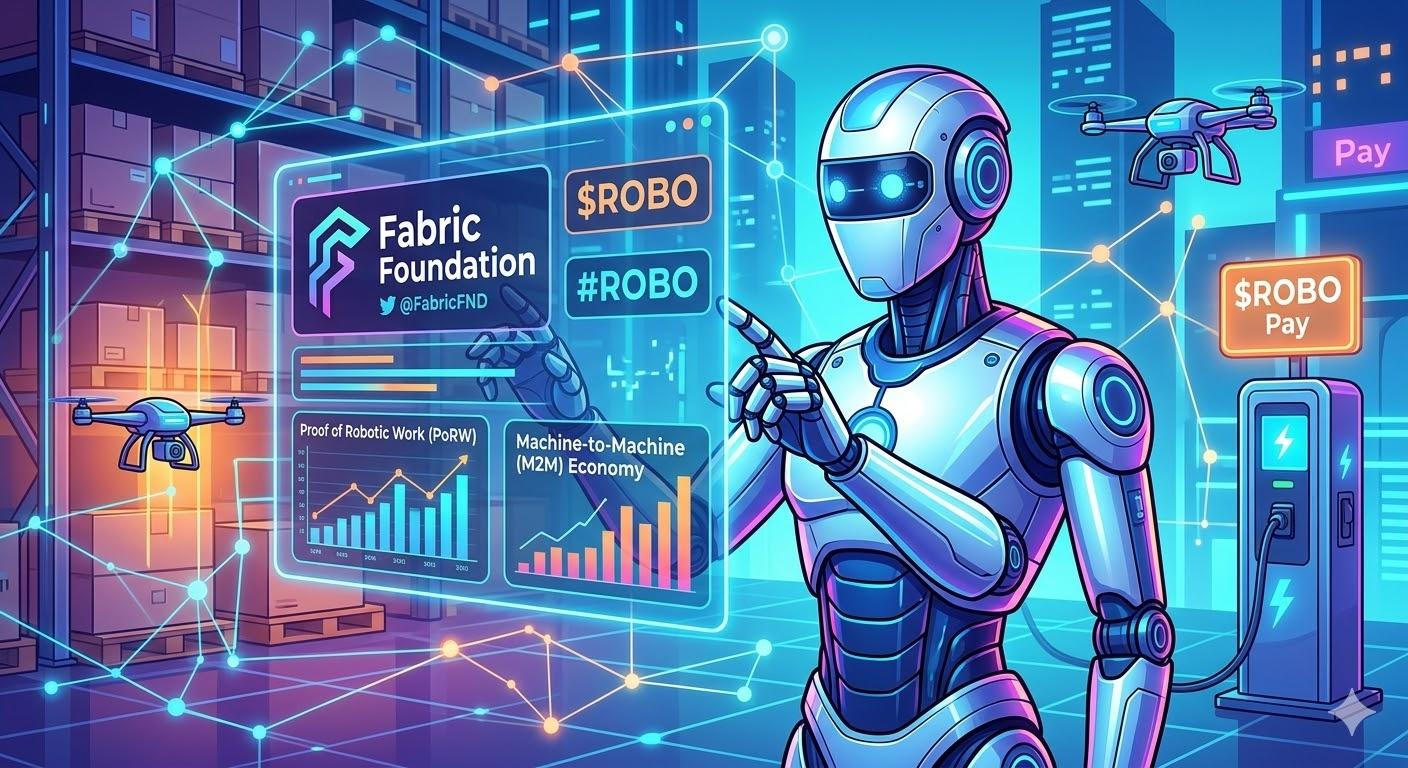
Solving the "Silo" Problem
Historically, robotics has been a closed-loop industry. A robot from one manufacturer rarely communicates with a robot from another, and they certainly don't share a unified payment or identity system. Fabric Foundation is changing this by creating a decentralized coordination layer.
Through their protocol, robots are granted:
On-chain Identity: A persistent, verifiable "passport" that tracks performance and permissions.
Autonomous Payments: The ability for machines to pay for their own charging, maintenance, and data processing without human intervention.
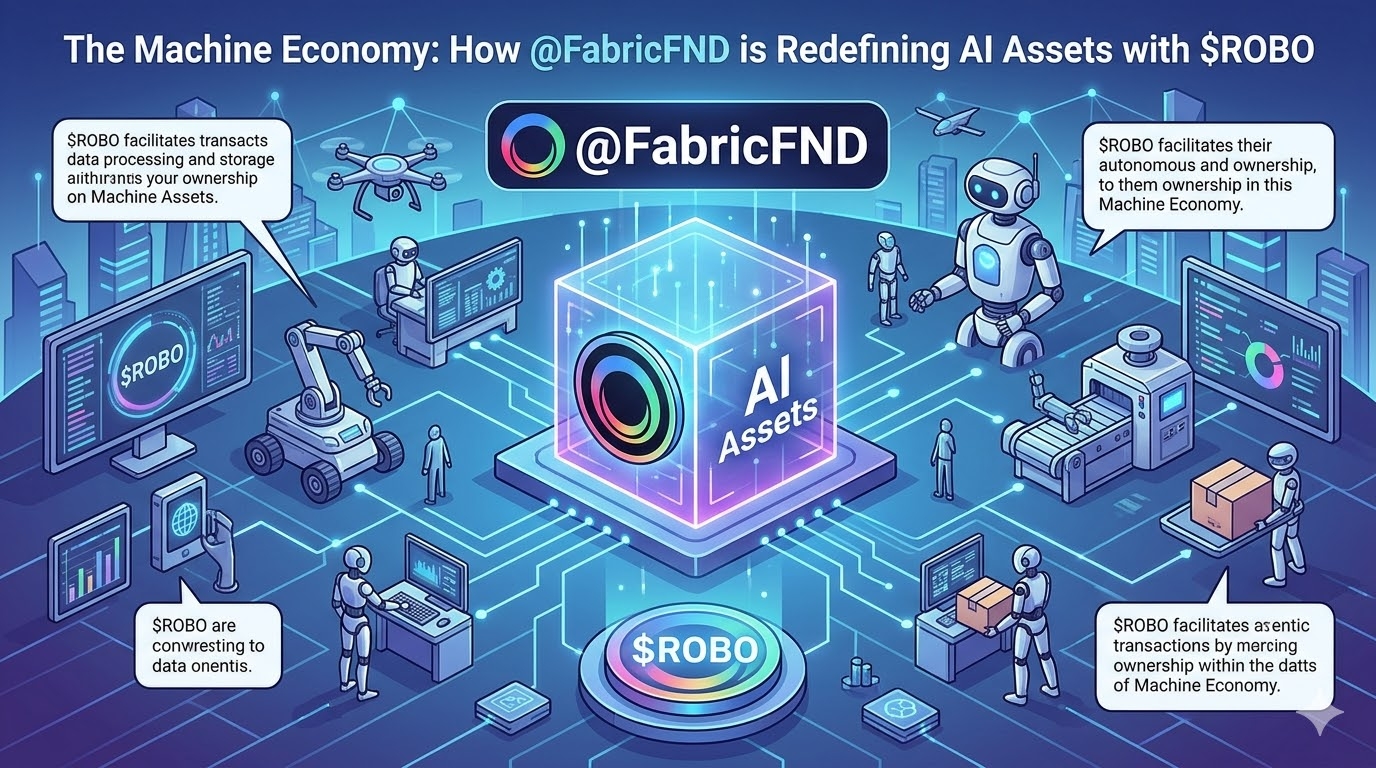
Verifiable Proof of Work: A cryptographic guarantee that a physical task was actually completed.
The Utility of $ROBO
The ecosystem is powered by its native token, $ROBO. Unlike speculative assets, $ROBO serves as the functional "fuel" for the network:
Network Fees: All transactions, from identity registration to task settlement, are processed in $ROBO.
Work Bonds: Robot operators stake $ROBO as a performance bond to ensure reliability and trust within the network.
Governance: Token holders help shape the operational policies and fee structures of the foundation.
Looking Ahead
With the recent successful launch on Base and the transition toward a dedicated Machine-Native Layer 1, the momentum behind @FabricFND is undeniable. By providing the "pipes" for the global robotic labor market, the project is positioning itself as a foundational pillar of Web3 and AI integration.
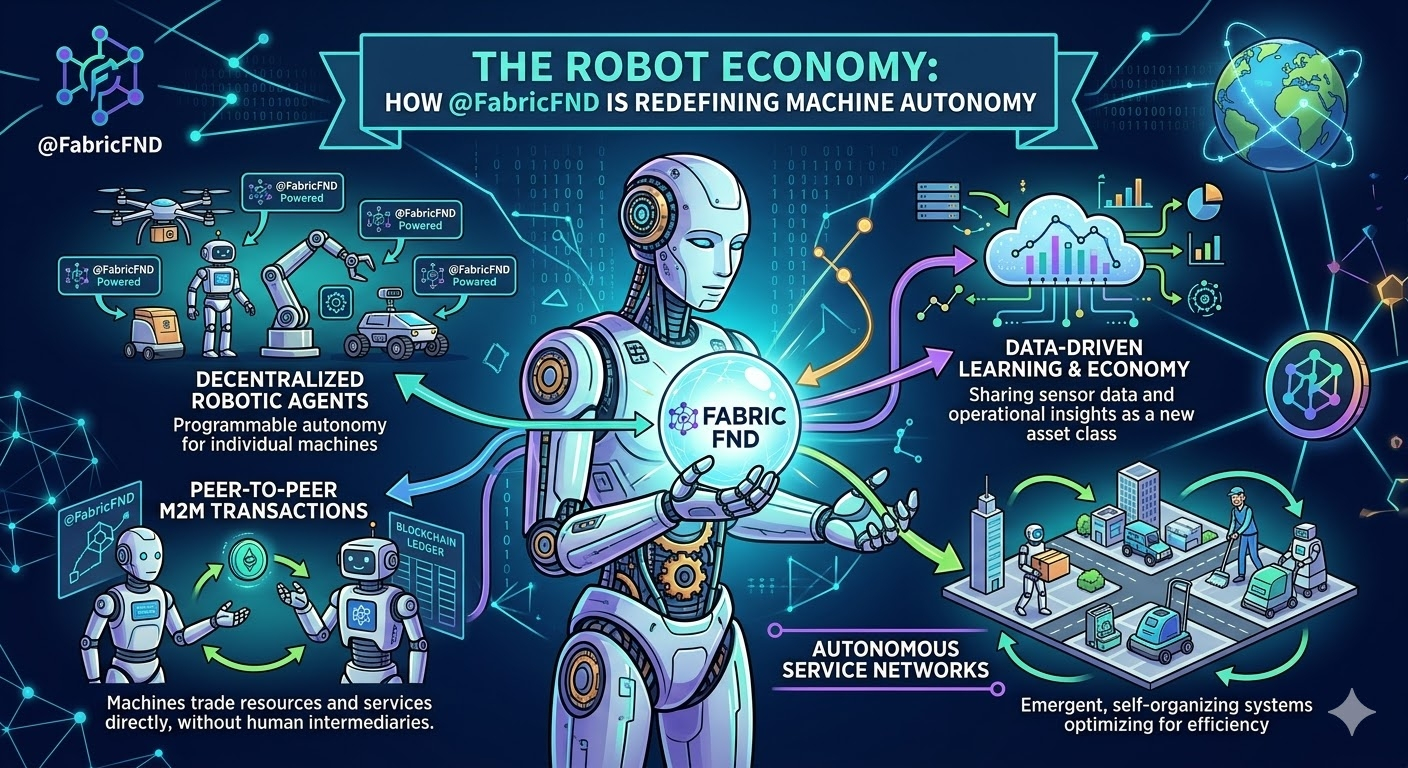
The future isn't just about robots doing our chores; it's about robots having the infrastructure to participate in a fair, open, and decentralized economy.