
As blockchain technology continues to evolve, new digital assets are emerging to address the growing demand for decentralized, intelligent, and scalable ecosystems. MIRA represents one such innovation—designed to support a network where artificial intelligence, data, and decentralized infrastructure can operate together efficiently. By combining blockchain transparency with advanced digital services, MIRA aims to create a foundation for a more connected and intelligent decentralized economy.
At its core, MIRA focuses on enabling decentralized intelligence networks. In today’s digital environment, data and AI services are often controlled by centralized platforms, limiting accessibility and raising concerns about privacy, ownership, and transparency. MIRA seeks to address these issues by providing a blockchain-based ecosystem where users, developers, and organizations can securely share, access, and utilize data while maintaining control over their digital assets.
The MIRA token functions as the economic layer of this ecosystem. It facilitates transactions, incentivizes network participants, and supports various services built within the platform. Participants can use $MIRA to access AI-powered tools, pay for decentralized computing resources, or reward contributors who provide valuable datasets, algorithms, or infrastructure support. By aligning incentives across the network, MIRA encourages collaboration and sustainable ecosystem growth.
A key component of the MIRA ecosystem is its focus on data ownership and value distribution. In traditional data-driven industries, users often generate valuable information without receiving direct benefits from it. MIRA introduces a model where individuals and organizations can monetize their data securely while maintaining control over how it is shared and used. Blockchain technology ensures transparency in data transactions and helps protect the integrity of information within the network.
Developers play a central role in the growth of the MIRA platform. The ecosystem supports the creation of decentralized applications (dApps), AI models, and intelligent services that can operate on a trustless infrastructure. With open frameworks and developer-friendly tools, builders can design applications that integrate machine learning, data analysis, and automated processes directly into decentralized networks. This flexibility opens the door to innovation across multiple sectors, including finance, healthcare, logistics, and digital services.
Scalability and security are essential to the long-term success of any blockchain ecosystem, and MIRA is designed with both in mind. The platform emphasizes efficient transaction processing, strong encryption, and compatibility with broader blockchain networks. This allows the ecosystem to expand as more users, developers, and services join the network while maintaining reliability and performance.
Another important feature of the MIRA ecosystem is community governance. Token holders have the opportunity to participate in decision-making processes that shape the platform’s future. Through decentralized governance mechanisms, the community can propose upgrades, vote on improvements, and support initiatives that enhance the overall ecosystem. This approach ensures that the development of MIRA remains aligned with the interests of its users and contributors.
The potential applications of MIRA extend across a wide range of industries. Decentralized AI marketplaces could allow organizations to access machine learning models on demand. Businesses could utilize the network for secure data sharing and collaborative analytics. Meanwhile, individuals could participate in data economies where they retain ownership of their information while benefiting from its value.
In summary, MIRA aims to bridge the gap between blockchain technology, artificial intelligence, and decentralized data systems. By providing an infrastructure where intelligence, data, and digital services can interact securely and transparently, the project seeks to contribute to the development of a more open and collaborative digital economy. As the demand for decentralized intelligence continues to 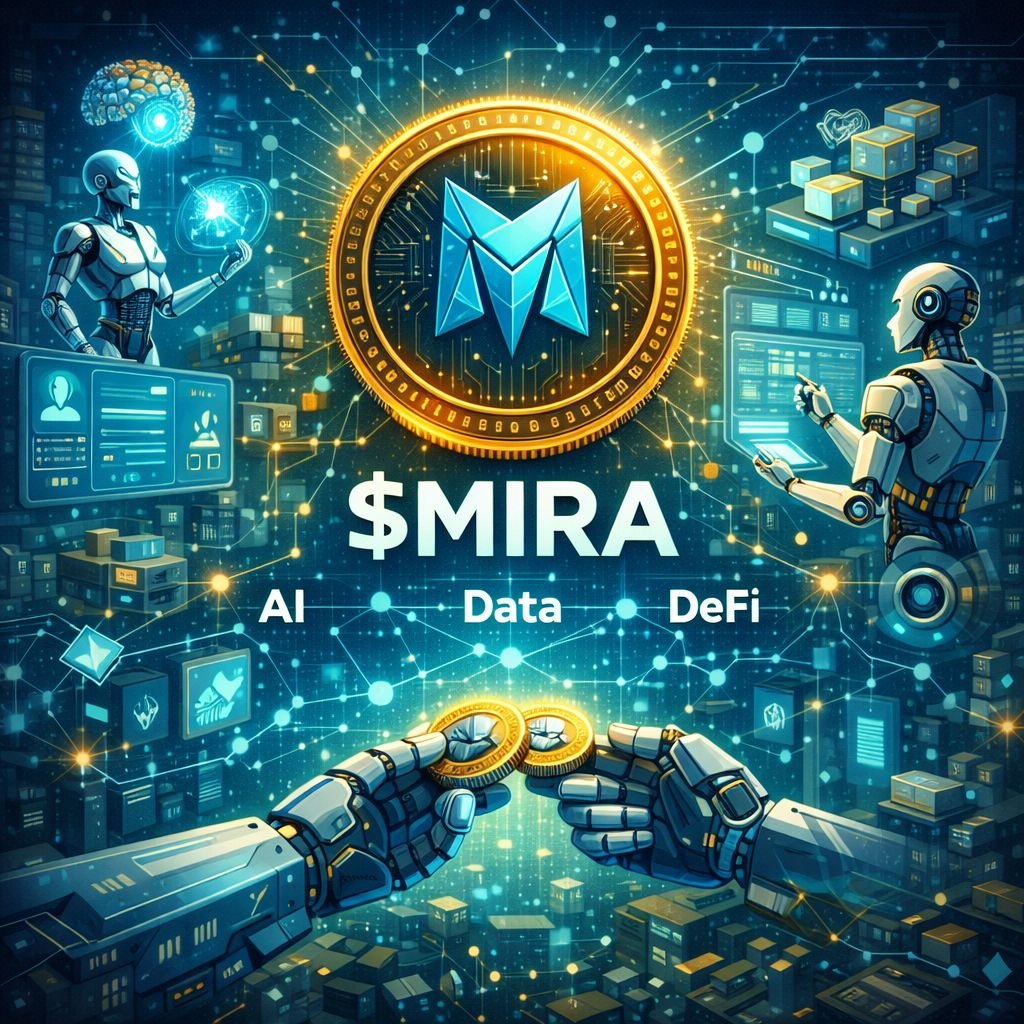 grow, ecosystems like $MIRA may play an important role in shaping the future of technology and digital innovation.
