
What I like about veROBO is that it gives Fabric Protocol a more thoughtful kind of governance. A lot of token governance models feel routine after a while. Lock tokens, vote, move on. veROBO seems more purposeful than that. The more I look at it, the more it feels like Fabric is trying to build a system where governance helps shape how a machine-driven network should grow, verify actions, and stay accountable. That makes the topic interesting to write about, because it is not just about voting power. It is about how rules are set for a network that wants to connect payments, identity, verification, and coordination through ROBO.
That starting point matters. Fabric’s own blog describes ROBO as the network’s core utility and governance asset, not a token waiting around for a future use case. It is tied to fees for payments, identity, and verification, with Fabric planning to launch on Base first and work toward its own L1 over time. That gives the governance discussion some weight. veROBO is sitting on top of an operating system idea, not just a voting wrapper.
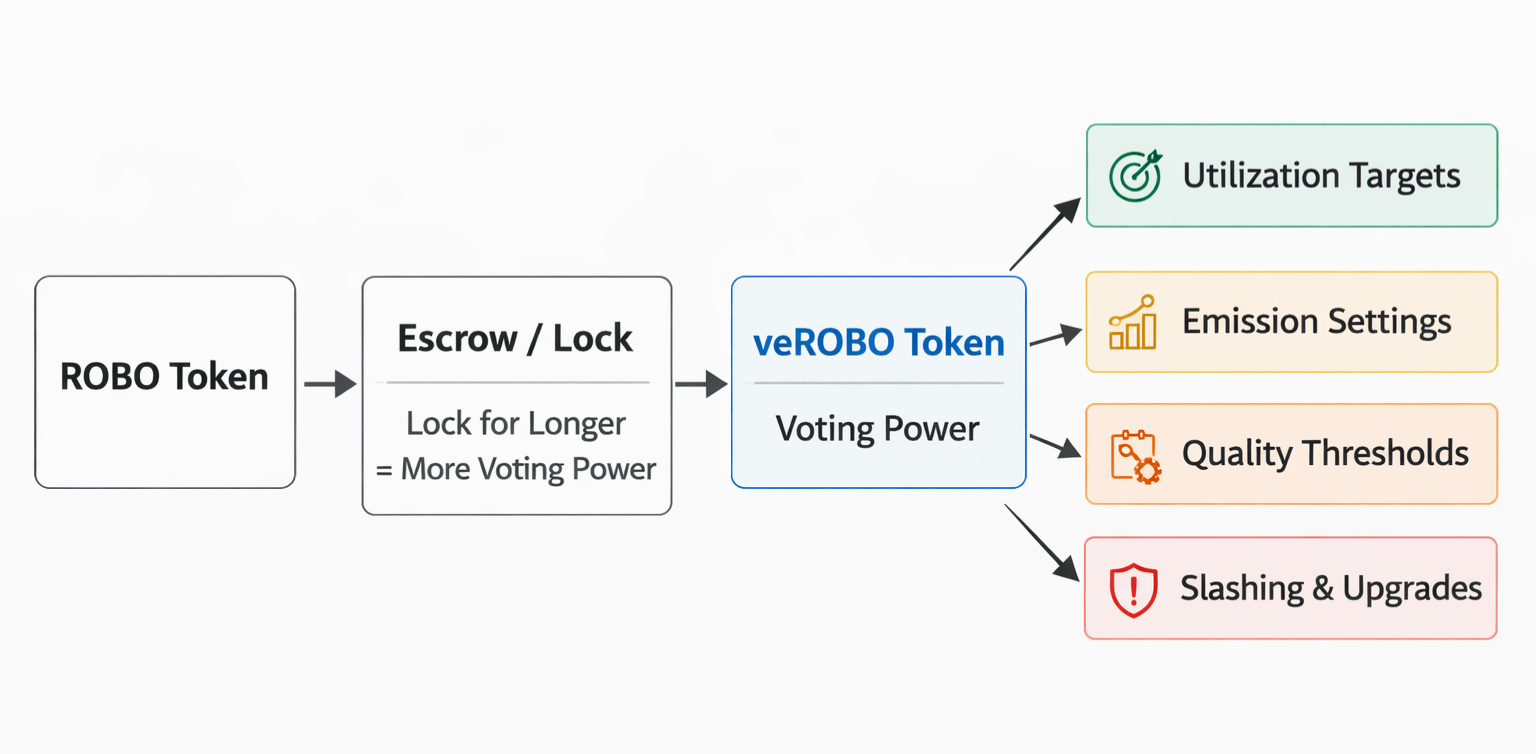
The mechanic itself is easy to follow. Holders escrow ROBO, receive veROBO, and get more voting weight when they lock for longer. That part is familiar. The important part is what the voting is meant to reach. Fabric’s whitepaper says veROBO is for onchain voting and signaling on limited protocol parameters and improvement proposals, including target utilization, emission sensitivity, quality thresholds, verification and slashing rules, and upgrade proposals. That is a much more practical list than the usual vague governance language.
This is where veROBO starts to feel different. Fabric’s emission design is not random. The whitepaper describes a controller that reacts to utilization and service quality, and it even suggests initial reference values like a 0.70 target utilization rate and a 0.95 quality threshold. So when governance can signal on those kinds of parameters, it is not just debating optics. It is potentially shaping how strict the network is, how fast incentives adjust, and how much poor-quality performance should matter. That is more interesting than governance for show.
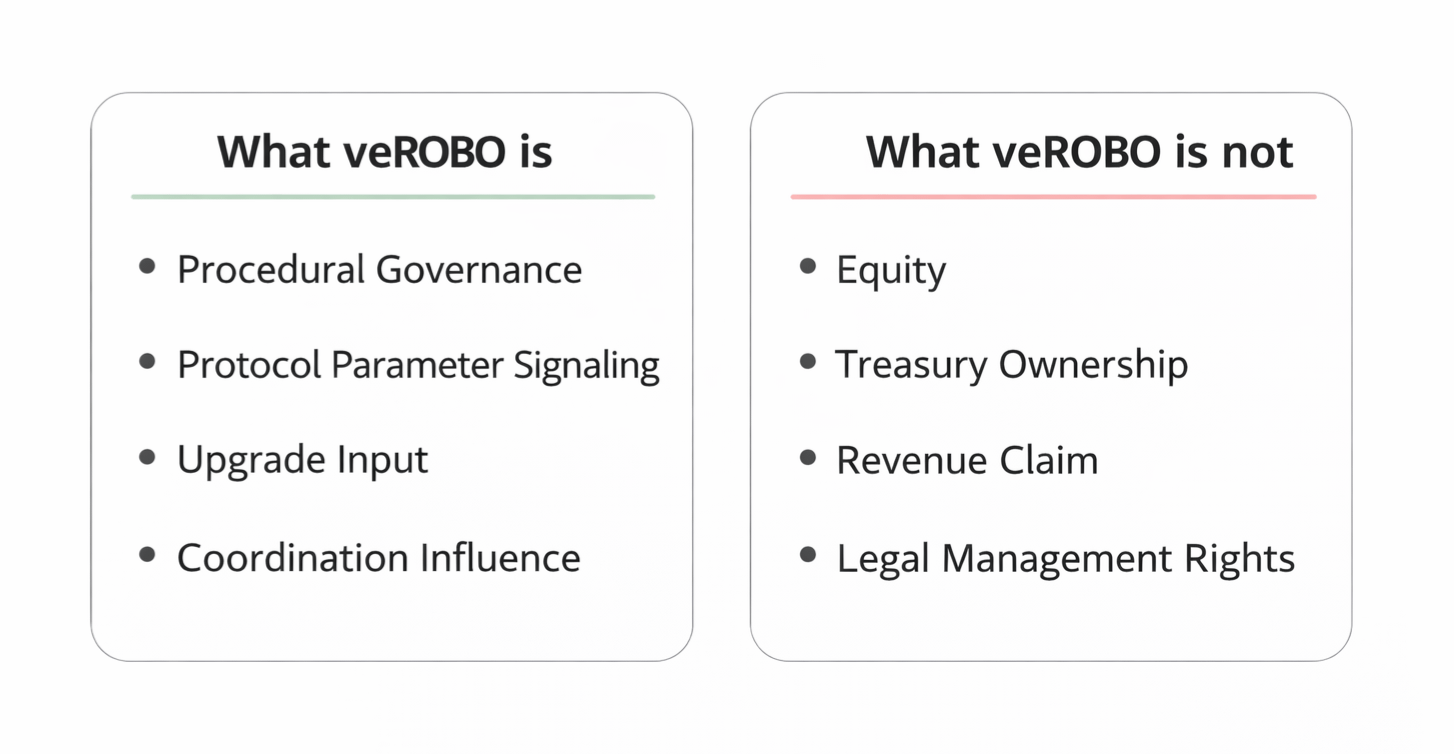
The accountability side is just as important. Fabric uses challenge-based verification, and the whitepaper says proven fraud can trigger slashing of 30% to 50% of the earmarked task stake. That makes the governance layer feel closer to rule-setting for behavior than simple token-holder participation. At the same time, Fabric draws a clear boundary around what veROBO is not. These rights are procedural. They do not give management rights in a legal entity, and they do not create claims on treasury assets, revenues, or distributions. I actually think that makes the design easier to take seriously. It keeps the conversation on protocol operations instead of turning governance into pretend equity.
The most useful part, at least to me, is that Fabric does not act like every hard governance question is already solved. The roadmap points to 2026 work around robot identity, task settlement, verified contribution incentives, broader data collection, and later progress toward a machine-native Fabric L1. But the governance section is still open on some real design choices, including how to define sub-economies, how the initial validator set should work, and how success should be measured beyond revenue alone. That honesty helps. It makes veROBO feel early, but real.
My takeaway is positive, but grounded. veROBO looks more meaningful than the average lock-and-vote system because Fabric is trying to use governance to shape trust, quality, and coordination in a machine economy. That is a harder job than ordinary token governance. It is also why the mechanism is worth watching closely. If Fabric gets this right, veROBO will matter not because it gives people votes, but because it helps define how a robot network is supposed to behave.