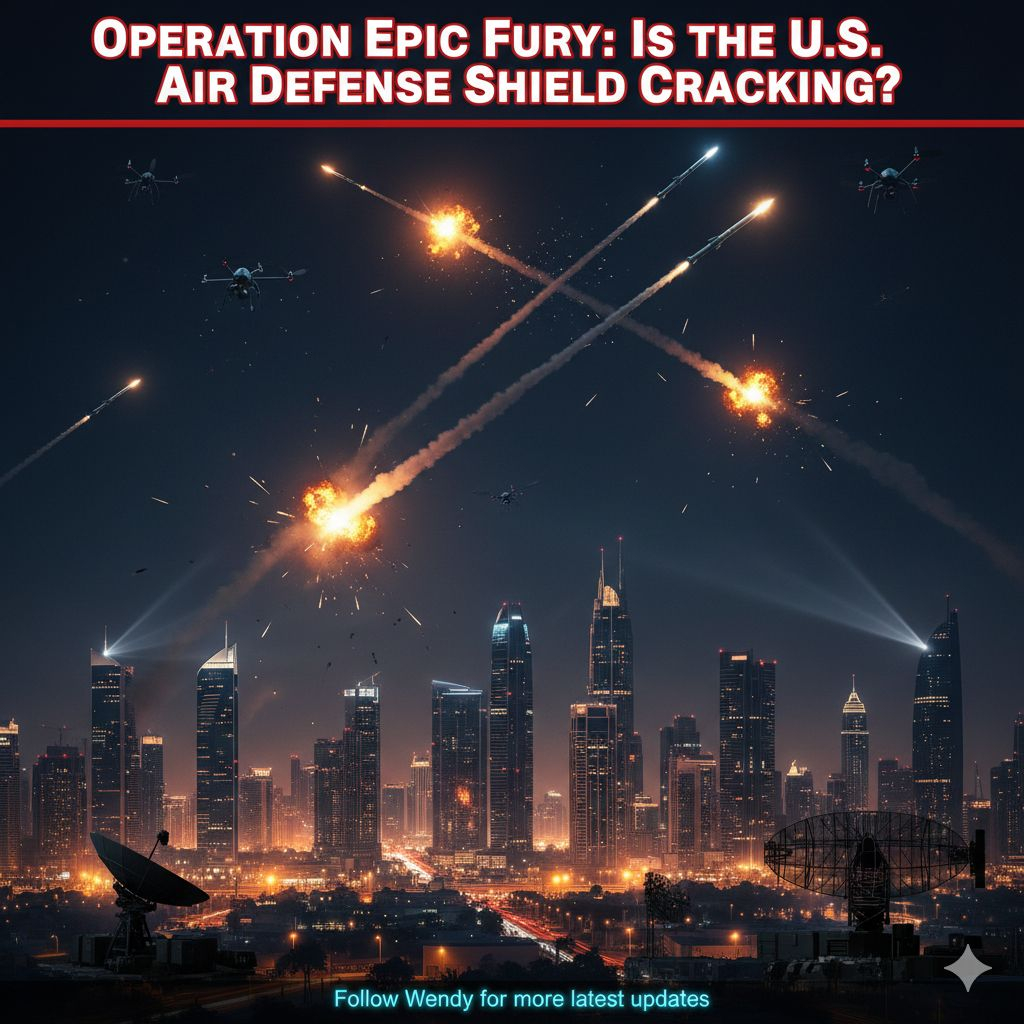
The Middle East has entered a new and dangerous chapter. Following the massive, coordinated strikes by the U.S. and Israel on Iranian nuclear and leadership sites this weekend, Tehran has launched a "crushing response." While the Pentagon reports that U.S. operations remain unaffected, the sheer scale of the retaliation is raising urgent questions about the sustainability of regional air defenses.
The Saturation Challenge
Iran’s strategy is clear: overwhelm through volume. By launching massive swarms of low-cost "kamikaze" drones alongside ballistic missiles, Tehran is attempting to saturate sophisticated defense systems like the Patriot and THAAD.
While CENTCOM confirms that hundreds of threats were intercepted over the last 24 hours, the cost of defense is astronomical compared to the cost of the attack. We are seeing a "war of attrition" where the goal isn't just to hit a target, but to drain the interceptor stockpiles of the U.S. and its allies.
Impact Across the Gulf
The "umbrella" of protection is being tested like never before. While many missiles were neutralized, the secondary effects are becoming a major concern:
UAE: Interceptions over Abu Dhabi resulted in falling debris that tragically caused one civilian fatality and property damage.
Bahrain & Qatar: Authorities at the U.S. Navy’s Fifth Fleet HQ and Al Udeid Air Base issued "duck and cover" orders as sirens rang out across the region.
Kuwait: A drone strike at Kuwait International Airport caused minor injuries and disrupted one of the region's most vital travel hubs.
What This Means for the Market
The uncertainty is palpable. With Israeli Prime Minister Netanyahu claiming "many signs" that Supreme Leader Khamenei was killed in the strikes—a claim Iran dismisses as "mental warfare"—the region is on a knife-edge.
For the first time, we aren't just looking at a "limited strike" scenario. This is a broad campaign aimed at regime decapitation. As airspaces close and global energy supplies face potential disruption, the question is no longer if the U.S. can defend its assets, but for how long it can maintain this level of high-intensity defense against a desperate adversary.
The "Wild West" of the Middle East just got a lot more complicated.