

As artificial intelligence moves from a novelty to a necessity, the primary hurdle to its mass adoption is no longer performance, but the "reliability gap." While AI is becoming increasingly powerful, it remains a "black box" prone to hallucinations and bias. Mira Network is positioning itself as the foundational infrastructure for the convergence of Web3 and AI by building a decentralized trust layer that ensures intelligence is not just accessible, but verifiable.
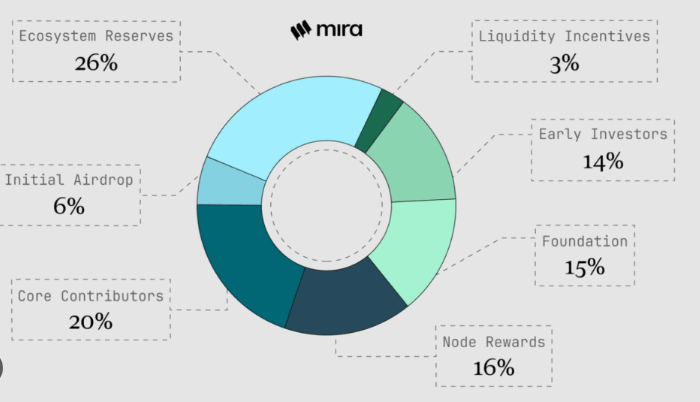
From my perspective, Mira’s most important contribution is treating verification as a core primitive. Instead of relying on centralized auditors or single-point oracles, the network distributes validation across decentralized participants. This ensures that AI-generated outputs are not blindly trusted but actively verified through structured mechanisms aligned with incentives and consensus.
This matters deeply in Web3. A single faulty or manipulated AI output embedded in a smart contract can trigger irreversible on-chain consequences. By enabling decentralized verification, Mira introduces accountability into AI-driven execution environments.
One of the most compelling advantages of Mira's model is its commitment to long-term data integrity in a Web3 context. Verified outputs are attested with cryptographic certificates recorded on the blockchain, forming an immutable audit trail that can be referenced indefinitely. This is crucial for Web3 applications like decentralized finance (DeFi), autonomous agents, or oracle systems, where compliance, provenance, and tamper-proof records drive adoption. Imagine AI agents executing smart contracts or providing data feeds without the risk of manipulation—Mirai's infrastructure makes this verifiable reality, turning raw AI outputs into value-backed facts that fuel the decentralized economy.
One of the biggest concerns in AI is data privacy. Mira addresses this through its Sharding process. Because content is broken into entity-claim pairs and distributed randomly across the network, no single node operator can reconstruct the full dataset. This allows for the verification of sensitive information in fields like healthcare and finance without compromising the user’s original data.
When I look at the broader Web3 ecosystem, I see scaling solutions, modular chains, restaking layers, and cross-chain bridges. But very few protocols are directly addressing the trust gap between deterministic blockchain logic and probabilistic AI reasoning.
That’s why I see Mira as foundational infrastructure—not just an application, not just a middleware layer, but a trust framework for intelligent systems operating on-chain.
Mira Network is not just another AI project; it is the coordination layer that makes AI-driven economies viable. By providing the tools - such as the Mira SDK and the Mira Flows marketplace - developers can now integrate verified AI directly into their dApps.
In the age of intelligent machines, trust is the ultimate currency. By combining cryptography, economic incentives, and decentralized consensus, Mira Network is ensuring that as AI becomes more autonomous, it remains fundamentally accountable to the humans it serves.
@Mira - Trust Layer of AI $MIRA #Mira
