
@Fogo Official I was at my kitchen table at 11:47 p.m., radiator ticking, a metal spoon still in the sink from late tea. I’d just checked a claim page and saw an allocation of FOGO sitting in a fresh address. I wanted to move a small test amount to my everyday wallet before bed, but I hesitated—what actually happens when I press send?
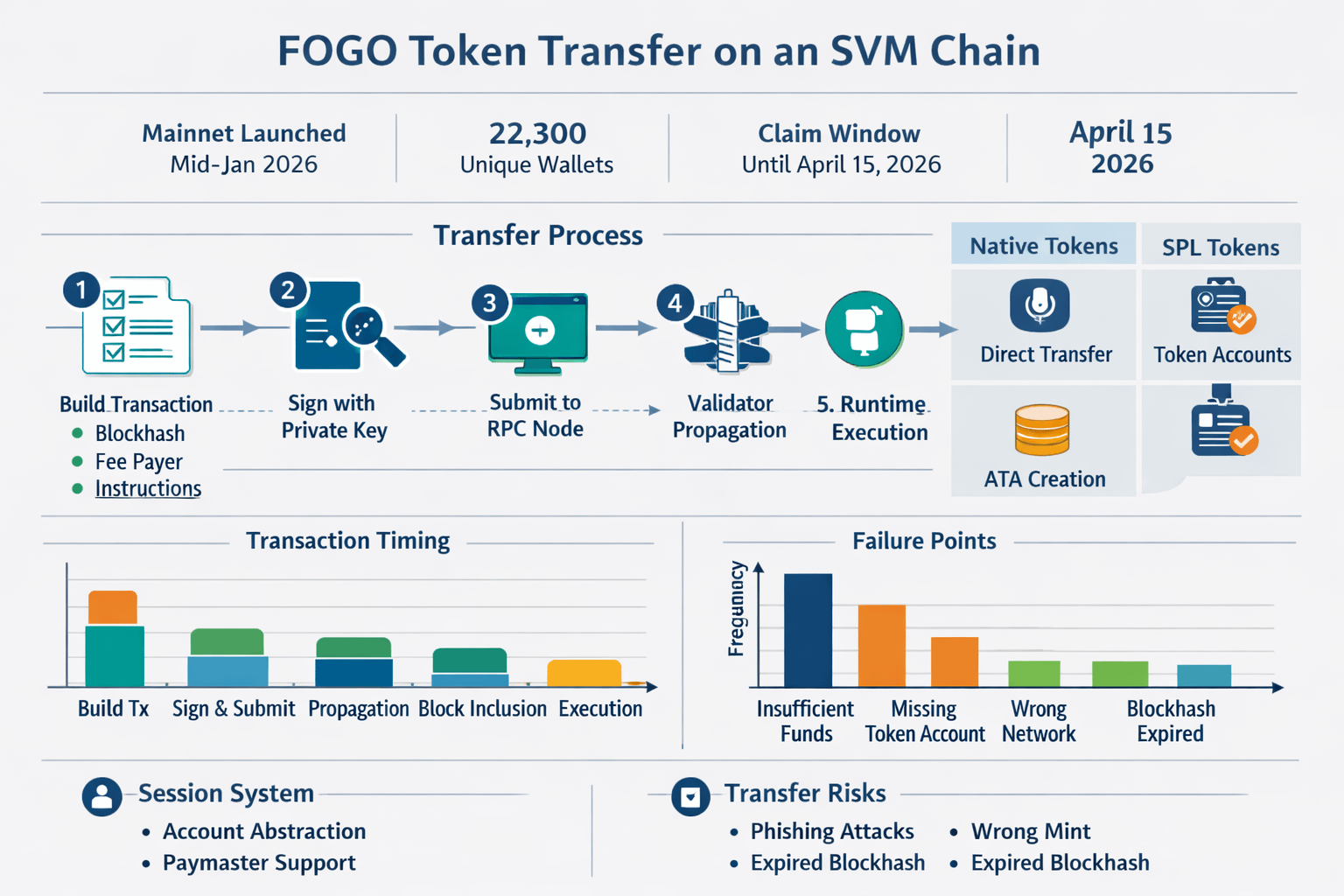
FOGO transfers are suddenly everywhere because Fogo’s mainnet and token distribution arrived in mid-January 2026, turning a testnet curiosity into something people had to use. Fogo’s own airdrop post says roughly 22,300 unique wallets received fully unlocked tokens, and the claim window stays open until April 15, 2026. That one detail alone explains the current flood of “first send” questions.
When I say “SVM chain,” I mean a Solana Virtual Machine style network where a transaction is an explicit bundle of instructions plus the accounts those instructions will touch. Because those account lists are known up front, the runtime can often execute non-overlapping transactions in parallel. Fogo is built to be SVM-compatible and emphasizes very short blocks and fast finality, so confirmation can feel immediate enough to change wallet habits.
A transfer begins in my wallet. The wallet selects the network, fetches a recent blockhash, and builds a transaction message with a fee payer and one or more instructions. If I’m sending native FOGO, the instruction is a straightforward debit and credit between two addresses. If I’m sending an SPL token, the instruction targets token accounts, not wallet addresses, because balances live in accounts tied to a specific mint.
That difference matters when the recipient has never held the token. If the destination token account doesn’t exist, the transfer can’t complete. Most wallets handle this quietly by adding an instruction to create the associated token account first, then issuing the transfer. It feels like one click, but it can be two state changes, and both can fail if my native balance is too low for fees or account creation.
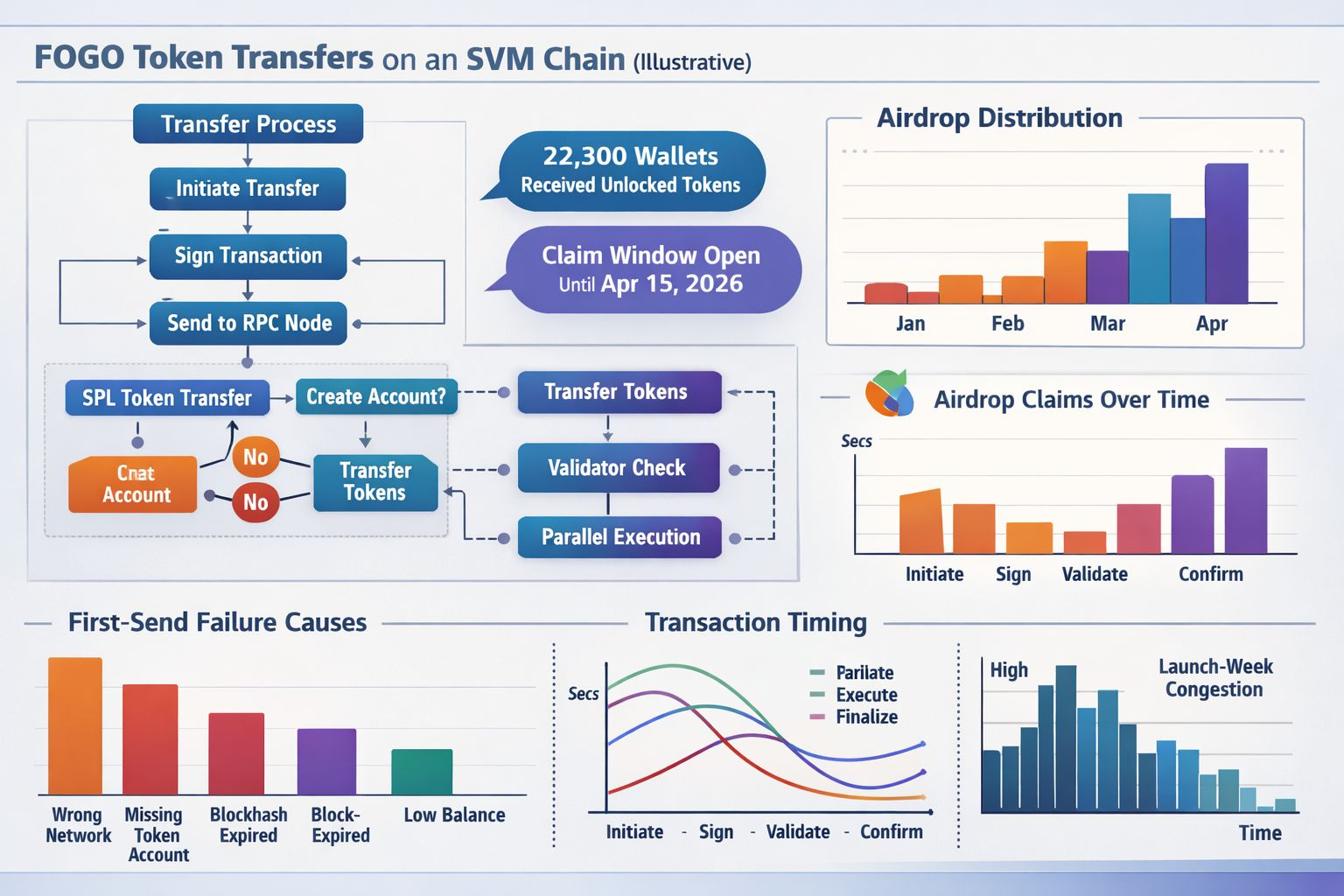
After I approve, my wallet signs the message with my private key. The signature is the authorization, and it also freezes the message so it can’t be edited in transit. Then the wallet submits the signed transaction to an RPC node. On Fogo, standard Solana tools can be pointed at the chain’s RPC, which makes the mechanics easier to audit when I’m nervous about a brand-new network.
From there, validators propagate the transaction until a leader includes it in a block. The runtime checks the blockhash is recent, verifies signatures, and executes the programs involved. For an SPL transfer, the token program validates ownership and balances, then updates the source and destination token accounts. If my transfer’s accounts don’t collide with other transactions, parallel execution helps it land quickly, especially during launch-week congestion.
Fogo also introduces Sessions, which the docs describe as account abstraction paired with paymasters. Sessions let apps cover fees and reduce constant per-transaction signing, while still limiting what the session can do. Sessions only support SPL tokens, not native FOGO, so native FOGO can stay mostly behind the scenes while user activity lives in token flows.
The problems I watch for are plain: wrong network, wrong mint, missing token account, or a blockhash that expires because I waited too long. The louder risk during any airdrop season is phishing, and I take comfort in Fogo’s airdrop post naming one official claim domain instead of a vague set of links.
When my transfer lands, it’s anticlimactic in the best way. Two accounts update, an explorer shows the instructions, and my balance is simply elsewhere. I still run a tiny transfer first, because habits beat assumptions when money is involved and networks are young today. I keep caring because the steps are legible: intent, signed message, executed instructions, final state. That’s enough to make sending FOGO on an SVM chain feel less like magic and more like a system I can actually trust.
