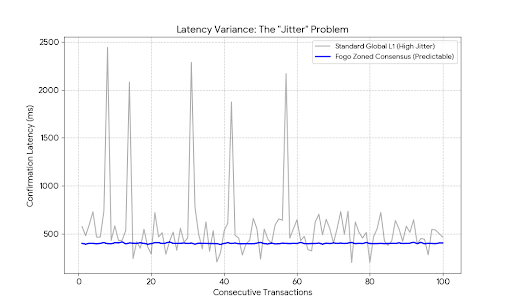
The cryptocurrency industry has spent a decade obsessed with a single, seductive metric: speed. Transactions per second (TPS) have become the benchmark of progress, a number flashed on pitch decks and website headers to signal technical superiority. But for anyone who has actually tried to trade on-chain during a volatile event, the experience tells a different story. It’s not the average speed that breaks a chain; it’s the moment the mempool backs up, the UI freezes, and the "confirming" spinner spins into oblivion. It’s the unreliability under pressure.
This is the problem that Fogo, a new Layer-1 blockchain, is explicitly designed to solve. Not by chasing raw, theoretical throughput, but by compressing the one variable that physics won't allow us to ignore: latency variance. Through a series of deliberate and controversial architectural decisions zoned consensus, curated validators, and a canonical client Fogo is attempting to build a venue where on-chain markets don't just feel fast, but feel reliable, even when the noise is deafening. The question is not whether its approach is ideologically pure, but whether it can deliver on its promise of institutional-grade predictability.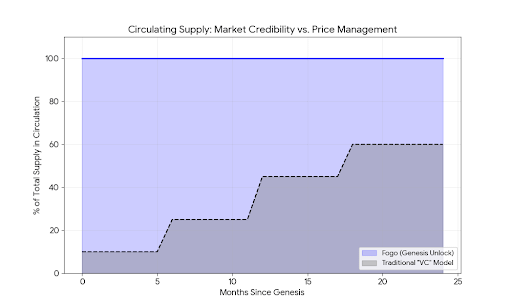
The Real Bottleneck Isn’t Compute, It’s Geography
To understand Fogo’s design, you must first unlearn the idea that computation is the primary bottleneck in blockchain performance. Modern validation hardware is extraordinarily powerful. The true constraint is coordination across distance. In a standard, globally distributed network, a block producer in North America must wait for validators in Europe, Asia, and South America to receive, verify, and attest to a block. This isn't just about the speed of light; it's about the "jitter" the unpredictable variance in network hops, routing congestion, and processing delays that occur when a quorum is scattered across thousands of miles.
In traditional finance, this problem was solved decades ago by physically co-locating matching engines. You don't build a global stock exchange by stringing a fiber optic cable between New York and Tokyo; you put everyone in a data center in New Jersey.
Fogo has adopted a variant of this principle with what it calls Zoned Consensus. The core idea is simple but its implications are profound: instead of requiring global consensus for every single block, Fogo localizes the active voting quorum within a specific geographic zone. This zone a subset of the total validator set, all physically located in the same region is responsible for confirming blocks for a set period.
If you sit with what this does to the system, the logic becomes clear. By shrinking the geographic footprint of the active consensus, Fogo dramatically reduces the physical lower bound of latency. Validators in the same zone can communicate in milliseconds, not hundreds of milliseconds. But more importantly, it compresses the variance. When the active quorum shares a power grid, a network backbone, and a regional internet exchange, the unpredictable "jitter" of global networking is replaced by the predictable, low-latency communication of a co-located data center.
This is not a theoretical optimization. It is a direct acknowledgment that for high frequency, time sensitive applications like an on-chain order book predictable latency is more valuable than raw speed. A system that confirms a trade in 400ms with +/- 10ms of variance is infinitely more usable than one that averages 200ms but can spike to 2 seconds under load.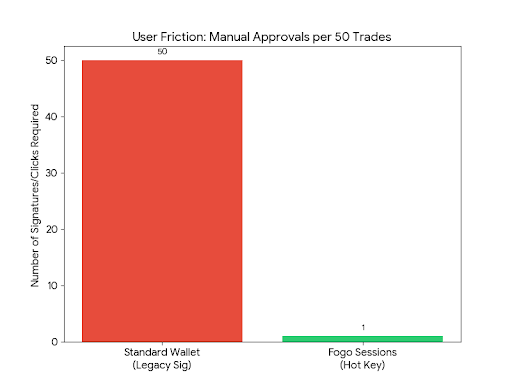
The Cost of Consistency: Curation and the Canonical Client
Fogo’s architectural honesty is most apparent not in its innovations, but in the trade offs it explicitly accepts. The first, and most culturally fraught, is the decision to curate its validator set. Fogo is not a permissionless free for all. To participate in zone rotation, a validator must meet specific performance standards, including hardware requirements and, implicitly, a level of operational professionalism that ensures they do not become the weakest link.
This is the part of the design that will provoke the loudest ideological criticism. In a space built on the mantra of "don't trust, verify," Fogo is introducing a layer of trust in the operator. It is choosing execution quality over permissionless idealism.
Whether you view this as a flaw or a feature depends entirely on your worldview. If you see blockchain as a political movement for decentralized censorship resistance, this is a step backward. But if you see blockchain as a new form of financial infrastructure a venue for settling high-value transactions then the curation of validators is not only acceptable, it is necessary. No major financial exchange allows just anyone to act as a clearer or settlement agent. They require capital, reliability, and adherence to strict rules. Fogo is effectively applying the same logic to its consensus layer. It is building a venue, not a public square.
This commitment to reliability is reinforced by another politically unfashionable choice: the embrace of a canonical client. The broader crypto ecosystem has spent years championing client diversity as a bulwark against network-wide bugs. It is a valid security model. But it also introduces variance. Different clients, written in different languages by different teams, have different performance characteristics, different memory footprints, and different latency profiles.
Fogo has looked at this model and decided that, for its specific use case, the benefits of diversity are outweighed by the costs of unpredictability. By standardizing on a single, high-performance client a specialized fork of the Firedancer architecture Fogo can optimize every cycle, every memory access, and every network call for maximum determinism. The system becomes a finely tuned machine rather than a collection of loosely coupled parts. This introduces a new risk: a bug in the canonical client could halt the entire network. It is a central point of failure. But Fogo’s argument is that for a financial venue, a predictable, manageable risk is preferable to the unpredictable chaos of variance.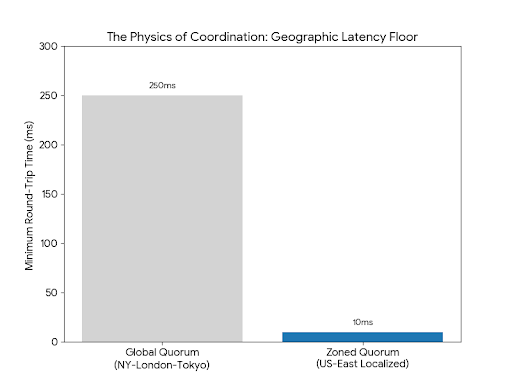
The UX Layer: Sessions as a Necessary Dependency
The architectural rigor of the consensus layer would be meaningless if the user experience remained clunky. This is where Fogo’s second-layer innovation, Sessions, comes into play.
Sessions are a response to the "signature fatigue" that plagues active traders on existing chains. Currently, every transaction every order placement, every cancellation, every modification requires a wallet pop-up and a cryptographic signature. For a high-frequency trader making hundreds of actions a minute, this is not just annoying; it's physically impossible.
Sessions solve this by allowing a user to open a temporary, secure channel with an application. For the duration of the session, the user grants the application a limited capability to sign specific types of transactions on their behalf. This is, in effect, creating a "hot key" for a specific trading session.
However, as with the validator set, this UX improvement introduces new dependencies. Sessions rely on paymasters entities that can sponsor transaction fees on behalf of the user. This is designed to allow for seamless, gasless trading experiences. But it also creates a new gatekeeper. The paymaster, likely a centralized service or the application itself, controls the flow of transactions. It could, in theory, prioritize its own orders or censor a user's activity. Fogo acknowledges this dependency openly. The system is trading the friction of signature requests for the trust requirement of a paymaster. Whether this trade-off is acceptable depends on the competitiveness and transparency of the paymaster market.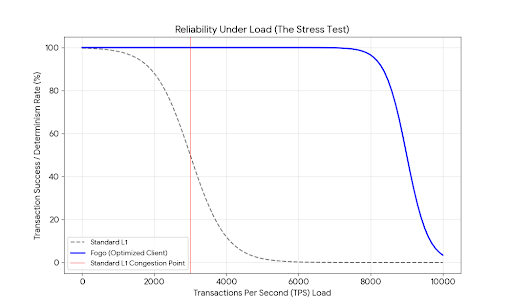
The Token Reality: Unlocking the Future
Perhaps the most understated but significant detail in Fogo’s design is its decision regarding tokenomics. The article notes that Fogo’s tokens will be "unlocked at genesis." In an industry where projects often lock vast percentages of the supply and release them slowly to prop up the price, this is a radical signal.
It means the team and early investors are accepting immediate, transparent price discovery, including the risk of significant short-term selling pressure. They are choosing long-term market credibility over the ability to artificially manage their valuation. For an institutional investor evaluating the project, this is a powerful data point. It suggests that the team is confident enough in the long-term utility of the network that they are willing to let the market find its true level from day one. It aligns the incentives of the builders with the long-term health of the venue, rather than with short-term token price manipulation.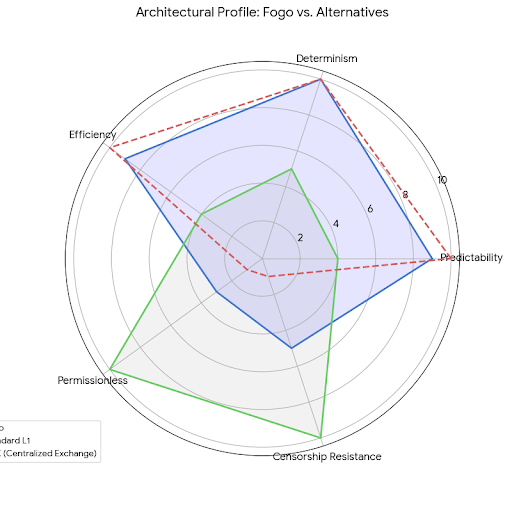
The Verdict: A Coherent Gamble
Fogo is not trying to be the world computer. It is not trying to host decentralized social media or NFT art projects (though it could). It is trying to be the fastest, most reliable settlement layer for on-chain capital markets. Every design choice it from zoned consensus and validator curation to the canonical client and session-based UX is subordinate to that single goal.
This makes the system extraordinarily coherent, but also potentially fragile. Its coherence comes from the fact that every piece is designed to work in perfect harmony with every other piece. Its fragility comes from the same source: if one piece fails, the whole system is compromised. A bug in the canonical client, a capture of the validator curation process, or a failure of the paymaster model could have cascading effects that a more diverse, messy system might survive.
Ultimately, the success of Fogo will not be determined by whitepapers or philosophical debates. It will be determined by a few critical, observable realities:
1. Performance Under Duress: Does confirmation time remain steady when global markets are in turmoil and trading volume spikes? Does the system eliminate the "spinner of death"?
2. Builder Preference: Do the most sophisticated trading firms and applications choose to build on Fogo because they trust its latency profile more than the alternatives?
3. Governance Consistency: Can the mechanism for selecting validators and zones remain meritocratic, or will it devolve into a system of political favoritism?
If Fogo can pass these tests, it will have proven that its "politically unfashionable" trade-offs were not just ideological provocations, but necessary engineering decisions. It will have built a venue where markets don't just feel fast, but feel fundamentally solid. And in the high-stakes world of finance, solidity is the only thing that truly matters.