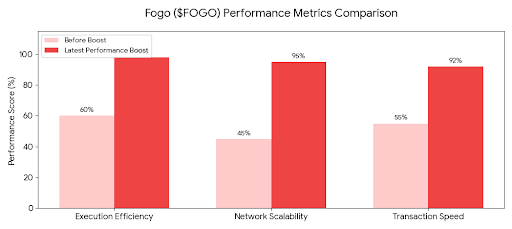
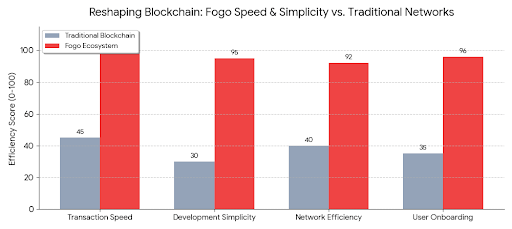
 Fogo, a Layer 1 blockchain project focused on speed and scalability, is steadily establishing itself as a key player in the rapidly evolving blockchain space. With each passing week, the project is moving away from the typical noise of early-stage hype and instead proving itself with real, tangible results. By focusing on execution efficiency and network maturity, Fogo is offering a promising glimpse into the future of high-performance blockchains that combine Solana’s robust Virtual Machine (SVM) with impressive real-world use cases.
When looking at Fogo's growth, one thing is abundantly clear: the team has been focused on delivering real progress. Unlike many blockchain projects that often spend too much time in the theoretical phase or experimenting with complex, untested ideas, Fogo has focused on making their vision a reality. This shift is evident in the blockchain’s increasing performance, more validators coming on board, and the rise in genuine usage. It's clear that the project is moving past the “hype” stage and has entered a new era where the work being done is translating directly into operational reality.
One of the defining characteristics of Fogo’s evolution has been its commitment to performance without introducing unnecessary complexity. In a blockchain world filled with projects creating new virtual environments and infrastructures from scratch, Fogo chose a different path. Rather than building an entirely new virtual machine, Fogo built on top of the successful Solana execution model. This decision has allowed the blockchain to maintain Solana’s strengths such as parallel transaction processing, faster finality, and reduced latency while optimizing these features to meet the demands of next-generation decentralized applications (dApps).
What makes this particularly compelling is that developers who are already familiar with Solana’s tooling don’t face any significant hurdles when transitioning to Fogo. This lack of friction is critical because it allows the network to attract a wide range of developers who can build immediately without spending weeks or months learning a new stack. The removal of these adoption barriers has undoubtedly accelerated the blockchain’s growth, creating an environment where developers and users alike can experience Fogo’s capabilities in real-time.
Furthermore, the recent public network activation marked a major milestone in Fogo’s development. But it’s not just another announcement for the sake of publicity it’s a key point where the rubber meets the road. Validators are becoming more involved, staking participation is growing, and the network is being tested in real-world conditions. This is a crucial moment for Fogo, as proving that the system can handle real-world stress and maintain performance under load is essential for its long-term viability. Claims of scalability are one thing; proving it under real conditions is what sets serious blockchain projects apart.
At the heart of the ecosystem is the $FOGO token, which plays a multi-faceted role. It powers transaction fees, enables staking, and plays a central role in governance. This design not only helps to secure the network through validator participation but also provides users with the ability to access key network resources. This structure aligns the interests of validators, token holders, and users, ensuring that the network remains secure and continues to evolve in a sustainable way.
The real standout feature of Fogo, however, is its infrastructure-first approach. In a market that’s often driven by narrative-building and flashy marketing tactics, Fogo’s decision to focus squarely on technical performance execution reliability, reduced latency, and scalability has helped set it apart. It’s a refreshing change in a space that’s often more concerned with the next big story than with solving real-world issues. For Fogo, performance always comes first, and it’s clear that the team is focused on creating an optimized, robust network capable of supporting decentralized applications at scale.
The real challenge for Fogo, however, will be ensuring that its progress continues. There are still hurdles to overcome in terms of developer adoption, on-chain activity, and continuous technical improvement. Fogo must prove that it can keep up the momentum of the past few weeks and turn it into a sustainable, long-term ecosystem. If it succeeds in this, Fogo will solidify its position as a critical player in the broader Solana Virtual Machine ecosystem.
To this end, the next few months will be crucial. The network’s ability to consistently attract developers and create value for users will be key to its continued success. However, if Fogo can continue to focus on what has worked optimized performance, real-world application, and an accessible developer experience there’s a strong chance that it will continue to gain traction within the blockchain community. The simplicity of its infrastructure, combined with its solid performance, creates a clear path forward for the network to establish itself as a mainstay in the blockchain space.
As we look ahead, one thing is certain: Fogo’s strategy of focusing on scalability without compromise is paying off. Whether you’re a developer or a user, the infrastructure is there to support the growing demand for faster, more reliable decentralized applications. As Fogo continues to mature and refine its network, it will undoubtedly become a staple for anyone seeking a high-performance blockchain solution. The future is looking increasingly bright for this innovative project, and the blockchain space is undoubtedly better for it.
In conclusion, Fogo is a blockchain project that is grounded in performance and functionality. By building on the successful Solana Virtual Machine, the project is able to offer real scalability, low latency, and faster transaction finality, all while simplifying the developer experience. It’s clear that Fogo has chosen a pragmatic approach, and as the network matures and adoption grows, the project has the potential to become a leading player in the blockchain space. With continued growth, a focus on reliability, and an ongoing commitment to performance, Fogo may very well become one of the standout Layer 1 blockchains in the industry.