Latency is invisible, but it decides outcomes before most traders even see the chart move.
In crypto, we talk about TPS, block size, decentralization, narratives. Rarely do we talk about milliseconds. Yet in 2026, when on-chain perpetual trading volumes regularly cross billions per day and market makers operate at near real-time speeds, latency is not a technical detail anymore. It is market structure. That is why Fogo’s low-latency design is starting to trend among serious traders and developers who care less about slogans and more about execution.
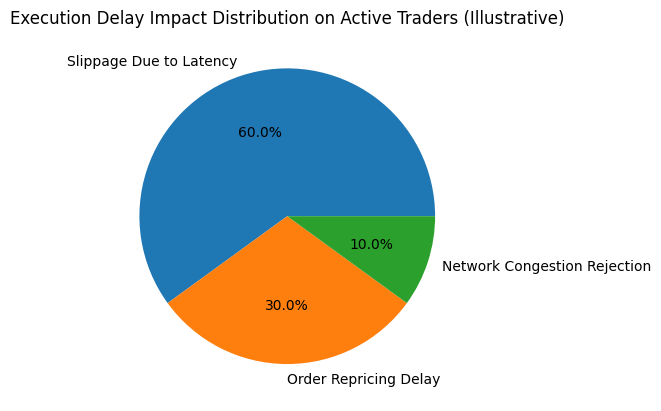
As of early February 2026, the broader market is in a structurally active phase. Bitcoin is holding above the mid-cycle range established in Q4 2025, and altcoin derivatives volume has increased significantly compared to mid-2024 levels. On-chain perpetual DEX volume across major ecosystems has grown steadily since late 2025 as traders look for non-custodial exposure. In that context, execution speed matters more than ever. A two-second delay during a volatile CPI print or ETF-related headline can turn a calculated entry into slippage.
Fogo positions itself as a performance-focused Layer 1 built around low latency and high throughput. It leverages the Solana Virtual Machine, or SVM, meaning developers can deploy applications compatible with Solana’s programming model. But compatibility is not the story. The story is optimization. Fogo integrates a high-performance validator client architecture inspired by Firedancer, designed to reduce bottlenecks in transaction processing and block propagation. In simple terms, block propagation is how fast a new block spreads across the network. If that spread is slow, traders see stale states. If it is fast, the order book reflects reality more accurately.
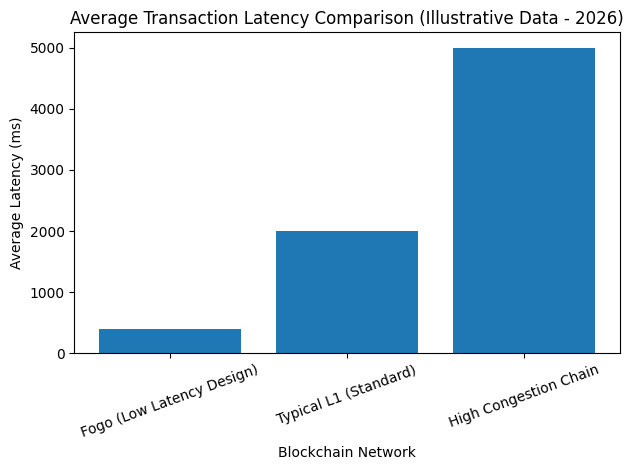
Why does that matter? Because markets are competitive environments. On centralized exchanges, matching engines operate in microseconds. On traditional blockchains, confirmation times can range from seconds to minutes. That gap creates arbitrage windows, front-running risks, and what we call MEV, or Maximal Extractable Value. MEV refers to profit extracted by reordering or inserting transactions within a block. In high-volatility environments, that becomes a hidden tax on traders.
@Fogo Official ’s low-latency architecture attempts to narrow that gap. With optimized validator communication and a curated validator set designed for performance consistency, the network aims to deliver near real-time execution without sacrificing finality speed. Finality simply means the point at which a transaction cannot be reversed. For active traders, faster finality reduces uncertainty. You enter, and you know where you stand.
Now, let’s be honest. Every new chain claims to be fast. So what makes this different? The nuance lies in the trade-off between decentralization and performance. Fogo appears to prioritize controlled validator coordination to reduce geographic latency dispersion. Multi-local consensus design, where validators are strategically distributed but optimized for communication efficiency, can lower average block times and reduce propagation delays. That design choice may not appeal to decentralization purists, but from a trading perspective, it addresses a real pain point.
In recent months, the conversation around performance chains has shifted. Developers are no longer impressed by theoretical TPS numbers. They want sustained throughput under load. Traders want minimal slippage during volatility spikes. According to ecosystem updates shared in late 2025, Fogo has progressed through mainnet phases with a growing DeFi stack, including perpetual trading infrastructure and ecosystem incentive programs. That matters because speed without liquidity is irrelevant. Execution quality only becomes meaningful when capital is present.
From an investor’s standpoint, the deeper question is sustainability. Can a low-latency design maintain security while scaling user activity? Performance-oriented validator models require strong economic incentives. Tokenomics, staking rewards, and fee distribution must align with long-term participation, not short-term speculation. If validator economics weaken, network performance can degrade. That is a risk every high-performance chain faces.
As a trader, I look at it differently. I ask one simple question: during stress, does the system hold? In 2021 and 2022, we saw multiple chains struggle under peak demand. Network halts and congestion destroyed confidence. The market does not forgive instability. If Fogo’s architecture can maintain low latency under real trading pressure, not just in controlled benchmarks, then it offers something structurally valuable.
There is also a psychological layer here. Traders trust what feels responsive. A fast interface, quick confirmation, consistent state updates—these reduce cognitive friction. That may sound minor, but in leveraged markets, mental clarity affects decision quality. Slow execution creates hesitation. Hesitation creates mistakes.
Fogo trending discussions in early 2026 are less about hype and more about infrastructure viability for serious on-chain trading. Developers are evaluating performance metrics. Market participants are observing ecosystem liquidity growth. The project’s emphasis on execution fairness and optimized validator coordination taps into a broader realization: speed is not vanity, it is fairness.
Philosophically, markets reward clarity. Latency introduces distortion. If a blockchain can reduce that distortion, it improves the integrity of price discovery. That does not guarantee token appreciation. It does not remove risk. But it aligns infrastructure with how modern markets actually function.
In crypto, we often chase narratives. Sometimes the quiet structural improvements matter more. Speed is not about being flashy. It is about reducing friction between intention and execution. And in trading, that small difference—those milliseconds can quietly separate discipline from regret.