
Modern computing systems are growing rapidly in scale and complexity. Traditional architectures where computing, storage, and networking are managed separately often struggle to handle massive data processing, cloud workloads, and real-time applications. Fabric computing has emerged as a new architectural approach that integrates computing resources into a unified, highly efficient system. It creates a “fabric” of interconnected resources that can dynamically allocate computing power, storage, and networking where needed.
This article explores the concepts, opportunities, and challenges associated with fabric computing and how it is shaping the future of data centers and cloud computing.
Concept of Fabric Computing
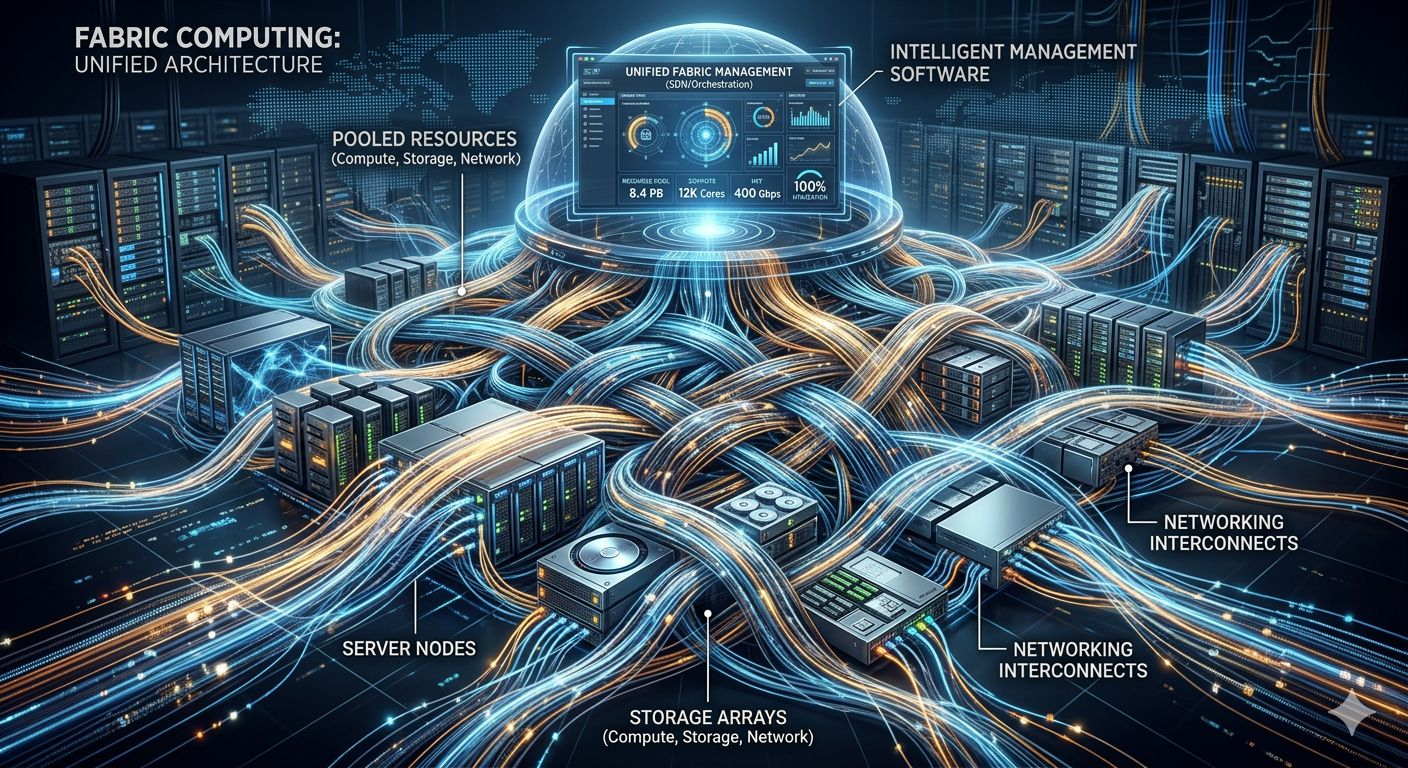
Fabric computing is an architecture in which servers, storage devices, and networking components are interconnected through a high-speed fabric and managed as a single unified system. Instead of operating as independent units, these resources are pooled together and controlled by intelligent software.
The core idea is similar to a fabric cloth, where threads are tightly woven together to create a strong and flexible structure. In computing, the fabric links multiple resources so they function like a single large computing system.
Key characteristics of fabric computing include:
Unified resource management Computing, storage, and networking are managed from a centralized control system.
High-speed interconnects Fast communication links allow data to move quickly between resources.
Dynamic resource allocation Resources can be automatically assigned based on workload demands.
Automation and virtualization Software tools automate configuration, monitoring, and optimization.
This architecture is widely used in data centers, cloud platforms, and high-performance computing environments.
Opportunities Provided by Fabric Computing
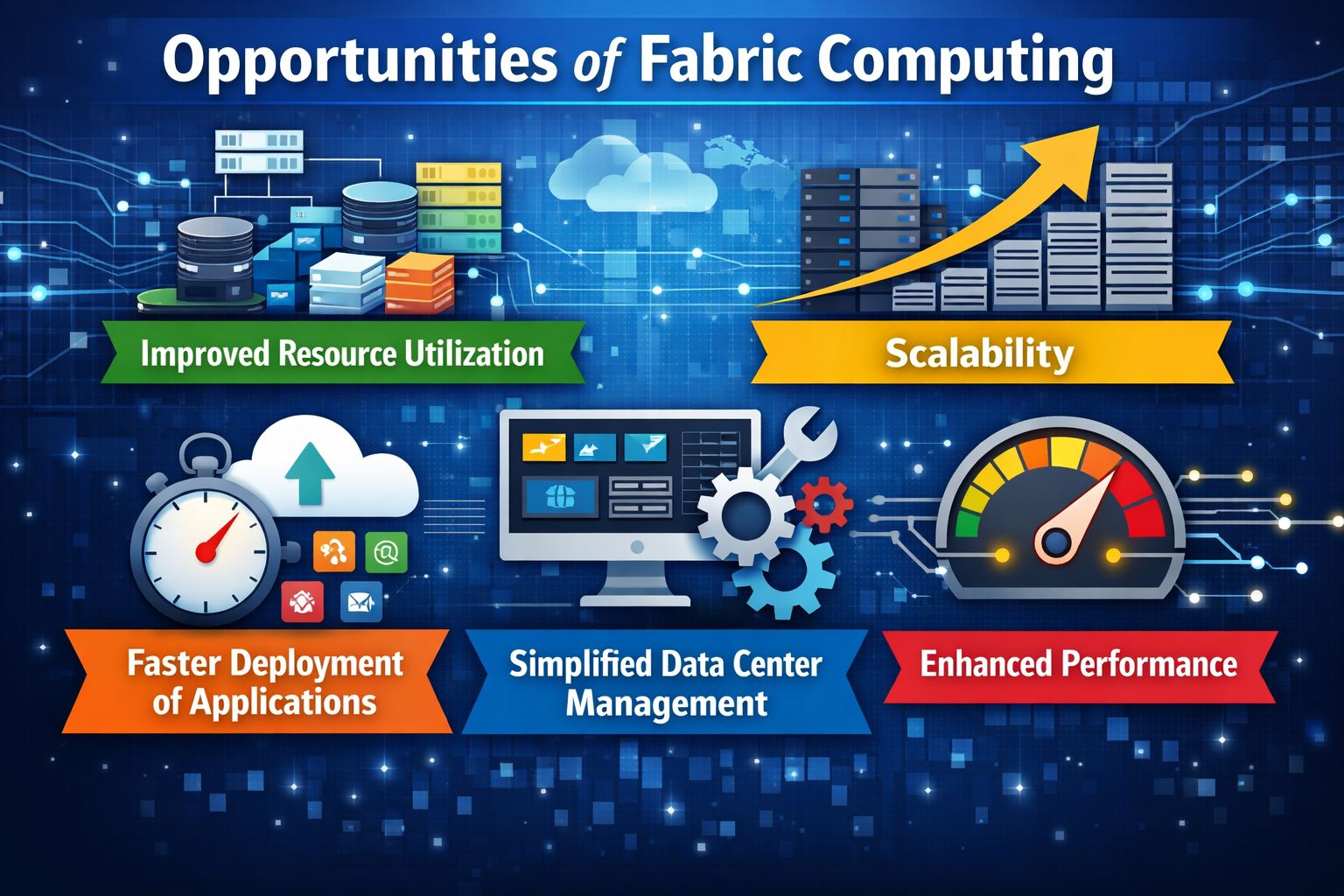
1. Improved Resource Utilization
Fabric computing allows organizations to pool resources together, which reduces idle hardware and improves overall efficiency. Resources are allocated only when needed, ensuring optimal use of infrastructure.
2. Scalability
One of the most important advantages of fabric computing is its scalability. Organizations can easily add more servers, storage, or networking components without disrupting the existing infrastructure.
3. Faster Deployment of Applications
Because resources are centrally managed and automated, new applications or services can be deployed quickly. This is particularly beneficial for cloud computing and large enterprise environments.
4. Simplified Data Center Management
Fabric computing reduces complexity by providing a single management interface for multiple resources. Administrators can monitor and control the entire system more efficiently.
5. Enhanced Performance
High-speed connections between components improve data transfer rates and reduce latency. This leads to better performance for big data analytics, artificial intelligence, and high-performance computing workloads.
Challenges of Fabric Computing
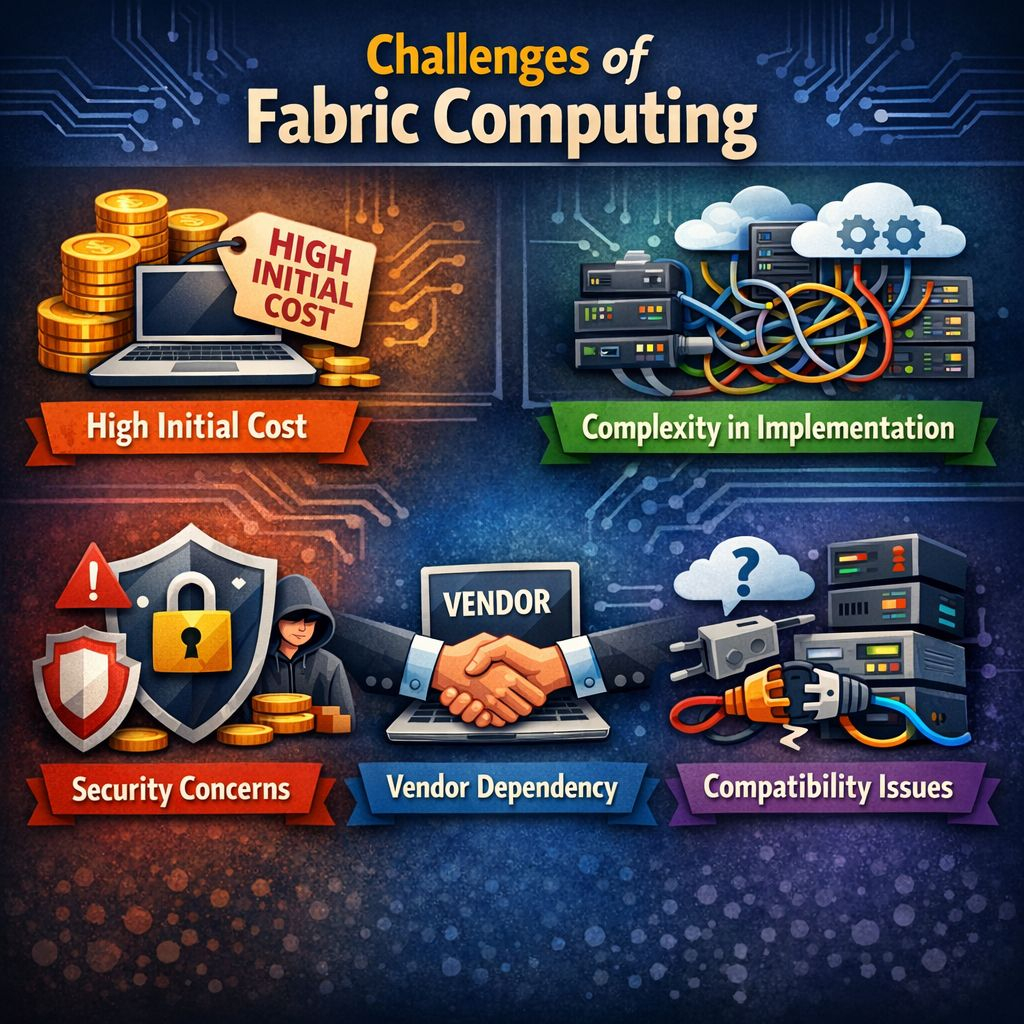
1. High Initial Cost
Implementing fabric computing infrastructure requires advanced hardware, networking equipment, and specialized software, which can be expensive for organizations.
2. Complexity in Implementation
Although the architecture simplifies management later, the initial setup and integration can be technically complex and requires skilled professionals.
3. Security Concerns
Because resources are highly interconnected, a security breach in one part of the system could potentially affect multiple components. Strong security measures and monitoring systems are required.
4. Vendor Dependency
Some fabric computing solutions rely heavily on specific vendors, which may limit flexibility and increase long-term costs.
5. Compatibility Issues
Integrating new fabric systems with existing legacy infrastructure can be challenging and may require upgrades or modifications.
Future of Fabric Computing
As technologies such as cloud computing, edge computing, artificial intelligence, and big data analytics continue to grow, the demand for flexible and scalable computing architectures will increase. Fabric computing is expected to play a key role in building next-generation data centers.
Advancements in software-defined infrastructure and high-speed networking technologies will further enhance the capabilities of fabric computing, making systems more efficient, intelligent, and adaptive.
Conclusion
Fabric computing represents a significant evolution in the way computing resources are organized and managed. By integrating servers, storage, and networking into a unified system, it offers improved scalability, performance, and efficiency. However, organizations must also address challenges such as cost, implementation complexity, and security risks.
Despite these challenges, fabric computing is becoming an essential technology for modern IT infrastructure and will likely continue to shape the future of computing systems.
@Fabric Foundation #ROBO $ROBO
