
As we move further into 2026, the convergence of AI and physical hardware is no longer a futuristic dream—it is a live economic shift. However, a major hurdle remains: how do robots, which lack legal identities or bank accounts, participate in a global economy? This is where the @Fabric Foundation 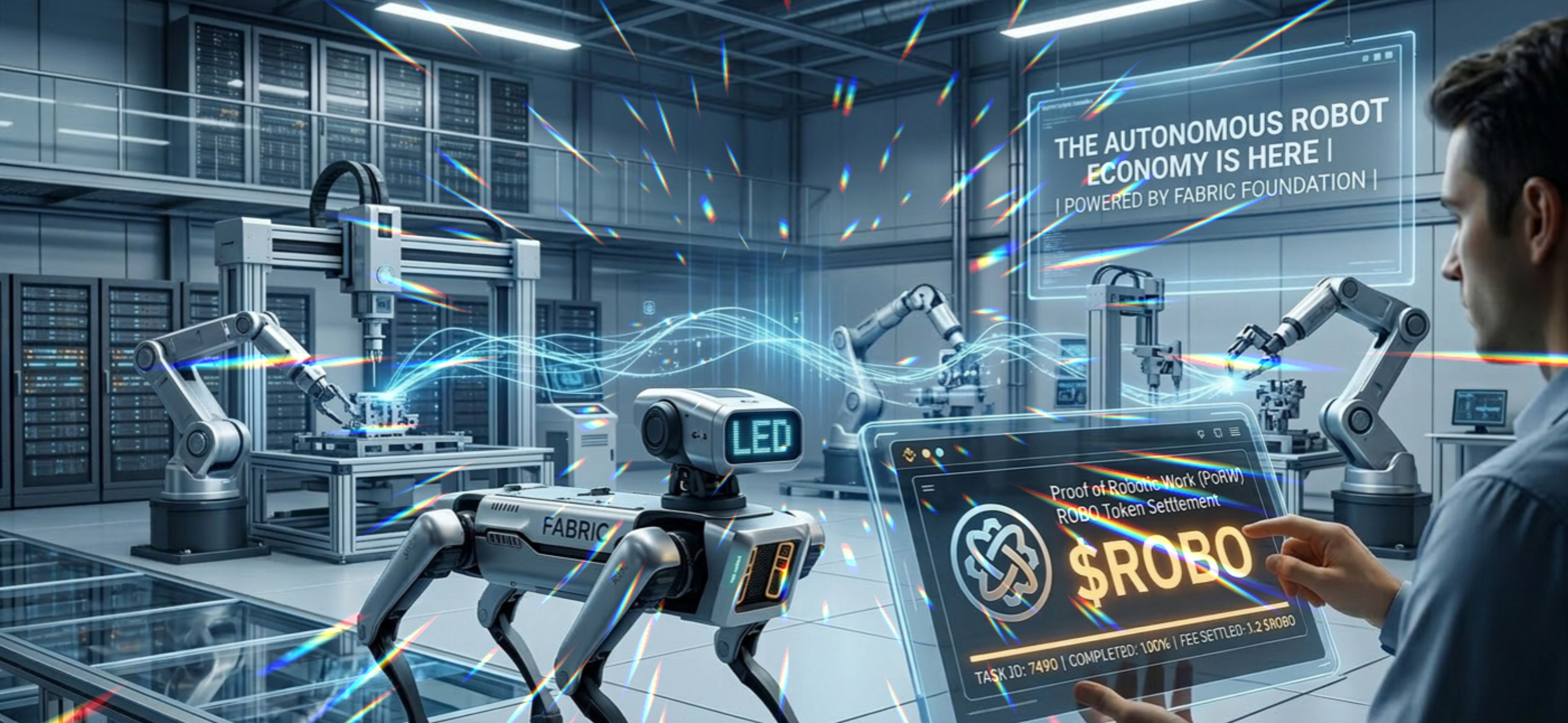 steps in, providing the decentralized "soul" for autonomous machines.
Building the Infrastructure for Machines
The Fabric Foundation is not just another AI project; it is the architect of a specialized coordination layer designed specifically for the Robot Economy. By utilizing the Fabric Protocol, robots are transformed from mere tools into independent economic actors. Through a three-layer architecture—Identity, Payment, and Coordination—machines can finally own their data, verify their work, and even pay for their own maintenance.
The Power of ROBO
At the heart of this ecosystem is the $ROBO token. Unlike speculative assets, $ROBO is the functional fuel of the network. Its utility is deeply integrated into every machine-to-machine (M2M) interaction:
Network Settlement: All transaction fees, identity registrations, and task validations within the Fabric ecosystem are settled in $ROBO.
Proof of Robotic Work (PoRW): Robots earn rewards in $ROBO upon the verifiable completion of tasks, creating a transparent marketplace for labor.
Governance & Staking: Through the veROBO model, the community and operators can vote on protocol upgrades and resource allocation, ensuring the network remains decentralized.
Robot Genesis: The protocol even allows for decentralized funding of robot fleets through coordination pools, democratizing access to high-tech hardware.
A New Layer of Value
With its recent listing on major platforms like Binance, $ROBO has moved from a niche infrastructure play to a central pillar of the DePIN (Decentralized Physical Infrastructure) narrative. As global robot shipments continue to climb, the demand for a neutral, open-source operating layer becomes undeniable.
The Fabric Foundation is ensuring that the future of robotics isn't locked behind corporate silos, but is instead built on an open, verifiable, and programmable foundation.