
One thing the crypto market has taught me over the years is that popularity and usefulness rarely appear at the same time.
Sometimes the loudest narratives in the market are built around ideas that feel exciting but don’t yet solve a problem anyone outside crypto is actually facing. And other times, the tools that quietly become essential receive very little attention in the beginning.
That thought came back to me recently when I started seeing the name appear more frequently across crypto discussions.
Price charts were being shared. Threads about zero-knowledge technology were trending again. Some people were describing the underlying network as a privacy infrastructure that could allow applications to use data without exposing it.
Naturally, the blockchain behind the token was suddenly getting more attention.
The core idea sounds powerful on paper.
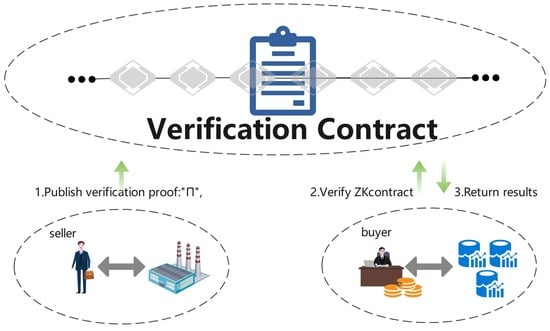
A blockchain that uses to allow information to be verified without revealing the information itself.
In simple terms, the network claims it can offer utility without forcing users to give up control of their data.
Privacy without secrecy.
Verification without exposure.
Conceptually, that is one of the most compelling promises in modern cryptography.
But experience has taught me something important.
A powerful idea does not automatically mean a real problem exists.
So instead of reading more posts or watching price charts, I tried to approach the question from a different angle.
I asked myself a simple question.
Who actually needs this?
To explore that, I spoke with a few people who work in fields where privacy and data protection are already serious concerns. Some work with financial compliance systems. Others deal with enterprise software and identity management.
I described the idea behind Midnight and its use of zero-knowledge proofs.
Most of them found the concept intellectually interesting.
But the reactions were more cautious than enthusiastic.
One engineer told me something that stayed with me.
“We already have ways to protect data,” he said. “The challenge usually isn’t cryptography. It’s regulation, responsibility, and integration with existing systems.”
Another pointed out that large organizations already use layered security models, encrypted databases, and permission systems.
In other words, privacy problems are often solved operationally, not architecturally.
A compliance specialist added another perspective.
In regulated industries, privacy alone isn’t enough.
Companies also need accountability.
Someone has to be responsible if something goes wrong.
And systems that hide too much information can sometimes create legal complications rather than solutions.
None of these people dismissed the idea completely.
But none of them immediately said, “Yes, this is exactly what our industry needs.”
That reaction reminded me of something I’ve noticed repeatedly in crypto.
Projects sometimes try to solve problems they assume exist.
But industries outside crypto often experience those problems very differently.
When crypto has succeeded historically, it usually solved problems within its own ecosystem.
Decentralized finance simplified access to trading and lending without traditional intermediaries. NFT infrastructure made digital ownership easier to track and transfer. Wallet technology improved how users interact with blockchain networks.
These innovations made sense because they addressed problems crypto users were already experiencing.
But when blockchain projects attempt to move into industries that already function reasonably well, the challenge becomes much harder.
Those industries already have systems.
They already have workflows.
They already have regulations.
And replacing those systems requires more than an interesting technical idea.
This is where the real test for Midnight and the token begins.
The project does not only need to demonstrate that zero-knowledge technology is impressive.
That part is already widely accepted.
It needs to demonstrate that its infrastructure solves a real problem better than the systems that already exist.
For people outside crypto.
Not just for developers experimenting with new tools.
Another thing the market often forgets is the difference between token price and actual adoption.
Prices move because of narratives.
Because of speculation.
Because communities start believing in a story.
Sometimes those stories eventually become reality.
But sometimes they remain stories.
Buying a token like NIGHT today is not really buying existing utility.
It is buying a possibility.
A possibility that one day privacy infrastructure built on zero-knowledge proofs becomes necessary for real industries.
That possibility may or may not become reality.
And that uncertainty is where the most interesting questions usually live.
After watching this market for years, I’ve learned that the best way to evaluate projects is often the simplest way.
Before believing any narrative, I ask myself one question.
What real problem, experienced by people outside crypto, does this solve today?