
Robots, Blockchains, and the Problem That Might Not Exist
After watching the crypto market for years, one pattern keeps repeating itself.
Popularity and usefulness rarely arrive at the same time.
Sometimes the most discussed projects solve problems that nobody outside crypto actually feels. Other times, the tools that quietly become essential barely receive attention at first.
That’s why I’ve learned to slow down whenever a new narrative suddenly starts spreading across the market.
Recently I began noticing something similar happening around Fabric Protocol and its token, ROBO.
The name started appearing in trading chats. Charts were being shared. Some people were calling it a project that could connect robots, automation systems, and AI agents through blockchain infrastructure.
It’s an ambitious idea.
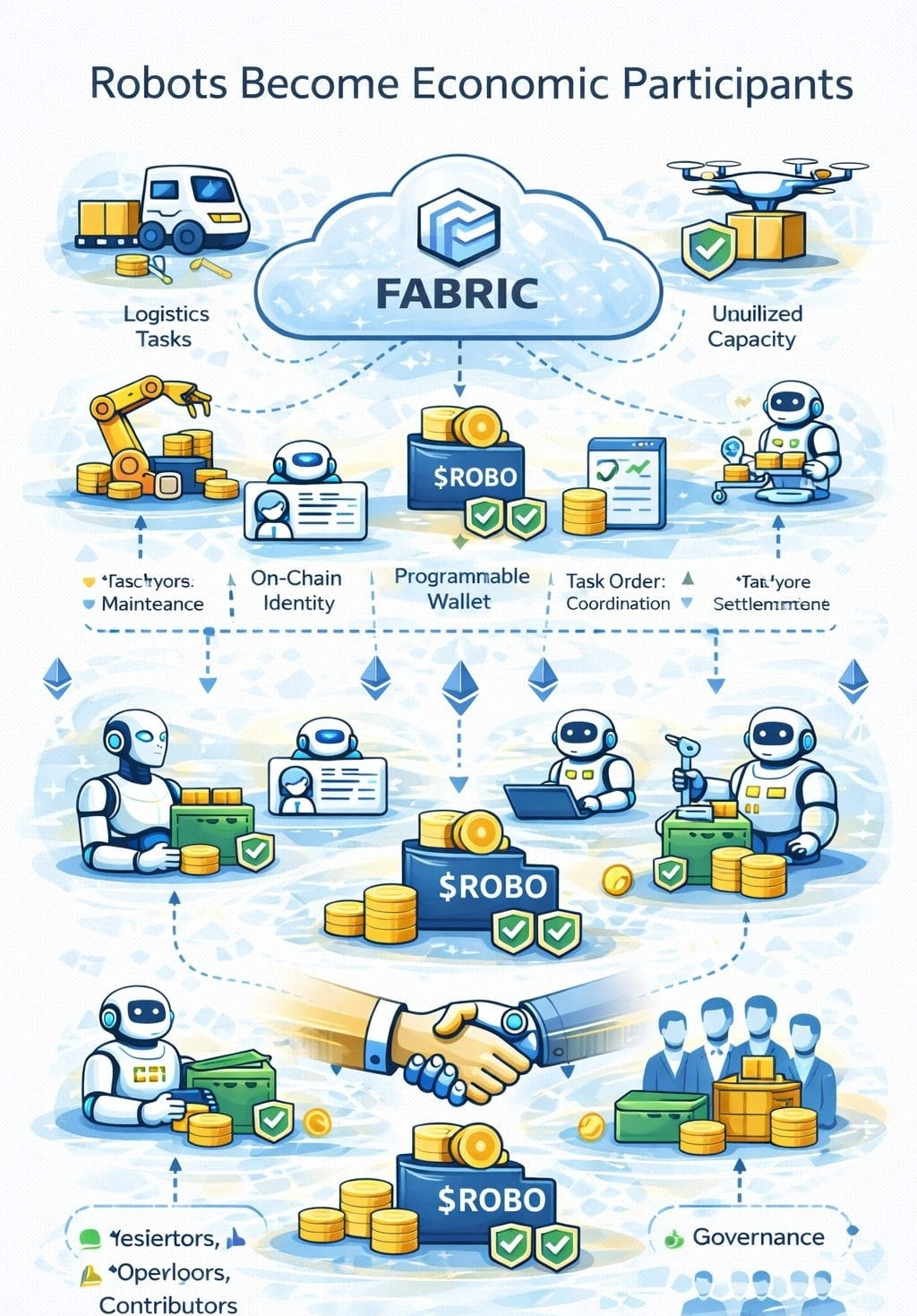
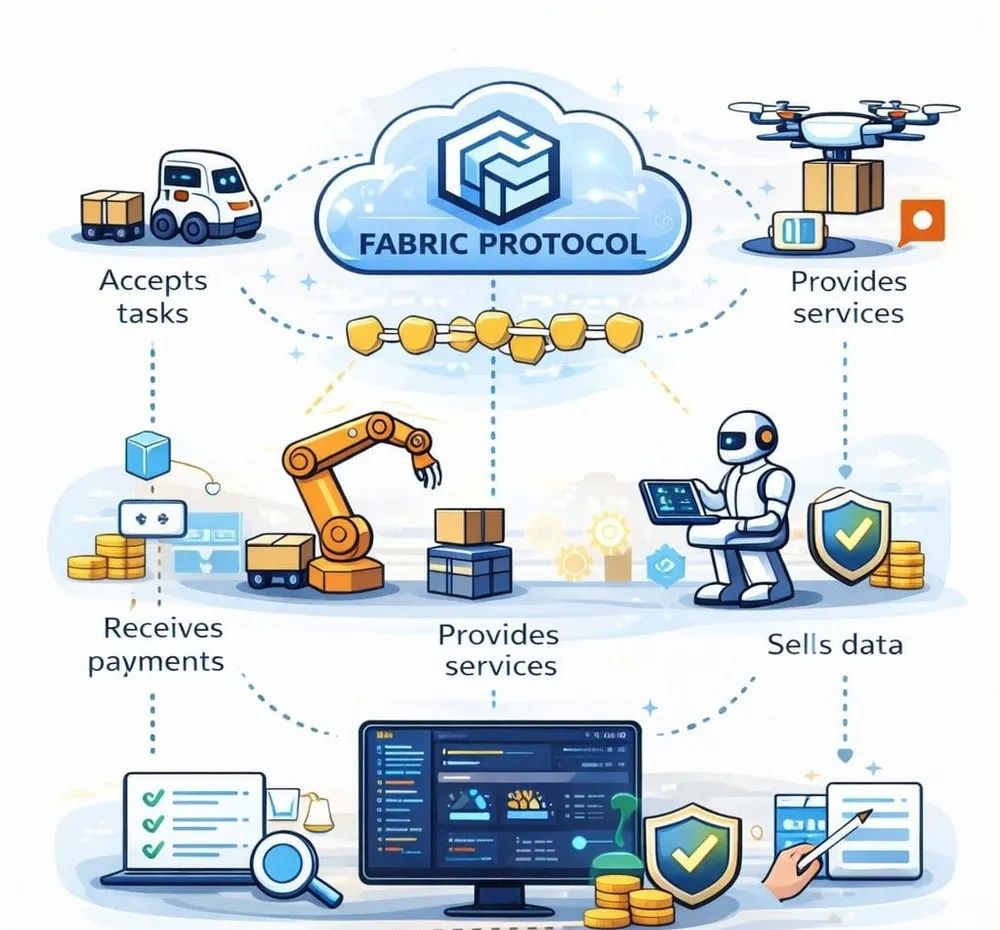
Fabric Protocol describes itself as a global open network that helps build, coordinate, and govern general-purpose robots. The system combines verifiable computing, agent-native infrastructure, and a public ledger that supposedly helps machines coordinate tasks and share data safely.
On paper, the concept sounds futuristic.
Robots collaborating across an open network. Autonomous agents coordinating logistics, manufacturing, or services. Blockchain ensuring transparency and trust between machines and organizations.
But crypto markets have taught me one important lesson: interesting ideas and useful solutions are not the same thing.
So instead of reading more threads on social media, I tried to understand something more basic.
What do people in the robotics industry actually think about this?
I spoke with a few engineers and automation specialists who work with robotics systems in manufacturing and logistics environments. These are the kinds of people who deal with real machines, real factories, and real operational problems.
Their reactions were interesting.
None of them dismissed the idea completely. But none of them were convinced either.
One engineer told me that most industrial robots already operate within tightly controlled systems. Factories rely on predictable communication networks because delays or failures can stop production lines.
A public blockchain, even a fast one, introduces uncertainty.
Another automation specialist pointed out something even more practical.
Responsibility.
If a robot controlled through a distributed system makes a mistake, who is accountable? The manufacturer? The operator? The network participants?
In industries where safety regulations are strict, these questions matter more than technological elegance.
Someone else raised a privacy issue.
Industrial automation systems often contain sensitive operational data. Companies are usually reluctant to expose internal processes to external networks, even if those networks promise transparency and security.
And then there is speed.
Robotics systems frequently operate in milliseconds. Even small delays can create problems in high-precision environments.
Most blockchain infrastructure, despite improvements, still struggles to compete with specialized industrial networks designed for real-time control.
None of these engineers said the concept was impossible.
But they all suggested something similar.
Existing systems already work.
Factories use industrial protocols. Logistics companies run private infrastructure. Robotics platforms are often closed ecosystems because reliability matters more than openness.
Hearing these perspectives reminded me of something that happens often in crypto.
Projects sometimes try to solve problems they assume exist rather than problems industries actually experience.
Inside the crypto ecosystem, blockchain technology has clearly solved real needs.
Decentralized exchanges replaced trusted intermediaries. DeFi created financial tools that operate without banks. NFTs built new infrastructure for digital ownership.
These solutions worked because they solved problems native to crypto itself.
But industries outside crypto already have functioning systems.
Banking has payment rails. Manufacturing has automation networks. Logistics companies run highly optimized infrastructure built over decades.
Convincing those industries to replace working systems with blockchain is much harder than launching a token.
That doesn’t mean Fabric Protocol is doomed.
The idea of coordinating autonomous machines through open networks could become important one day, especially if AI agents and robotics systems become more widespread.
But the real challenge for projects like this is simple.
They must prove that blockchain is not just interesting, but necessary.
And more importantly, necessary for people outside the crypto ecosystem.
The market, however, often moves faster than real adoption.
A token like ROBO can rise in price because of narrative, speculation, or excitement around emerging technologies like AI and robotics. Traders love stories about the future.
But price movement and real-world usage are very different things.
Buying a token rarely means buying current utility.
It usually means betting on a possible future where the infrastructure becomes widely needed.
Sometimes that bet works.
Many times it doesn’t.
That’s why whenever I look at projects like Fabric Protocol, I try to return to a simple question that cuts through most narratives.
Not whether the idea sounds impressive.
Not whether the token chart looks strong.
But something much simpler.
What real problem, experienced by people outside crypto, does this actually solve today?
Until a clear answer appears, every investment in stories like this remains exactly what the market often is.
A bet on a future that may or may not arrive.