

Lately I’ve been spending some time reading about Midnight Network, and it made me rethink something about how blockchains actually work.
For years we’ve been told that transparency is one of the biggest strengths of blockchain technology. Every transaction can be verified, every movement is recorded, and everything is visible to the network. That level of openness builds trust.
But at the same time, it raises a simple question:
What happens to privacy?
Most people don’t think about it much in the early days of crypto, but as blockchain grows into finance, identity systems, and even healthcare, privacy becomes extremely important. Not every piece of information should live permanently on a public ledger.
This is where the idea behind $NIGHT and the Midnight Network becomes interesting.
Instead of trying to hide everything completely, the project focuses on something more balanced: proving information without exposing the actual data. This is done through a technology called zero-knowledge proofs.
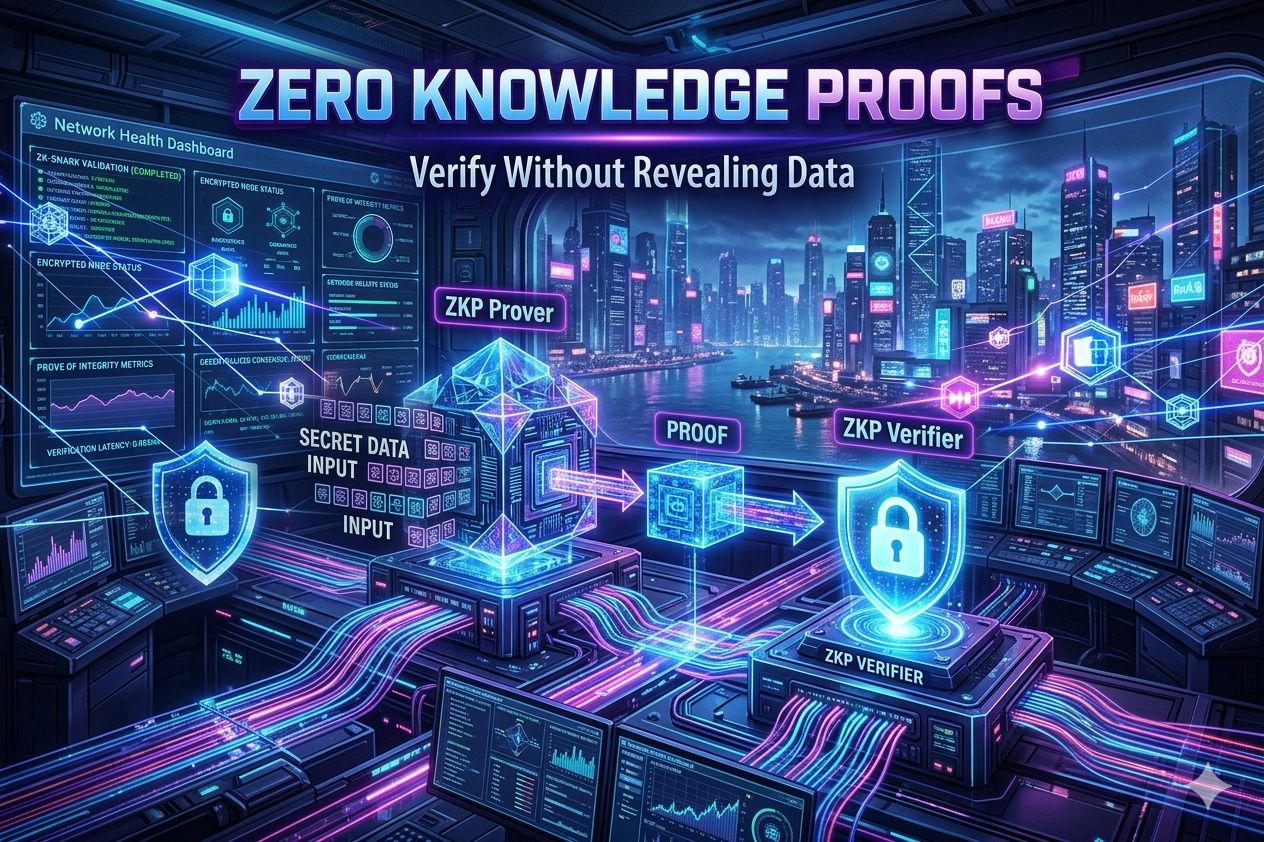
In simple terms, it means you can confirm that something is valid without revealing the details behind it. That concept alone could unlock a lot of possibilities for decentralized applications.
Think about industries that rely on sensitive information. Banks, hospitals, identity services, or even government systems all deal with private data. Public blockchains traditionally struggle in those environments because transparency conflicts with confidentiality.
Midnight seems to be exploring a path where both can exist together.
While learning about this today, it made me realize that the future of Web3 might depend less on hype and more on infrastructure like this. Developers need tools that allow them to build applications where security and privacy are built into the foundation.
If networks like Midnight succeed, users wouldn’t have to sacrifice their personal data just to interact with blockchain systems.
Another thing that caught my attention is the broader idea of data ownership. Right now, most of our online data is stored and controlled by large platforms. We trust them to manage it responsibly, but in reality, we rarely have full control.
Blockchain was always supposed to change that.
Projects focused on privacy and verifiable computation could move us closer to a system where individuals keep ownership of their information while still benefiting from decentralized networks.
Of course, none of this happens overnight.
Crypto has a habit of moving quickly from one trend to the next, but real technological shifts usually take time. Infrastructure projects often grow quietly before people truly understand their value.
That’s why I find Midnight interesting at this stage.
It’s still early, and there’s a lot to prove, but the direction it’s exploring touches on one of the most important challenges in blockchain: how to combine trust, transparency, and privacy in a single system.
If that balance becomes possible, the impact could be far bigger than most people expect.
And sometimes in crypto, the projects that solve fundamental problems are the ones that end up shaping the future.
#night #MidnightNetwork $NIGHT @MidnightNetwork
