
One thing I’ve learned after watching the crypto market for years is that popularity and usefulness rarely arrive at the same time.
A project can become famous long before anyone proves it actually solves something meaningful. Narratives travel faster than products. Prices move faster than adoption. And sometimes an idea becomes valuable simply because enough people start repeating it.
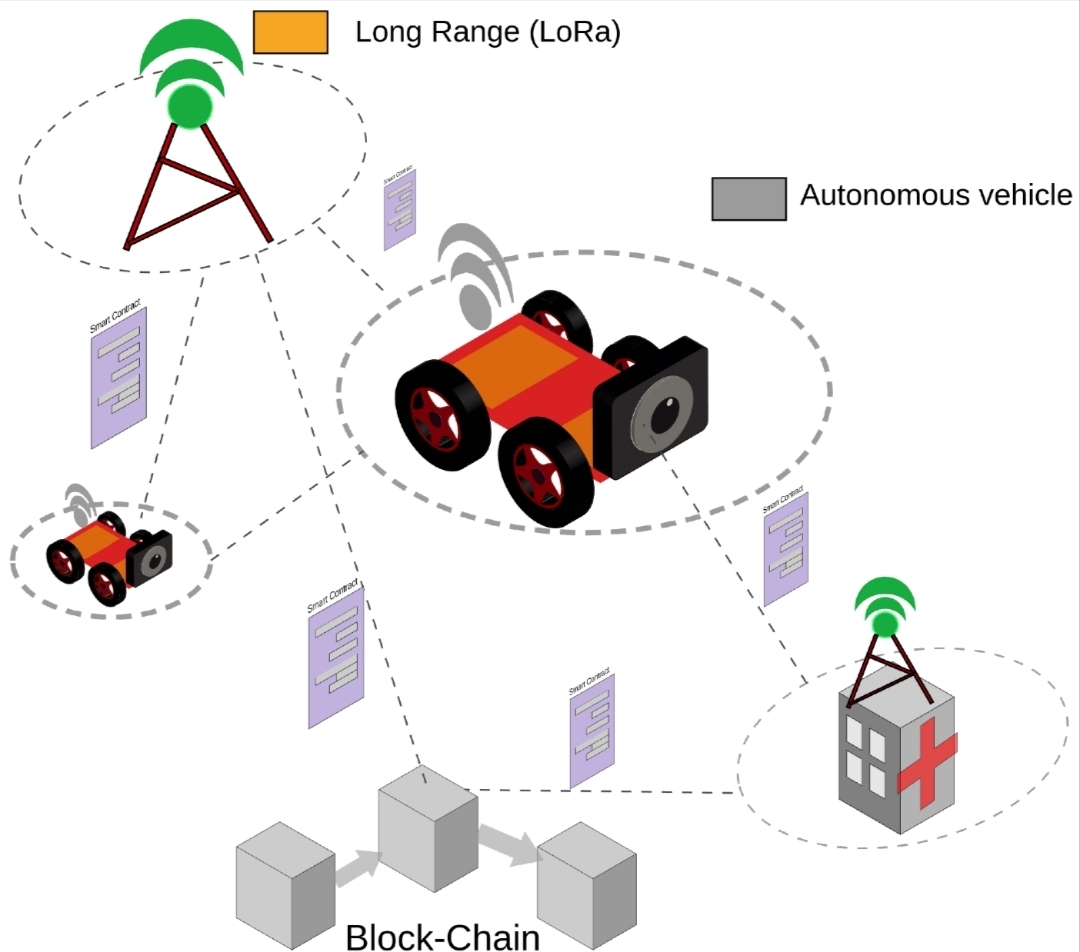
Recently I started seeing the name ROBO appear more frequently across trading feeds and crypto discussions. The token is connected to Fabric Protocol, a project that claims to build an open network for the development and governance of robots using blockchain infrastructure.
At first glance, the concept sounds futuristic and compelling. A global system where robots, data, computation, and rules are coordinated through a shared ledger. Machines interacting with machines. Autonomous agents negotiating tasks. Human oversight enforced through transparent infrastructure.
It’s the kind of idea that spreads quickly in crypto.
But experience has taught me something simple. When a project claims to solve a real-world problem, the best place to start isn’t Twitter or trading groups. It’s the industry the project claims to help.
So I tried to understand Fabric Protocol by looking at the robotics world itself.
I spoke with a few people who work in automation and robotics engineering. Some build warehouse robots. Others work with industrial systems used in manufacturing environments. None of them were familiar with Fabric Protocol specifically, but they were familiar with the broader idea of blockchain entering robotics.
Their reactions were interesting.
Not dismissive. But cautious.
One engineer told me that most robotics systems already rely on highly optimized internal networks. The machines need to communicate instantly, sometimes within milliseconds. Adding an external coordination layer, especially one tied to a distributed ledger, could introduce latency that robotics systems usually try to avoid.

Another person raised a different concern. Responsibility.
If a robot performs an action in the physical world, someone must be accountable for it. A decentralized governance system may sound elegant in theory, but companies operating machines in warehouses, factories, or hospitals still need clear liability structures. A token-based governance model doesn’t easily answer that.
There were also practical considerations.
Industrial robotics already operates within strict regulatory environments. Data security, safety standards, and operational reliability are taken seriously because the machines are interacting with real infrastructure and real people. Integrating public blockchain systems into that environment is not just a technical decision. It’s a legal and operational one.
None of these engineers said the idea was impossible.
But none of them immediately saw an urgent problem that required a blockchain to solve.
That observation stuck with me.
Crypto has a long history of building solutions for problems it assumes exist rather than problems industries actually experience.
Ironically, the sector’s biggest successes came from solving problems inside crypto itself.
Decentralized exchanges solved the need to trade assets without trusting centralized platforms. Lending protocols allowed capital to move efficiently within the digital asset economy. Wallet infrastructure improved how users manage private keys and digital identity.
These were native problems.
They existed inside the crypto ecosystem, so blockchain tools made sense as solutions.
But when crypto reaches into industries that already function with mature systems, the challenge becomes much harder. Those industries already have infrastructure, regulations, and established workflows. Replacing or integrating with them requires more than an interesting architecture.
It requires a clear improvement.
Fabric Protocol now sits at that intersection.
The idea of coordinating robots through verifiable computing and open infrastructure is intellectually appealing. A shared network where autonomous agents collaborate could, in theory, unlock new forms of machine coordination.
But theory and adoption are different things.
For the project to succeed, it must prove something very specific. Not just that the concept is exciting, but that people who operate real robots actually need this infrastructure.
That proof will not come from token price charts or social media discussions. It will come from companies integrating the system into real operations.
Until that happens, the ROBO token represents something closer to a bet on possibility than a reflection of present utility.
Crypto markets often price narratives before reality arrives. Tokens can rise because the story is compelling, because communities grow, or because traders believe others will believe in the story later.
But price movement alone doesn’t confirm that a system is being used in the world it claims to serve.
Buying a token like ROBO is essentially a wager on a future where machine economies become real and where Fabric Protocol becomes a necessary layer within that ecosystem.
Maybe that future arrives.
Maybe it doesn’t.
After years of watching this industry, I’ve learned that the most useful filter for evaluating projects is surprisingly simple.
Whenever a new narrative appears, I try to ask one question before anything else.
What real problem, experienced by people outside crypto, does this actually solve today?