
In a world where artificial intelligence is leaping from screens into the physical realm, the idea of a "Robot Economy" is no longer science fiction—it's an emerging reality. Imagine robots not just as tools in factories, but as autonomous economic actors: earning, spending, and transacting with each other seamlessly. This is the bold vision of the Fabric Foundation, a non-profit organization pioneering decentralized infrastructure for intelligent machines. At the heart of this ecosystem is the $ROBO token, designed to power machine-to-machine (M2M) payments and unlock a new era of human-machine collaboration.
Understanding the Robot Economy
The Robot Economy refers to a future where robots and AI agents participate in the global economy as independent entities. Today, robots are often siloed owned by corporations, limited by proprietary software, and unable to interact freely across systems. They lack the basic infrastructure humans take for granted: financial identities, bank accounts, or the ability to sign contracts. This fragmentation stifles innovation and scalability, especially as demand for automation surges in industries like manufacturing, logistics, and healthcare.
Fabric Foundation aims to bridge these gaps by creating an open, decentralized network. Drawing from blockchain technology, Fabric envisions robots with verifiable on-chain identities, enabling them to work alongside humans safely and productively. This isn't about replacing jobs; it's about broadening opportunities through aligned incentives, where machines handle repetitive tasks and humans focus on creativity and oversight.
Fabric's Ambitious Vision
Founded to accelerate open robotics worldwide, Fabric is building the payment, identity, and capital allocation network for autonomous machines. The foundation's mission is clear: transform robots from isolated tools into first-class economic participants. By integrating the OM1 universal operating system with the @Fabric Foundation robots from various manufacturers (like UBTech or Fourier) can share intelligence, coordinate tasks in real-time, and execute on-chain transactions without human intervention.
Key to this vision is decentralization. Fabric operates as a marketplace infrastructure layer, coordinating robotic labor across geographies and industries. Employers can access robot fleets through programmable contracts, while communities fund deployments via stablecoin pools for maintenance, charging, and routing. This shifts robotics from a capital-intensive, closed model to a collaborative, programmable ecosystem.
The Role of $ROBO: Powering the Ecosystem
Enter $ROBO—the utility and governance token that glues it all together. As the native asset of the Fabric network, $ROBO aligns incentives among developers, operators, humans, and machines. It's not just a currency; it's the fuel for governance, fees, and participation.
Network Fees and Transactions: All protocol-level fees, including those for identity verification and payments, are settled in $ROBO. This creates built-in demand and deflationary pressure as the network grows.
Governance: Token holders influence policies, such as fee structures and ecosystem upgrades, ensuring the network evolves democratically.
Staking and Coordination: Participants stake ROBO for priority access to coordination pools, enabling decentralized funding for robot operations without conferring ownership rights.
Ecosystem Entry: Builders must buy and stake to join, fostering commitment and value accrual.
With a total supply structured for long-term sustainability— including allocations for investors, team, community airdrops, and ecosystem growth and Robo is positioned to capture value from the expanding robot activity.
How It Enables Machine-to-Machine Payments
The magic happens in M2M payments, where $ROBO shines. Robots equipped with web3 wallets and on-chain identities can autonomously transact. For instance:
A robot completes a task (e.g., delivering goods).
It verifies the action on-chain using smart contracts and oracles.
Payment is settled instantly in $ROBO, deducted from the employer's wallet.
The robot can then use those funds for its own needs, like paying for charging or maintenance from another machine.
This is facilitated by Fabric's deployment on the Base network (with plans to migrate to its own Layer 1 chain), ensuring low-cost, scalable transactions. Unlike traditional systems reliant on intermediaries, it's enables direct, trustless M2M interactions think robots renting compute power from each other or sharing skills via tokenized knowledge transfers.
Protocol revenue from fees can even buy back ROBO on the open market, creating positive feedback loops.
Benefits and the Road Ahead
The benefits are profound: faster innovation through open systems, reduced barriers for small operators, and verifiable trust in machine behavior. For crypto enthusiasts, ROBO represents a bet on the intersection of AI, robotics, and blockchain a narrative gaining traction with listings on exchanges like Binance and Bitget.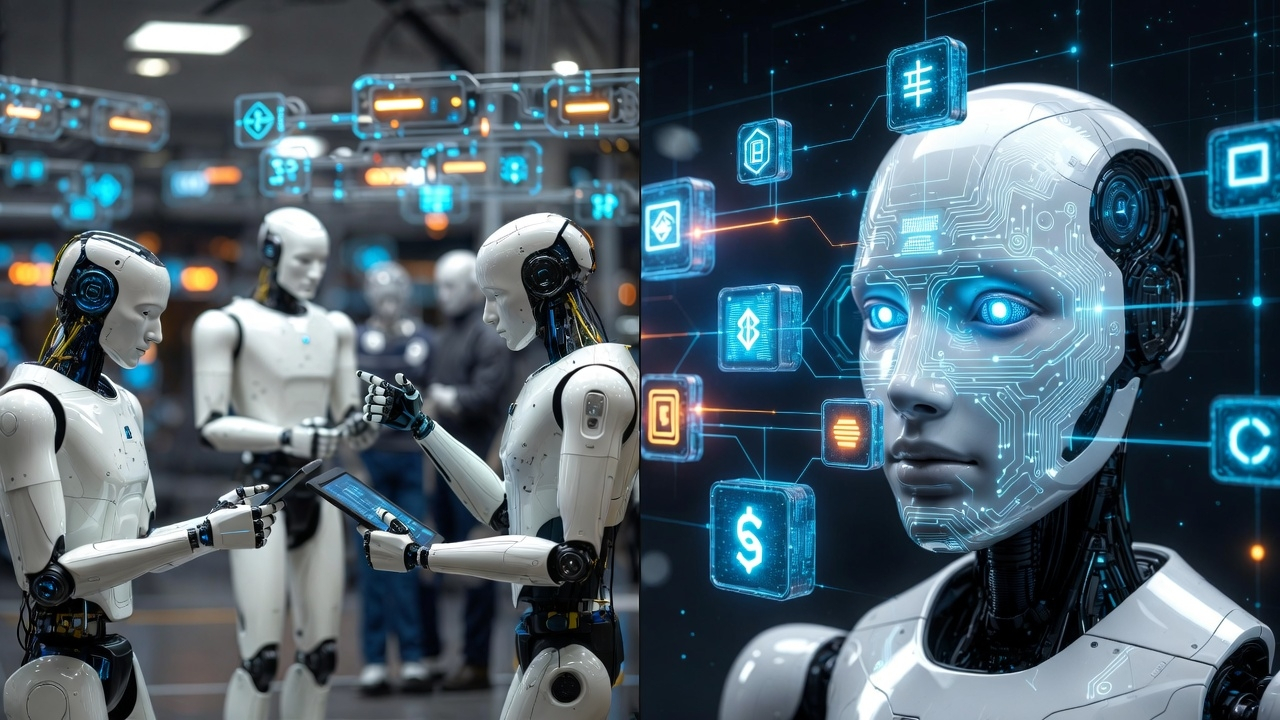
Looking forward, Fabric plans ecosystem expansions, real-world deployments, and partnerships to scale globally. Challenges like insurance and regulatory frameworks remain, but the foundation's non-profit status emphasizes public good over profit.
As robots become integral to our economy, Fabric and ROBO could redefine how we work with machines. Whether you're a developer, investor, or just curious about the future, this is a space worth watching. What do you think will the Robot Economy change everything? Share your thoughts below!
#ROBO #CryptoAi #UseAIforCryptoTrading #CFTCChairCryptoPlan #TrumpSaysIranWarWillEndVerySoon
