


Over the past few weeks, the crypto market has quietly shown something it hasn’t always been known for resilience. Even with rising geopolitical tensions and uncertainty in global markets, Bitcoin has managed to hold its ground within a relatively tight range between $65,000 and $73,000. For a market that historically reacts sharply to fear and headlines, that stability is starting to catch analysts’ attention.
According to a recent market update from Coinbase, panic selling across Bitcoin and Ethereum has dropped dramatically since late February. Earlier in the year, the market saw waves of short-term holders rushing to exit positions during volatility. Now that behavior appears to be fading.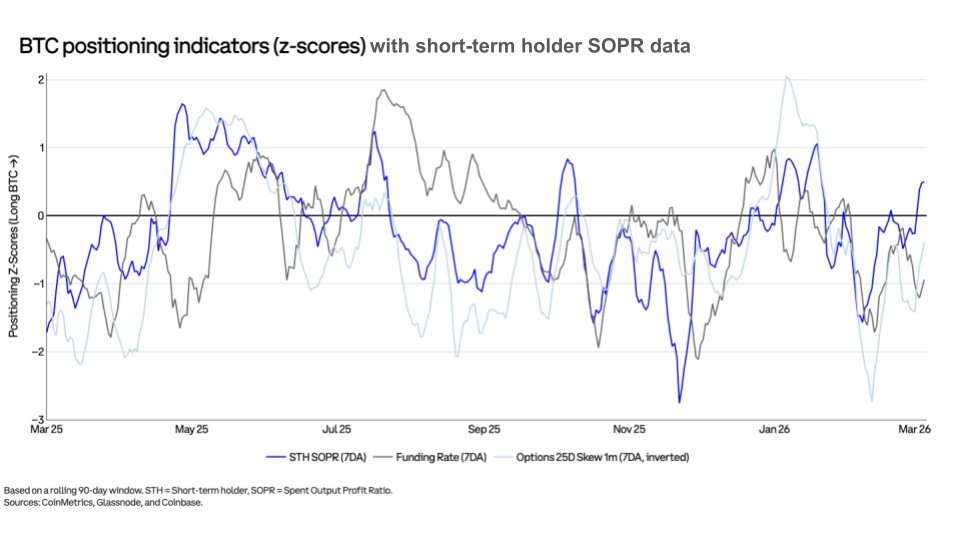
One of the indicators Coinbase analysts pointed to is the Spent Output Profit Ratio (SOPR). This metric helps track whether short-term holders are selling coins at a loss or at a profit. When SOPR begins to rise, it usually signals that demand in the market is strong enough to absorb selling pressure.
That is exactly what analysts believe is happening right now.
Instead of aggressive capitulation, buyers have been stepping in to absorb the supply being sold. In simple terms, the market is finding balance again.
Data from Bitfinex analysts reinforces this view. Earlier this year, Bitcoin investors were selling roughly $3 billion worth of BTC per day at a loss. Recently, that number has fallen to around $370 million. That’s an 87% drop in panic-driven selling pressure, suggesting that most of the traders willing to exit at a discount have already done so.
When this kind of exhaustion happens, it often marks the end of a fear-driven phase in the market.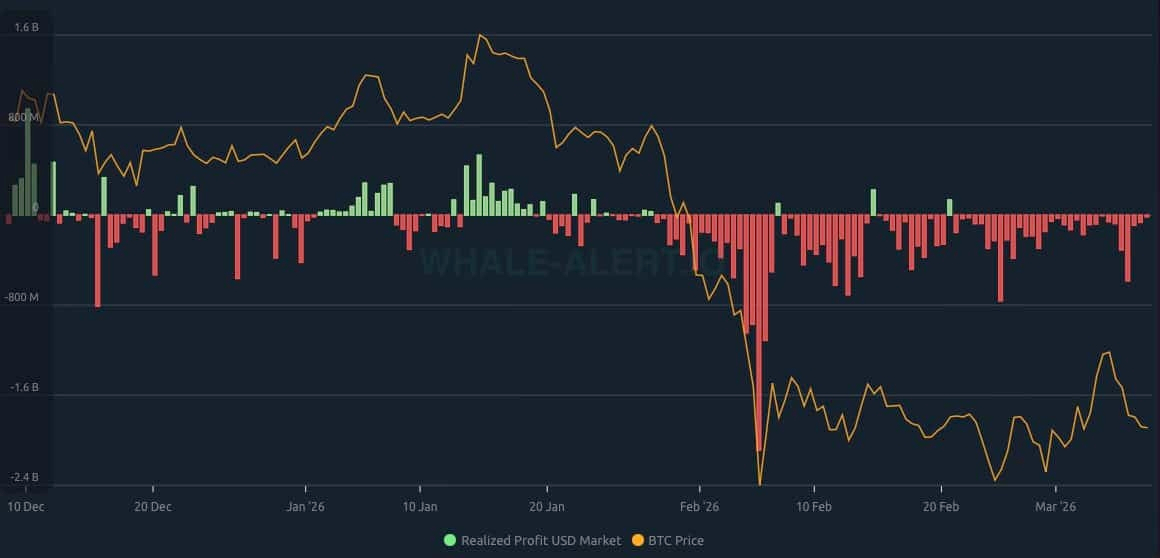
However, the next move will likely depend on fresh demand entering the system.
A major factor analysts are watching is spot Bitcoin ETF flows. Early this week, ETFs recorded net inflows of $167 million on Monday and $250 million on Tuesday. If those inflows continue through the rest of the week, it could provide the momentum needed for Bitcoin to challenge the $73K resistance level.
A break above that level could open the door for a broader market rally.
On the other hand, if inflows slow down and macro uncertainty increases, Bitcoin may simply continue moving sideways for a while longer. Technical indicators also suggest caution. If Bitcoin loses the middle range of the Bollinger Bands, analysts believe the price could drift back toward $65K–$66K.
Momentum indicators like the MACD and RSI are also being watched closely. A MACD death cross or a drop in RSI below its neutral level could signal additional downside pressure in the short term.
Still, the overall tone of the market feels different from the panic that dominated earlier in the year.
Selling pressure has cooled, panic has faded, and long-term investors appear more patient. For now, the crypto market isn’t exploding upward but it’s also not collapsing under pressure.
Sometimes in markets, stability itself is the signal.
And right now, Bitcoin seems to be quietly building its next move.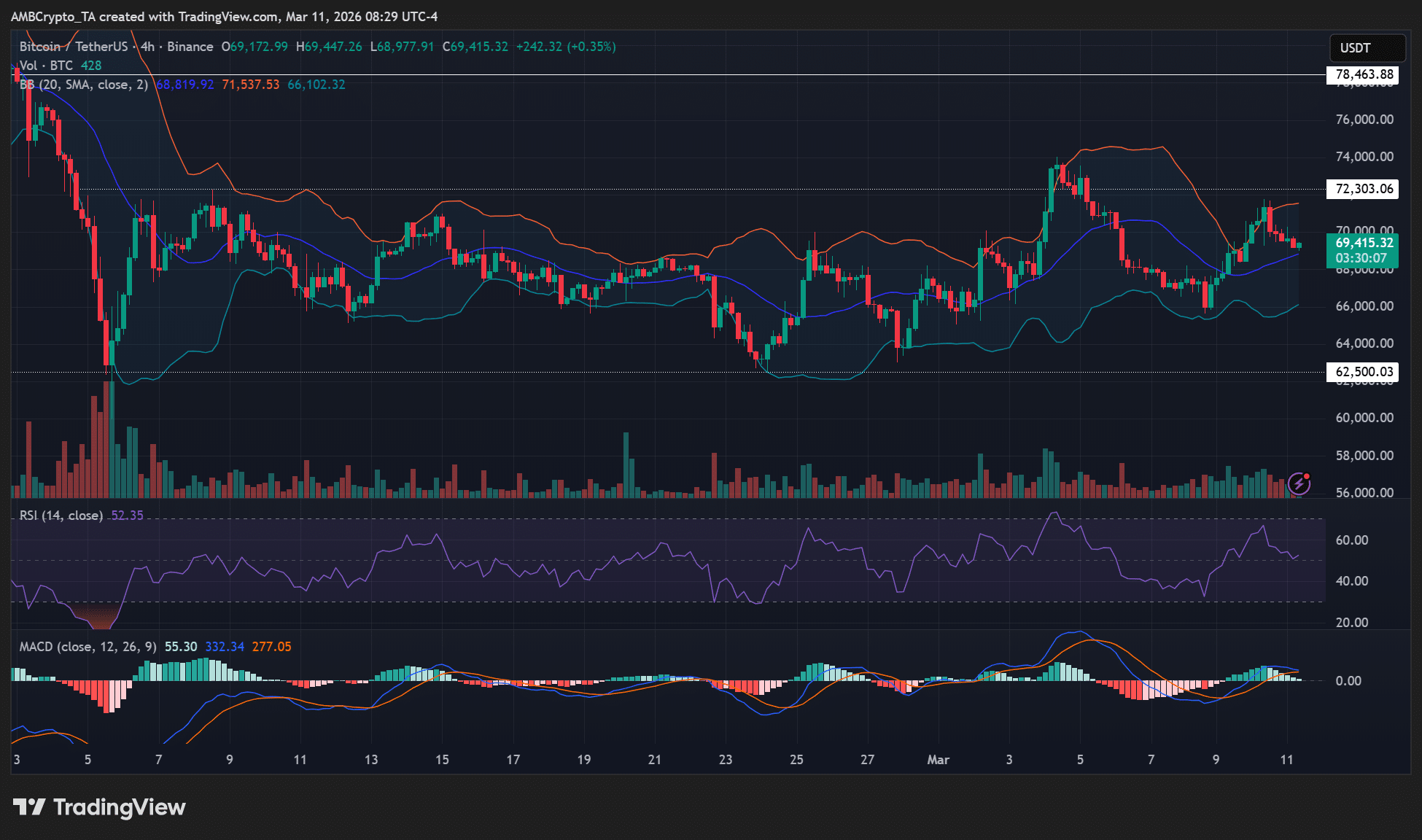
#BinanceTGEUP #IranianPresident'sSonSaysNewSupremeLeaderSafe #UseAIforCryptoTrading