
In the crypto world, attention usually goes to the loudest projects — the ones making big promises, running aggressive marketing campaigns, or chasing quick hype. But sometimes, the most interesting ideas grow quietly in the background. Fabric Protocol feels like one of those projects.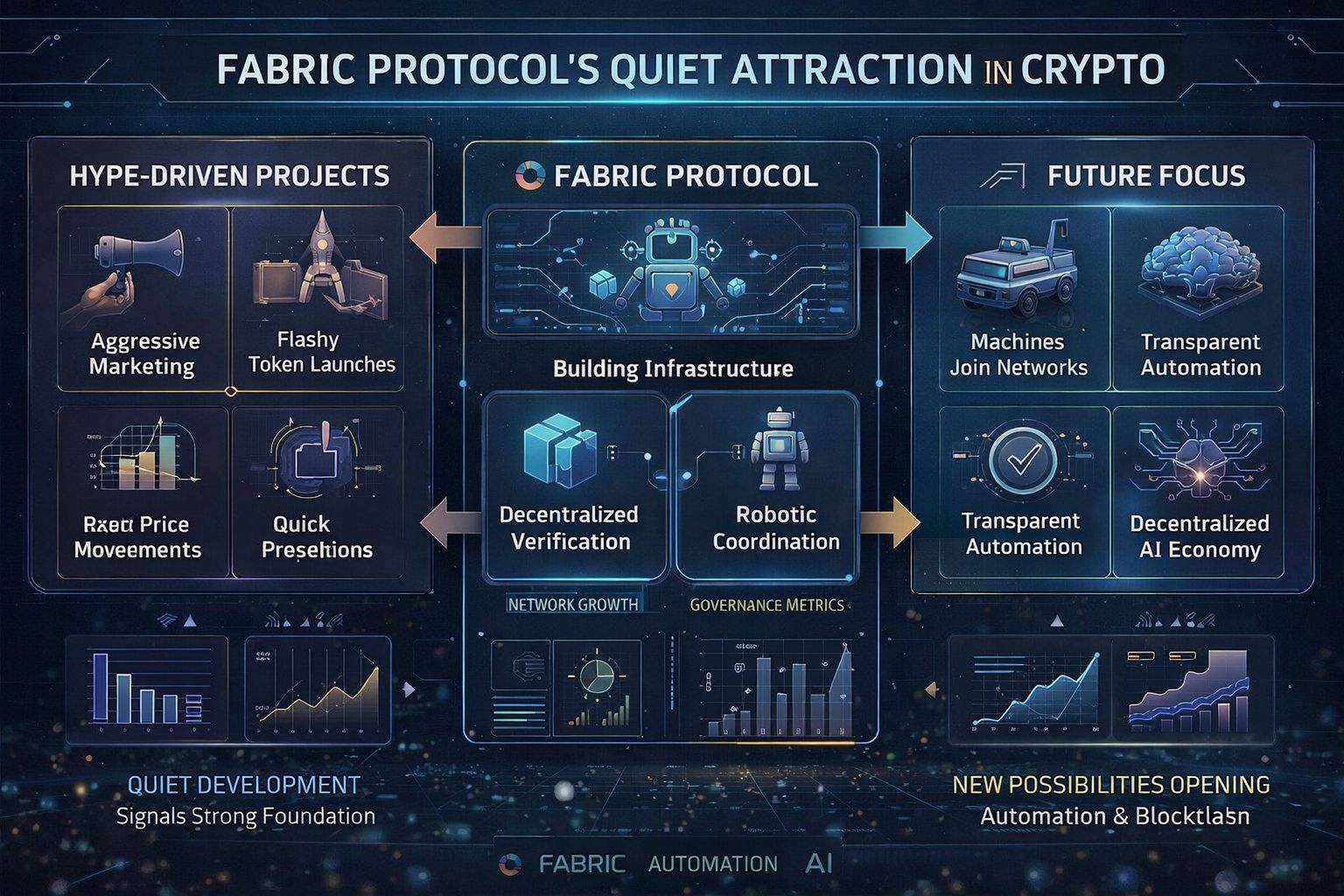
Instead of focusing on noise, Fabric seems more focused on building infrastructure. The idea behind it is simple but powerful: creating a decentralized system where machines, robots, and automated tasks can operate through blockchain verification.
As automation grows around the world, machines are already completing real tasks — deliveries, warehouse operations, dataprocessing, and more. But coordinating these machines across open networks raises important questions about identity, verification, and fair rewards.
This is where Fabric Protocol becomes interesting.
By combining blockchain verification with machine coordination, the protocol explores how autonomous systems could interact in a transparent, decentralized environment. Rather than relying entirely on centralized platforms, tasks and results could be verified through a network that anyone can observe and participate in.
That concept might sound subtle today, but its implications could grow much larger as robotics and AI continue expanding.
What makes Fabric stand out isn’t hype — it’s the direction it’s pointing toward. If machines eventually become active participants in digital economies, protocols like Fabric could help organize how work is verified and rewarded across decentralized networks.
And that’s where the quiet pull comes from.
It’s not about loud announcements or short-term attention. It’s about the feeling that something important is slowly taking shape — a system designed for a future where automation, AI, and blockchain begin working together.
Sometimes the most meaningful innovations in crypto don’t arrive with noise.
They arrive quietly — and then people slowly realize what’s being built.
@Fabric Foundation #ROBO $ROBO
