
The digital landscape is currently witnessing a historic collision between two of the most transformative technologies of our time: Artificial Intelligence and Decentralized Networks. For years, AI development has been a "walled garden" affair, dominated by a handful of tech giants with the massive compute power and data silos required to train large-scale models. However, a shift is occurring. As we move deeper into 2026, the demand for transparency, data sovereignty, and open access is giving rise to a new paradigm: Decentralized AI (DeAI).
At the heart of this movement is the Fabric Foundation, an organization dedicated to building the underlying economic and governance "fabric" that allows intelligent machines and humans to coexist and collaborate in a secure, open-market environment. 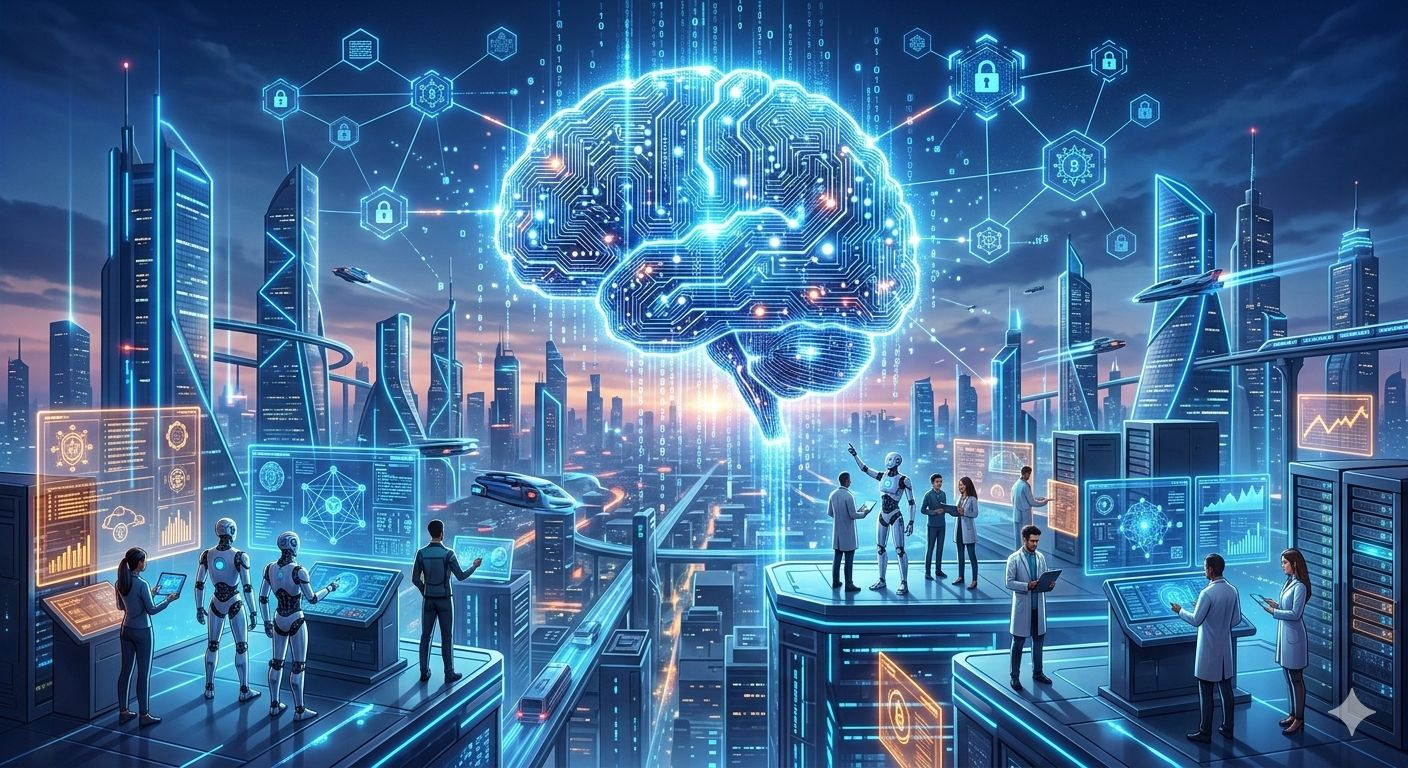
A New Digital Economy: From Tools to Agents
For the last decade, we have treated AI as a suite of tools—chatbots that answer questions or algorithms that recommend videos. But the future of the digital economy lies in Autonomous Agents. These are AI entities capable of making independent decisions, managing budgets, and executing complex tasks across different platforms.
Decentralization is the missing puzzle piece for these agents. In a centralized system, an AI agent is restricted by the rules of its parent company. In a decentralized economy, an AI agent can hold its own cryptographic keys, sign contracts, and pay for its own resources (like cloud compute or electricity) using blockchain-based tokens. This transition transforms AI from a passive service into an active, sovereign participant in the global economy.
What is the Fabric Foundation?
The Fabric Foundation acts as the architectural backbone for this "Robot Economy." Rather than building a single AI model, Fabric focuses on the coordination layer. Their mission is to ensure that as robots and AI systems enter the physical world—in manufacturing, healthcare, and logistics—they do so within a framework that is transparent and human-aligned.
One of the foundation’s key contributions is the development of a decentralized identity and payment infrastructure. This allows a robot from one manufacturer to communicate and transact with a system from another, breaking down the "data silos" that currently plague the industry. By providing a universal operating language through protocols like OM1, Fabric is essentially building the "Internet of Pipes" for the next generation of intelligent machines.
The Role of Blockchain Integration
Blockchain is often misunderstood as merely a vehicle for currency, but for the Fabric Foundation, it is a trust machine. By integrating AI with blockchain, several critical hurdles are cleared:
Verifiable Logic: In a decentralized network, the "decisions" made by an AI can be recorded on an immutable ledger. This provides an audit trail that is essential for safety and accountability.
Incentive Alignment: Through the use of native utility assets like the $ROBO token, the Fabric ecosystem rewards contributors—whether they are providing data, training models, or maintaining hardware nodes.
Edge Intelligence: By utilizing decentralized physical infrastructure (DePIN), Fabric supports "Edge AI." This means intelligence is processed locally on devices rather than sent to a distant cloud, reducing latency and increasing privacy.
Innovation and Future Opportunities
The potential for innovation within the Fabric ecosystem is vast. We are already seeing the emergence of Open Robotics Networks, where developers can "plug in" new capabilities to existing hardware. Imagine a world where a delivery drone, a warehouse robot, and a smart city sensor—all made by different companies—can coordinate their actions in real-time to optimize a supply chain without any human intervention.
For developers and entrepreneurs, this represents a "Gold Rush" of infrastructure. The opportunity is no longer just in building the AI itself, but in building the services that AI agents need: decentralized insurance for autonomous vehicles, specialized marketplaces for machine-to-machine data, and governance protocols that ensure these systems remain ethical and beneficial to society.
The Path Ahead
The road to a fully decentralized AI future is not without its challenges. Scalability, energy consumption, and regulatory clarity remain significant hurdles. However, the momentum is undeniable. Projects like the Fabric Foundation are moving the conversation away from "Will AI replace humans?" toward "How can we build a system where humans and machines work together transparently?"
As we look toward the end of the decade, the centralization of intelligence will likely be seen as a brief, transitional phase. The future is distributed, open-source, and autonomous. By laying the groundwork today, the Fabric Foundation is ensuring that the intelligence of tomorrow isn't just powerful—it's accountable.
Would you like me to dive deeper into the specific tokenomics of the $ROBO token or perhaps draft a technical summary of the OM1 operating system?
