
I didn’t expect a robotics token to feel this… practical
Most “AI + crypto” narratives melt the moment you ask one real question: what does this actually unlock in the real world? That’s why $ROBO caught me off guard. The more I read, the more it feels like Fabric isn’t trying to win a trend — it’s trying to build the missing infrastructure for the next decade.
Because if robots are about to move from demos to daily life, the biggest bottleneck won’t be “better hardware.” It’ll be everything around them: identity, payments, coordination, governance, accountability — the boring stuff that quietly decides whether a system can scale.
Fabric’s whole angle is simple and bold: Own the Robot Economy.
What Fabric is building
Fabric is positioning itself as an open coordination layer for robots — basically the rails that let robots become “first-class economic participants,” not just machines inside one company’s private silo.
Right now, robots mostly operate in closed fleets: one operator buys them, maintains them, signs contracts, handles payments, and everything stays locked inside that operator’s world. Fabric is pushing a different direction — one where coordination and settlement can be standardized, transparent, and open to more participants. That’s the “robot economy” thesis in plain terms.
The big missing piece today: robots don’t have a “financial identity”
This part is the hook for me.
Humans can open accounts, sign contracts, get paid, buy services, prove identity, build reputation. Robots can’t — not in a global, interoperable way. So even if robots become super capable, they still get trapped behind vendor lock-in, private systems, and fragmented software.
Fabric argues robots need three things to scale like a real workforce:
1. a persistent identity registry (who is this robot, who controls it, what can it do, what’s its history)
2. a wallet (so it can receive/pay for services)
3. transparent coordination (so participation and settlement can be standardized globally)
And honestly? That’s the first time I’ve seen the “robots + crypto” story feel like real infrastructure instead of vibes.
OpenMind: why the “Android for robots” comparison keeps coming up
Fabric doesn’t exist in a vacuum. The broader ecosystem story is tied to OpenMind, which has been framing its mission around creating a kind of common software layer for robots — the same way Android became a standard layer for phones.
This isn’t me romanticizing it — that “Android for humanoid robots” framing has been reported directly, and it matches what Fabric is trying to enable: robots that can operate across environments, verify identity, share context, and coordinate instead of being trapped in isolated stacks.
Where $ROBO fits (and why it’s more than “another ticker”)
This is where I’m very picky: if a token is real infrastructure, it has to be attached to real usage, not just a story.
Fabric Foundation describes $ROBO as the core utility + governance asset tied to participation across Fabric — aligned with the “Own the Robot Economy” mission.
From what the Foundation has outlined, the direction is:
• network-level activity and coordination require the token
• governance and ecosystem participation revolve around it
• it’s designed to be used inside the system, not just traded outside it
And the supply point matters too: multiple sources (including the Binance Square post and market trackers) reference a 10B max supply and current circulating supply figures.
The claim portal going live is a real milestone
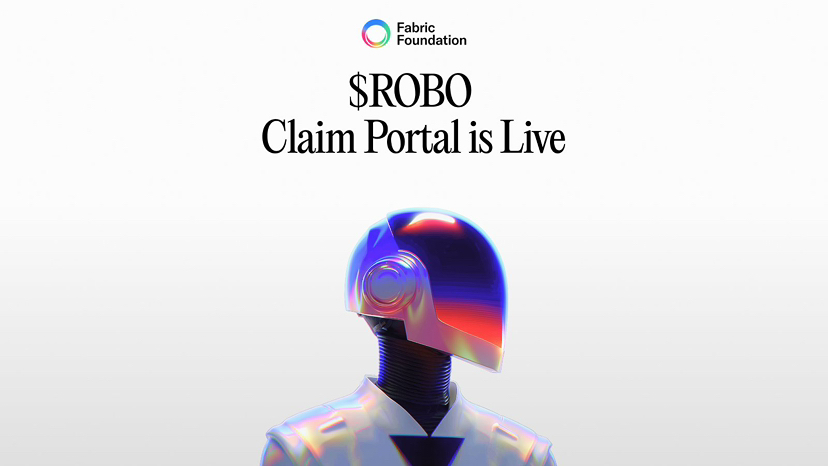
The visuals you shared (claim portal announcement) match what’s live publicly: Fabric has an official ROBO claim portal, and there’s also an official blog post for eligibility/registration steps ahead of claims.
I always watch how teams handle claim mechanics because it shows operational maturity. Clean terms, clear windows, fewer surprises — that’s not “hype,” that’s process.
Listing + derivatives: why it matters (even if you’re not trading)
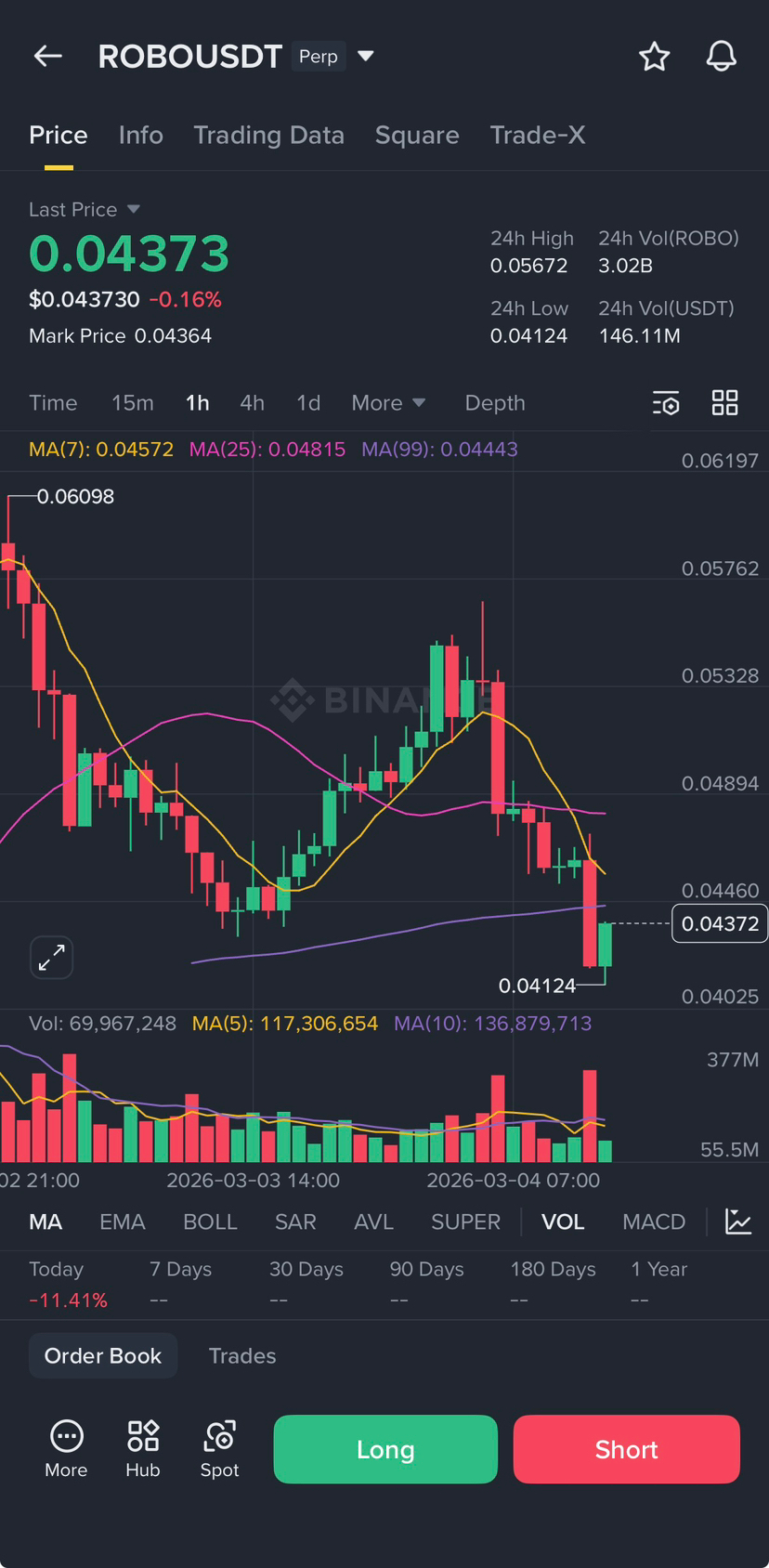
You also shared the ROBOUSDT perp screen — and yes, Binance has published an announcement for a ROBOUSDT perpetual contract launch with details like time and leverage limits.
Even if someone isn’t trading perps, this kind of listing infrastructure matters because it tends to:
• increase market access/liquidity
• bring more attention from serious participants
• pressure-test price discovery early
It’s not “bullish by default,” but it is a real market milestone.
Another reason I keep watching this: infrastructure stories usually look boring before they look obvious
That’s something I’ve noticed again and again. The market often pays attention to the flashy layer first — the robot demo, the humanoid clip, the viral AI moment. But the more lasting value usually sits underneath, in the rails that actually let those systems operate reliably at scale. That’s why Fabric feels different to me. It’s focused on the layer most people skip over because it sounds less exciting, even though it might end up being the part that matters most.
If robots eventually become active participants in logistics, delivery, manufacturing, services, or even personal assistance, then economic coordination will stop being a side question. It will become the main question. How do they get identified, how do they transact, how do they prove task completion, and how do different systems trust each other without relying on one company to control everything? Fabric is interesting because it is starting from those questions instead of pretending they can be solved later.
What would actually make me more confident long term
For me, the next level of conviction would come from seeing more proof that this can move from theory into repeatable execution. I want to see real integrations, real operational use cases, smoother onboarding for participants, and evidence that the token is tied to actual network behavior rather than just exchange attention. That’s the difference between a strong narrative and a durable infrastructure play.
At the same time, I think being early in a category like this means accepting that some uncertainty is part of the thesis. Robotics is hard, coordination is hard, and open systems are even harder. But if Fabric can keep building through that complexity and show that open robot infrastructure is not just possible but practical, then ROBO could end up representing something much bigger than a temporary trend.
The part I’m watching next: can Fabric move from concept to coordination at scale?
Here’s my honest take: the robot economy is a massive idea, but it only becomes real when coordination is tested in messy reality — hardware issues, maintenance, uptime guarantees, safety standards, local regulation, insurance, real service contracts.
The optimistic version is powerful: open identity + open settlement + open coordination could let robotics scale beyond a few giants and become a broader networked economy.
The skeptical version is also valid: physical-world systems are brutally hard, and execution will matter more than whitepaper poetry.
But the reason I’m still paying attention is simple: Fabric is at least aiming at the correct problem. It’s not trying to be “another AI token.” It’s trying to build the rails that make robotics economically interoperable.
And if that becomes true, @Fabric Foundation won’t need to scream to be valuable — it’ll quietly become necessary.