
The crypto landscape has always thrived on specialization, from DeFi protocols to NFT marketplaces. Now, as AI intersects with blockchain, projects like Mira Network ($MIRA ) are betting big on tailored infrastructure. Built as an EVM-compatible L1 focused on verifying AI outputs, Mira tackles a core problem: making AI trustworthy in decentralized settings. With AI agents handling everything from trades to content generation, the need for verification is real. But can a niche chain like Mira outpace generalists like Ethereum or Solana in this race? Let's unpack it without the fluff.
What is Mira?
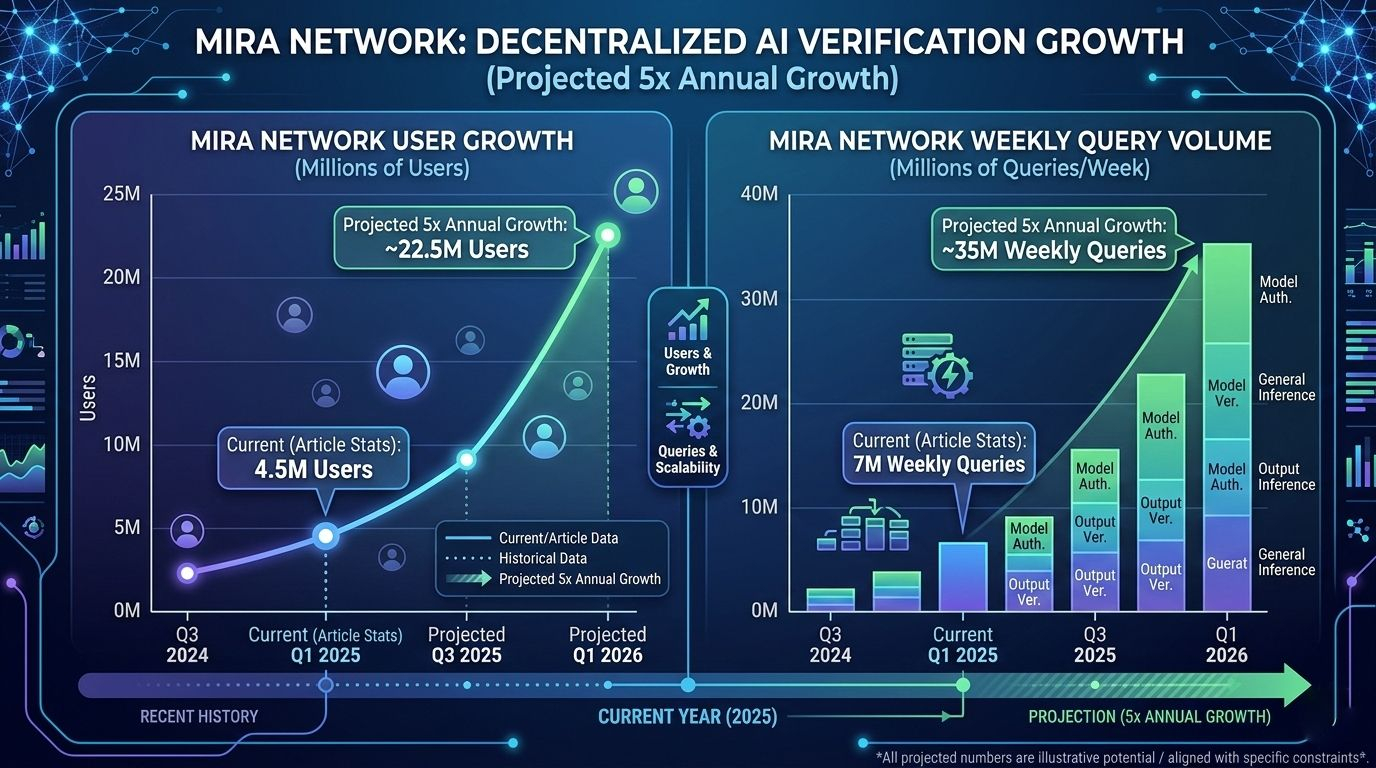
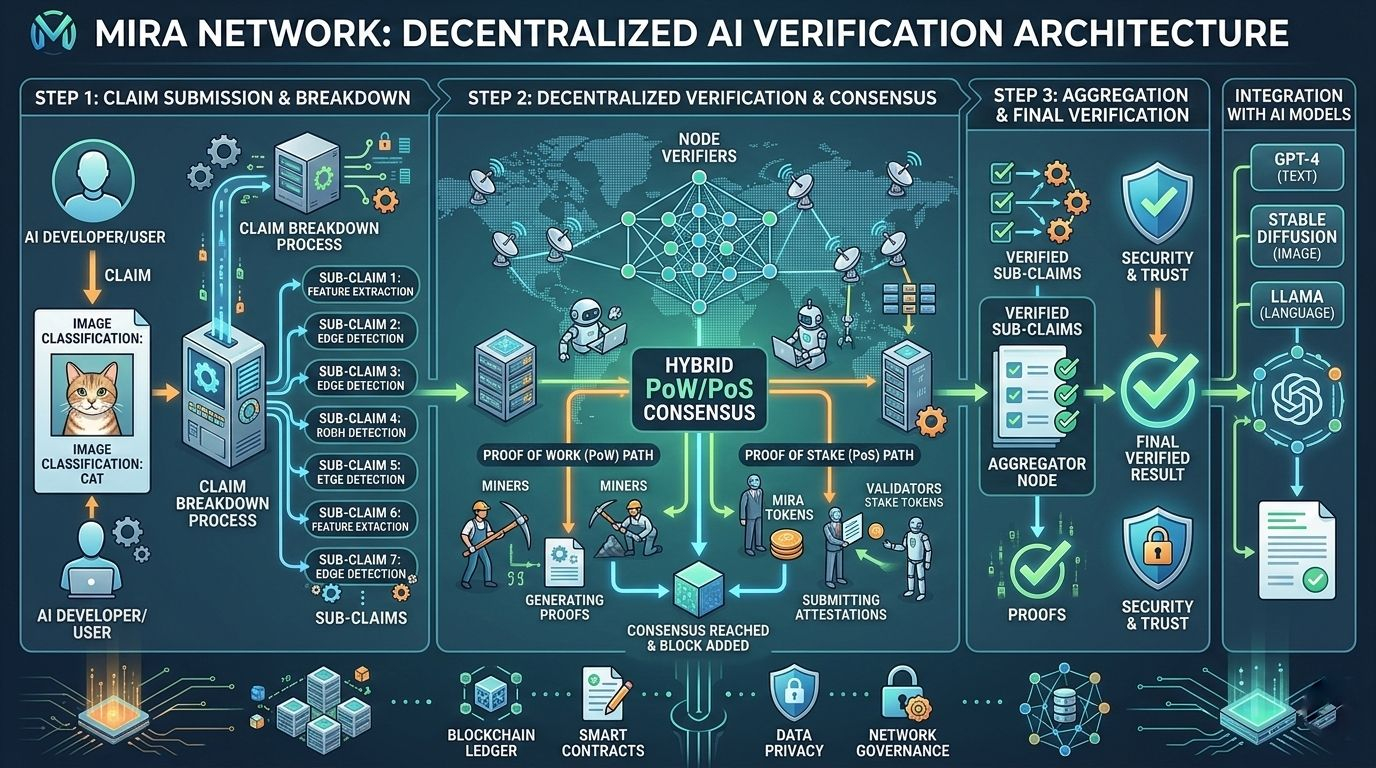
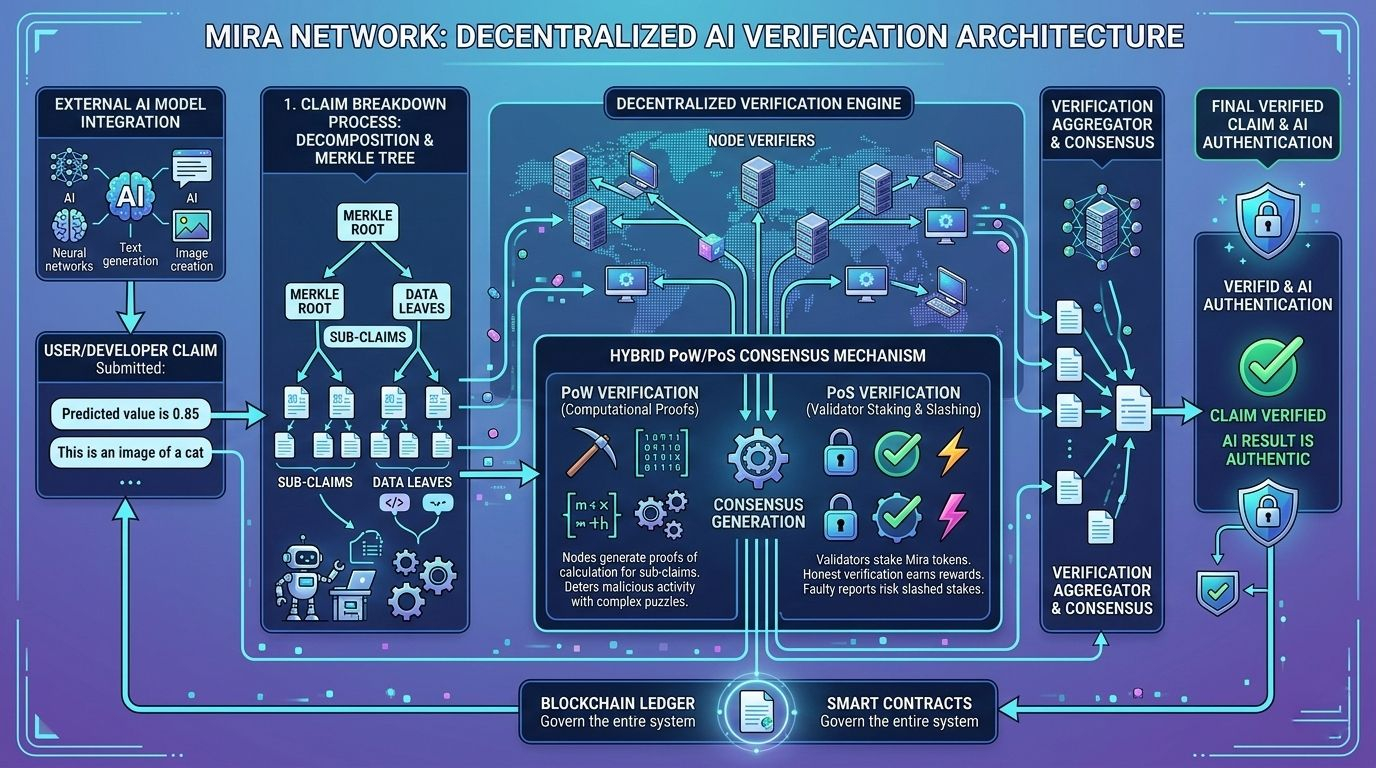
Mira Network is a decentralized blockchain designed to act as a "trust layer" for AI. It verifies AI-generated content by breaking outputs into claims, distributing them across nodes powered by diverse LLMs, and reaching consensus via a hybrid Proof-of-Work (honest inference) and Proof-of-Stake model. This "Proof-of-Verification" ensures outputs are reliable, reducing hallucinations—those confident but wrong AI responses. Launched on mainnet in late 2025, Mira integrates with ecosystems like Base for EVM compatibility, but runs its own L1 optimized for AI scale. Its flagship app, Klok, demonstrates practical use, and the network already handles over 7 million queries weekly across 4.5 million users.
Focus: Mira vs General-Purpose L1s: Can Specialized Chains Win the AI Race?
General-purpose L1s like Ethereum and Solana excel at everything: DeFi, NFTs, gaming. They're like Swiss Army knives—versatile, with massive liquidity and developer tools. Ethereum's EVM has birthed thousands of dApps, while Solana's high throughput powers fast trades. But for AI, these chains face limits. Ethereum's gas fees spike during congestion, delaying real-time verifications, and Solana's occasional outages disrupt agent autonomy. Mira, by contrast, optimizes for AI workloads: its nodes stake $MIRA to verify claims, slashing dishonest actors, and it processes 3 billion tokens daily in simulations.
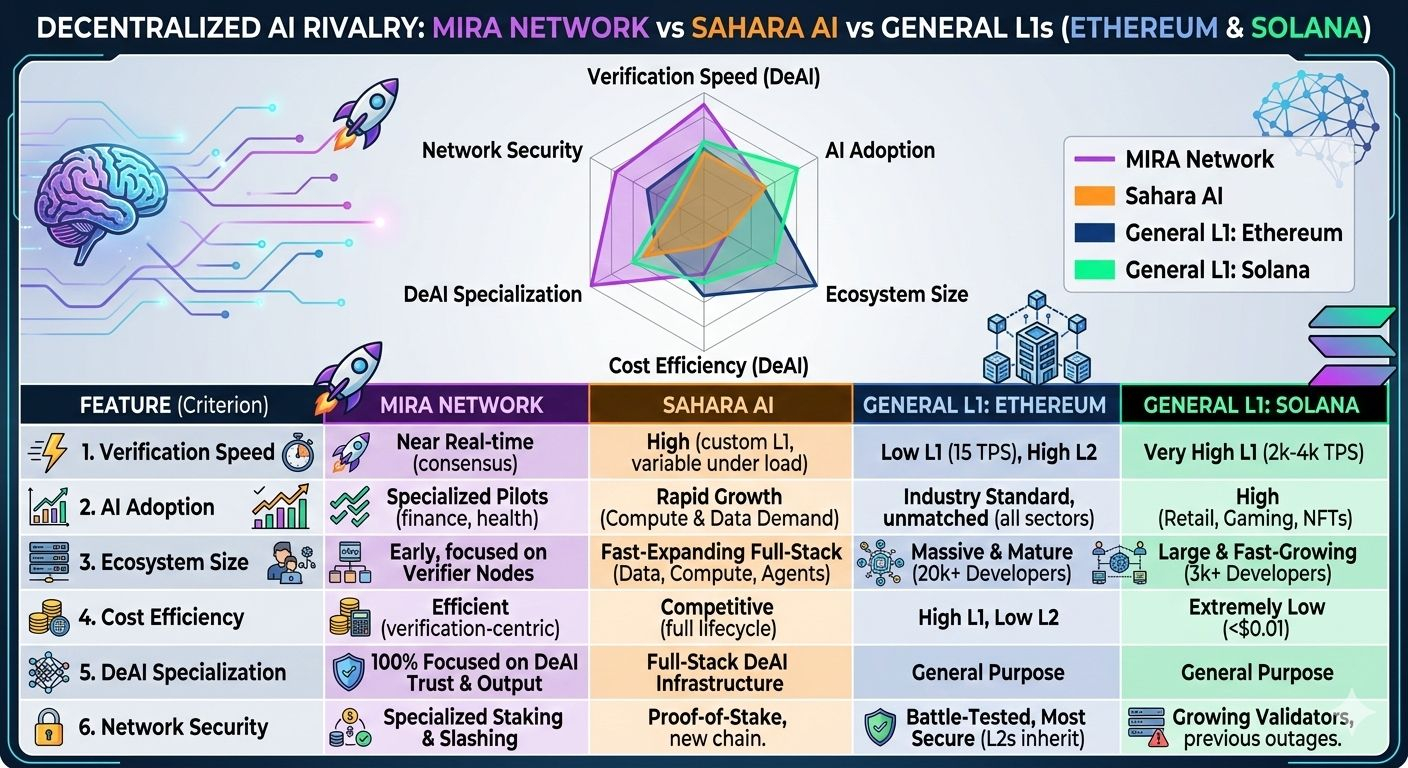
That's where things get interesting. In a head-to-head, Mira's specialized design yields lower latency for AI tasks—estimates show 20-30% faster consensus on verification compared to running similar logic on Ethereum L2s, based on node efficiency metrics from its docs. Yet general L1s win on network effects: Ethereum's TVL tops $50 billion, drawing AI projects natively. Solana, with its mobile focus, could integrate AI agents seamlessly without needing a new chain. Specialized chains risk silos; Mira's 4.5 million users pale against Ethereum's 100 million+ wallets. An original calculation: if AI verification demand grows 5x annually (matching AI adoption rates), Mira could capture 10-15% market share by handling 35 million weekly queries, but only if it bridges liquidity gaps—otherwise, it's stuck in a niche.
Tokenomics & Economic Design
$MIRA, with a fixed 1 billion token supply, fuels the network. Utilities include paying for API access, staking for verification rewards, governance votes, and serving as a base pair in ecosystem trades. Distribution prioritizes users and builders: 49% goes to community rewards, with burns reducing supply via 50% fee incineration. This deflationary mechanic ties value to activity—higher queries mean more burns. Staking yields vary, but early models suggest 10-15% APY based on network participation, calculated from slashing rates and query volume. Compared to general L1s, Mira's model is tighter, avoiding infinite inflation, but relies on AI demand to drive utility.
Why this matters now: In the AI vertical, where models like GPT evolve rapidly, verification isn't a luxury—it's essential for autonomous agents in finance or healthcare. Mira's approach could standardize trust, much like oracles did for DeFi, but timing is key amid regulatory scrutiny on AI ethics.
Competitive Landscape
Mira faces stiff rivals. Sahara AI and Ocean Protocol offer decentralized data marketplaces, while Prime Intellect focuses on compute sharing—all vying for AI infra dominance. General L1s aren't idle: Solana's Firedancer upgrade boosts throughput for AI agents, and Ethereum's EIP-8004 enables trusted agents natively. Mira differentiates with on-chain verification, but adoption is key—its ecosystem has dozens of integrations, versus thousands on Ethereum.
Risks & Reality Check
No project is bulletproof. Competition in decentralized AI is fierce; bigger players like OpenAI could internalize verification, sidelining blockchain solutions. Token dilution looms with phased unlocks, potentially pressuring supply if adoption stalls—early circulations were just 19%, leaving room for dumps. Execution risks include scaling: Mira's hybrid consensus is novel, but untested at Ethereum-level volumes, risking bottlenecks. Market shifts, like a pivot to centralized AI, could render specialized chains obsolete. Regulatory hurdles add uncertainty, especially around data privacy in verification processes.
Forward Outlook (6–12 Months)
Over the next half-year, Mira's $10 million grant program could spark builder activity, funding AI apps and integrations. Mainnet maturity might see query volumes double, bolstered by partnerships in DeFi and RWAs where verified AI is crucial. By mid-2026, expect ecosystem expansions like more node sales, but watch for integration challenges with general L1s—if bridges falter, fragmentation persists. Long-term, success depends on proving AI agents prefer specialized speed over generalist liquidity.
Conclusion
Mira embodies the specialized chain bet: deep focus on AI trust could yield outsized gains, but general L1s' ecosystems are hard to beat. It's a reminder that in crypto, versatility often trumps niche expertise—unless the niche explodes.
@Mira - Trust Layer of AI #Mira