$AAPLon
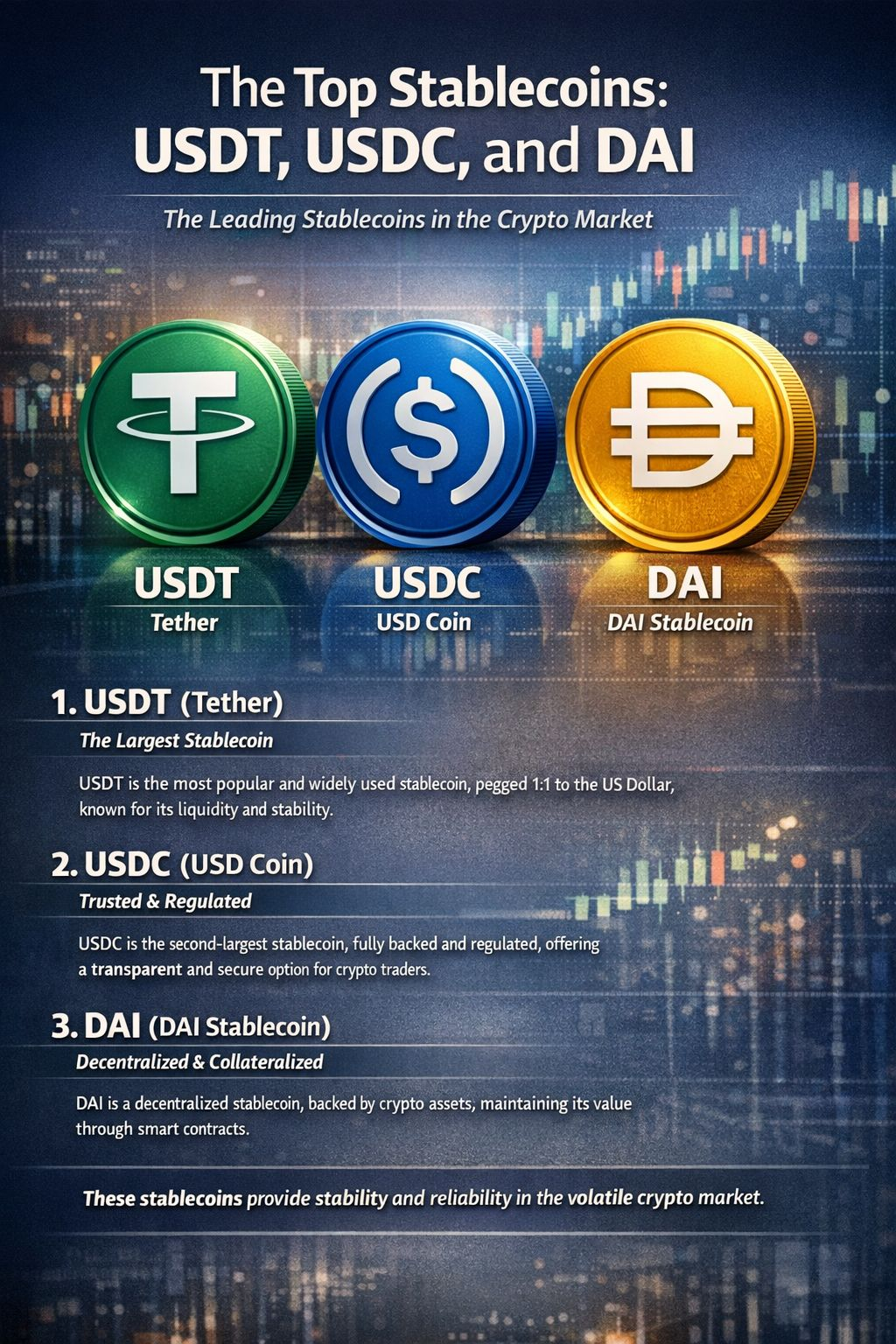
The Top Three Stablecoins by Market Capitalization: USDT, USDC, and DAI
In the rapidly evolving world of cryptocurrency, stablecoins have emerged as one of the most important innovations in digital finance. Unlike volatile cryptocurrencies such as Bitcoin or Ethereum, stablecoins are designed to maintain a stable value—usually pegged to a fiat currency like the US dollar. This stability makes them essential tools for trading, investing, payments, and decentralized finance (DeFi).
Among hundreds of stablecoins in the market, three consistently dominate by market capitalization: Tether (USDT), USD Coin (USDC), and DAI (DAI). Each has a unique structure, level of transparency, and role within the crypto ecosystem. This article explores why these three stablecoins lead the market and what differentiates them.
🥇 Tether (USDT): The Market Leader
Tether (USDT) holds the position as the largest stablecoin in the world by market capitalization. Launched in 2014, USDT was one of the first stablecoins to gain widespread adoption. Its primary goal is simple: maintain a 1:1 value with the US dollar.
Why Is USDT the Largest?
High Liquidity
USDT is listed on nearly every major cryptocurrency exchange worldwide. It is often used as a trading pair against Bitcoin, Ethereum, and thousands of altcoins.Global Adoption
Many traders, especially in regions with limited access to traditional banking, use USDT as a digital dollar. It allows users to store value and move funds quickly without relying on banks.Cross-Chain Availability
USDT operates on multiple blockchains, including Ethereum, Tron, and others. This flexibility makes it accessible and convenient for various use cases.
Because of its first-mover advantage and massive trading volume, USDT remains the dominant stablecoin in both centralized and decentralized markets.
🥈 USD Coin (USDC): The Transparency-Focused Alternative
USD Coin (USDC) is the second-largest stablecoin by market cap. It was launched in 2018 through a partnership between fintech companies and is known for its strong emphasis on regulatory compliance and transparency.
What Makes USDC Different?
Regulatory Compliance
USDC is designed to align closely with financial regulations. It is widely seen as a more institution-friendly stablecoin.Regular Audits
The reserves backing USDC are regularly audited and publicly reported, increasing investor confidence.Institutional Use
Many companies and fintech platforms prefer USDC for payments, remittances, and treasury management due to its transparent reserve model.
USDC has become a popular choice among institutional investors and businesses that prioritize regulatory clarity and financial reporting.
🥉 DAI (DAI): The Decentralized Stablecoin
Unlike USDT and USDC, which are backed by centralized reserves, DAI operates differently. DAI is a decentralized stablecoin governed by smart contracts and backed by crypto collateral rather than direct fiat reserves.
How DAI Works
DAI is created through over-collateralized crypto deposits in decentralized protocols. Users lock up cryptocurrencies as collateral, and in return, they can mint DAI. The system automatically maintains stability through smart contract mechanisms and governance decisions.
Why DAI Is Important
Decentralization
DAI is not controlled by a single company. Instead, it is managed through decentralized governance.Transparency On-Chain
All collateral and transactions are visible on the blockchain, offering full transparency.DeFi Integration
DAI is heavily used in decentralized finance applications, including lending, borrowing, and yield farming.
DAI represents the decentralized philosophy of cryptocurrency, offering an alternative to centralized stablecoin models.
Comparing the Top Three Stablecoins
FeatureUSDTUSDCDAIMarket Cap Rank1st2nd3rdBackingFiat ReservesFiat ReservesCrypto CollateralGovernanceCentralizedCentralizedDecentralizedPopular UseTrading & LiquidityInstitutional PaymentsDeFi Applications
Each stablecoin serves a slightly different audience:
USDT dominates in trading and liquidity.
USDC appeals to institutions and compliance-focused users.
DAI attracts DeFi users who value decentralization.
Why Stablecoins Matter in the Crypto Economy
Stablecoins act as a bridge between traditional finance and the crypto world. They offer:
Protection from volatility
Fast global transactions
Access to decentralized finance
An alternative to traditional banking systems
For traders, stablecoins allow quick movement in and out of volatile assets. For businesses, they provide a digital payment solution. For DeFi users, they enable borrowing, lending, and earning yields without relying on banks.
The Future of Stablecoins
As global interest in digital currencies grows, stablecoins are likely to become even more important. Governments and regulators are closely examining stablecoin frameworks, and central banks are exploring digital currencies of their own.
Despite regulatory challenges and market competition, USDT, USDC, and DAI continue to lead because they each fill critical roles within the ecosystem. Their dominance shows that the demand for stable, blockchain-based dollars is stronger than ever.
Conclusion
The stablecoin market is led by three major players: Tether (USDT), USD Coin (USDC), and DAI. While all aim to maintain price stability, they differ significantly in structure, governance, and use cases.
USDT remains the largest due to its liquidity and global reach. USDC stands out for transparency and institutional trust. DAI represents decentralization and innovation within DeFi.
Together, these three stablecoins form the backbone of today’s digital asset economy, providing stability in a market known for volatility. As cryptocurrency adoption continues to expand, their influence and importance are likely to grow even further. 🚀