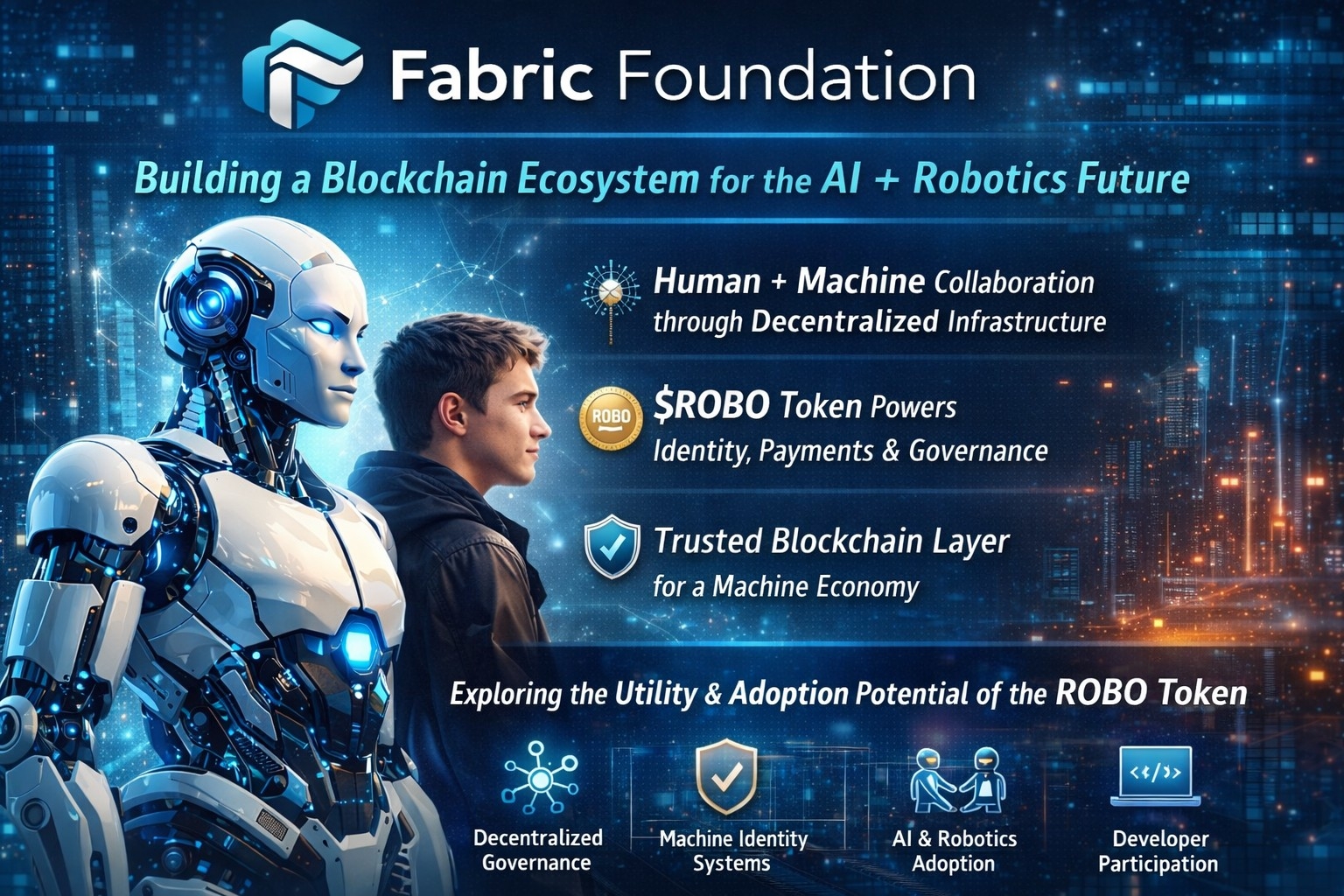
The @Fabric Foundation (ROBO) is rapidly positioning itself as the "economic and governance layer" for a decentralized robotics economy. As of early 2026, the project has transitioned from a highly anticipated launch into a functional infrastructure for machine-to-machine coordination.
Vision: Moving Beyond "Siloed Tools"
The core mission of the Fabric Foundation, developed by OpenMind, is to transform robots from isolated tools into autonomous economic actors. By providing a neutral, global coordination layer, the protocol allows robots to hold funds in on-chain wallets, verify their identities, and participate in a global market for automated labor without centralized gatekeepers.
Core Technology & Architecture
The ecosystem relies on several key technical pillars:
* OM1 Operating System: Described as the "Android for Robotics," this hardware-agnostic OS allows software to run across diverse machines like humanoids and robotic arms.
* The FABRIC Protocol: A coordination layer where robots share context and exchange skills in real-time.
* Blockchain Infrastructure: Initially launched on the Base (Ethereum Layer 2) network for cost efficiency, the roadmap includes a migration to a dedicated Layer 1 optimized for high-throughput machine transactions.
* Verifiable Computing: Every action performed by a robot is backed by cryptographic proof, ensuring trust on-chain without relying on centralized servers.
$ROBO OBO Tokenomics & Utility
The @Fabric Foundation ROBO token is the "centerpiece" of this DePIN (Decentralized Physical Infrastructure Network).
* Total Supply: Capped at 10 billion tokens with a fixed-supply model (0% inflation).
* Distribution: 29.7% is reserved for the ecosystem and community, while 44.3% is held by investors and the team (subject to a 12-month cliff and 36-month linear vesting).
* Utility:
* Work Bonds: Operators must stake ROBO as a performance security deposit to register hardware and access the task queue.
* Settlement: Used to pay for on-chain interactions, data exchange, and robotic labor.
* Governance: Holders can time-lock tokens to gain voting weight on protocol upgrades and fee structures.
Future Market Analysis (2026–2030)
As of late February 2026, ROBO has a live market capitalization of approximately $87 million with a trading price near $0.039.
| Year | Price Projection | Key Milestones & Sentiment |
|---|---|---|
| 2026 | $0.01 – $0.11 | High volatility following major listings on Binance Alpha and Coinbase. |
| 2027 | $0.0105 – $0.08 | Focus shifts to the 12-month unlock cliff for investors and team members. |
| 2028 | $0.011 – $0.15 | Impact of the native Layer 1 migration and scaling of multi-robot workflows. |
| 2030 | $0.012 – $0.35+ | Success depends on capturing a share of the "trillions in automated labor" market. |
Strategic Roadmap for 2026
The published roadmap for this year follows a phased rollout:
* Q1: Initial robot identity and task settlement components.
* Q2: Contribution-based incentives for verified task execution.
* Q3: Support for complex, multi-robot workflows.
* Q4: Refined incentive mechanisms for large-scale industrial deployment.
Risks and Challenges
While the vision is ambitious, investors should monitor structural challenges. Over 80% of the supply remains locked or subject to future vesting dilution, which could exert downward pressure on prices as tokens are released. Additionally, the complexity of human-machine alignment and competition in the DePIN sector remain significant hurdles.
The @Fabric Foundation (ROBO) is rapidly positioning itself as the "economic and governance layer" for a decentralized robotics economy. As of early 2026, the project has transitioned from a highly anticipated launch into a functional infrastructure for machine-to-machine coordination.
Vision: Moving Beyond "Siloed Tools"
The core mission of the Fabric Foundation, developed by OpenMind, is to transform robots from isolated tools into autonomous economic actors. By providing a neutral, global coordination layer, the protocol allows robots to hold funds in on-chain wallets, verify their identities, and participate in a global market for automated labor without centralized gatekeepers.
Core Technology & Architecture
The ecosystem relies on several key technical pillars:
* OM1 Operating System: Described as the "Android for Robotics," this hardware-agnostic OS allows software to run across diverse machines like humanoids and robotic arms.
* The FABRIC Protocol: A coordination layer where robots share context and exchange skills in real-time.
* Blockchain Infrastructure: Initially launched on the Base (Ethereum Layer 2) network for cost efficiency, the roadmap includes a migration to a dedicated Layer 1 optimized for high-throughput machine transactions.
* Verifiable Computing: Every action performed by a robot is backed by cryptographic proof, ensuring trust on-chain without relying on centralized servers.
ROBO Tokenomics & Utility
The ROBO token is the "centerpiece" of this DePIN (Decentralized Physical Infrastructure Network).
* Total Supply: Capped at 10 billion tokens with a fixed-supply model (0% inflation).
* Distribution: 29.7% is reserved for the ecosystem and community, while 44.3% is held by investors and the team (subject to a 12-month cliff and 36-month linear vesting).
* Utility:
* Work Bonds: Operators must stake ROBO as a performance security deposit to register hardware and access the task queue.
* Settlement: Used to pay for on-chain interactions, data exchange, and robotic labor.
* Governance: Holders can time-lock tokens to gain voting weight on protocol upgrades and fee structures.
Future Market Analysis (2026–2030)
As of late February 2026, ROBO has a live market capitalization of approximately $87 million with a trading price near $0.039.
| Year | Price Projection | Key Milestones & Sentiment |
|---|---|---|
| 2026 | $0.01 – $0.11 | High volatility following major listings on Binance Alpha and Coinbase. |
| 2027 | $0.0105 – $0.08 | Focus shifts to the 12-month unlock cliff for investors and team members. |
| 2028 | $0.011 – $0.15 | Impact of the native Layer 1 migration and scaling of multi-robot workflows. |
| 2030 | $0.012 – $0.35+ | Success depends on capturing a share of the "trillions in automated labor" market. |
Strategic Roadmap for 2026
The published roadmap for this year follows a phased rollout:
* Q1: Initial robot identity and task settlement components.
* Q2: Contribution-based incentives for verified task execution.
* Q3: Support for complex, multi-robot workflows.
* Q4: Refined incentive mechanisms for large-scale industrial deployment.
Risks and Challenges
While the vision is ambitious, investors should monitor structural challenges. Over 80% of the supply remains locked or subject to future vesting dilution, which could exert downward pressure on prices as tokens are released. Additionally, the complexity of human-machine alignment and competition in the DePIN sector remain significant hurdles.