Fabric Foundation (0@Fabric Foundation ROBO) – Future Outlook and Growth Potential
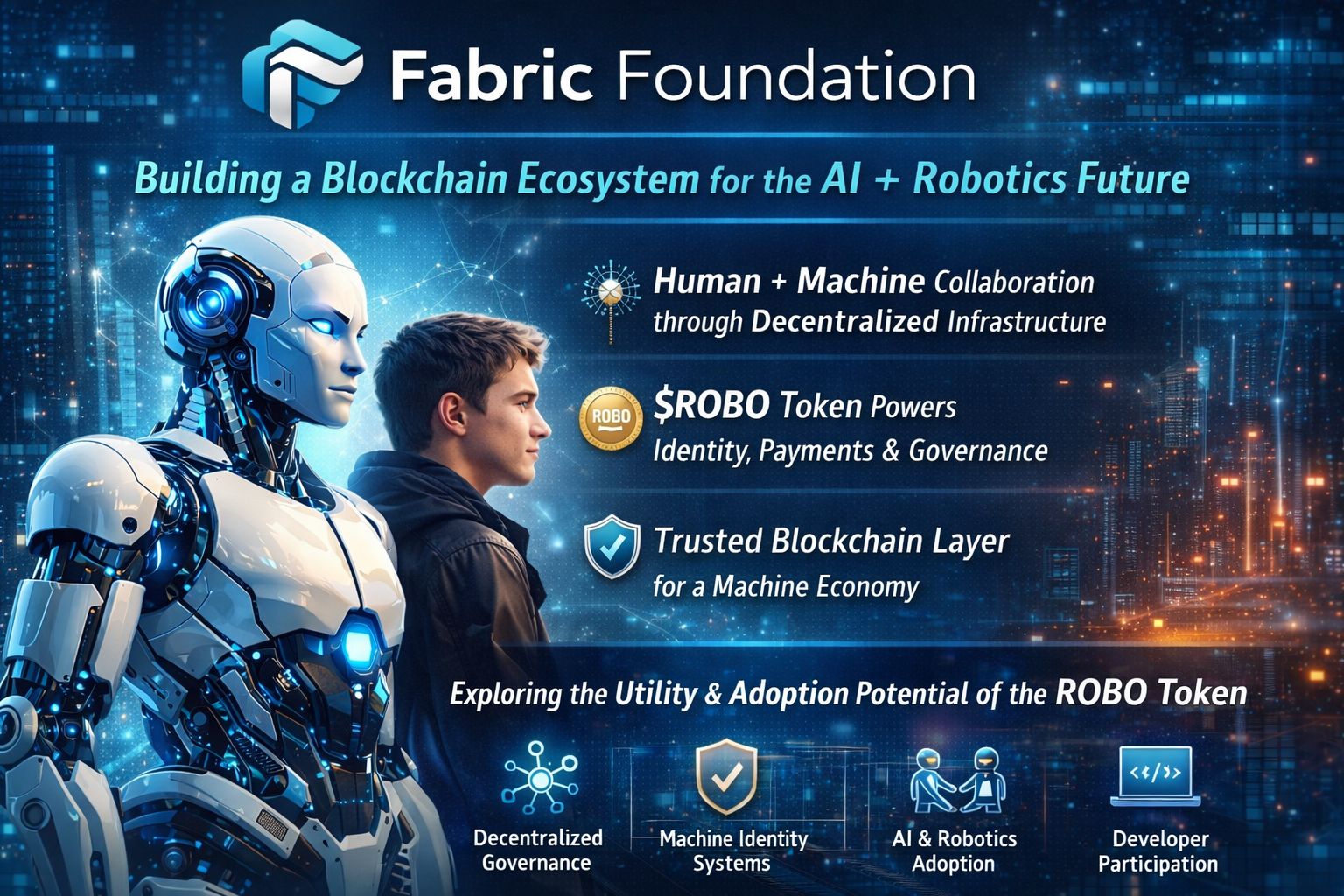
Fabric Foundation is a forward-looking blockchain project that aims to prepare the world for an era where humans, robots, and artificial intelligence systems can work together in a decentralized and transparent way. Unlike many crypto projects that focus only on payments or trading, Fabric Foundation is trying to solve a deeper problem: how machines can safely participate in economic activity while remaining aligned with human values. This vision places the project at the intersection of blockchain, robotics, and artificial intelligence, three of the fastest-growing technology sectors.
The $ROBO BO token is the core economic and governance unit of the Fabric ecosystem. It is designed to be used for identity verification, access to services, coordination between machines, and community governance. In the future, if autonomous machines such as delivery robots, factory systems, or AI agents become more common, they will need a trusted way to interact with people and with each other. Fabric Foundation’s long-term goal is to provide that trust layer using decentralized infrastructure instead of relying on a single corporation or government system.
From a development perspective, Fabric Foundation has shown consistent progress in building its conceptual and technical framework. The project has focused heavily on research into machine alignment, decentralized governance, and economic coordination. These are not simple problems, and they require long-term planning rather than short-term product releases. This slow but structured approach suggests that the team is targeting sustainability rather than hype. If the roadmap continues as planned, future updates may include stronger machine identity systems, more advanced governance tools, and expanded integration with AI-driven platforms.
In terms of market potential, the Fabric Foundation benefits from global trends that are already in motion. Automation is increasing across industries such as logistics, manufacturing, and healthcare. At the same time, blockchain technology is being explored as a way to provide transparency and trust in digital systems. If these two trends continue to merge, Fabric’s focus on machine-inclusive economies could become highly relevant. The ROBO token could gain more utility as machines begin to use blockchain networks for payments, task coordination, and access control.
However, the future of Fabric Foundation also depends on adoption. Technology alone is not enough; developers, companies, and communities must be willing to build on and use the system. If the project succeeds in attracting developers who create applications for machine coordination or decentralized robotics services, it could create a strong network effect. More users would mean more demand for the ROBO token, increasing its long-term value potential. Without adoption, even strong technology can struggle to maintain relevance in the crypto market.
Another important factor is regulation. Robotics and AI systems operating in the real world raise legal and ethical questions. Fabric Foundation’s emphasis on transparency and decentralized governance may help it adapt to regulatory expectations more easily than closed systems. If governments and institutions begin to look for open standards for machine accountability, Fabric’s approach could become a reference model rather than a niche experiment.
From an investment and price perspective, ROBO is still in an early phase. Early-stage projects usually experience high volatility due to speculation and limited historical data. Short-term price movements may be driven by market sentiment rather than fundamentals. In the long run, the value of ROBO will depend on how well the project turns its vision into practical use cases. If real machine-based economic activity begins to use the Fabric ecosystem, the token could shift from a speculative asset to a functional digital commodity.
In conclusion, Fabric Foundation represents a unique attempt to prepare blockchain for a machine-driven future. Its focus on human-machine collaboration, decentralized governance, and ethical design gives it a strong narrative and technical direction. While risks remain due to early-stage development and uncertain adoption, the project’s long-term potential lies in its alignment with global automation and AI trends. If these trends continue and Fabric Foundation succeeds in building useful infrastructure, ROBO could become a meaningful asset in the next generation of decentralized economies.