$ROBO: Building Accountability into the Robot Economy
I’ve spent years watching technology promise a better future. But promises alone aren’t enough. Trust is what matters. That’s why $ROBO caught my attention.
Robots are no longer confined to labs. They’re working in hospitals, warehouses, city streets — places humans depend on for safety and reliability. Yet, most of these systems are black boxes. Decisions happen, tasks execute, and occasionally, things fail. But the reasoning is hidden inside proprietary servers. Regulators, insurers, even the public, have no access.
That doesn’t feel like the future I want to live in.
Fabric Foundation is tackling this head-on. ROBO is the backbone of their network — a utility and governance asset that enables robots to participate as accountable, verifiable economic agents. Unlike humans, robots cannot hold bank accounts, passports, or sign contracts. They need web3 wallets, onchain identities, and a settlement system — $ROBO provides exactly that.
What excites me is the human dimension. This isn’t just about code or machines. It’s about creating systems that I, as someone who relies on technology daily, can trust.
I remember visiting a warehouse last year, where autonomous robots were moving inventory alongside human workers. Watching them operate, I noticed how smoothly they navigated, but also how errors happened — a misplaced box, a minor collision. The supervisors couldn’t always explain why. I realized then how fragile trust is when systems are opaque. That experience made me appreciate Fabric’s approach: giving robots an auditable record of every action, making errors easy to trace and understand. It’s not just efficiency; it’s accountability that directly affects people like me who interact with these systems every day.
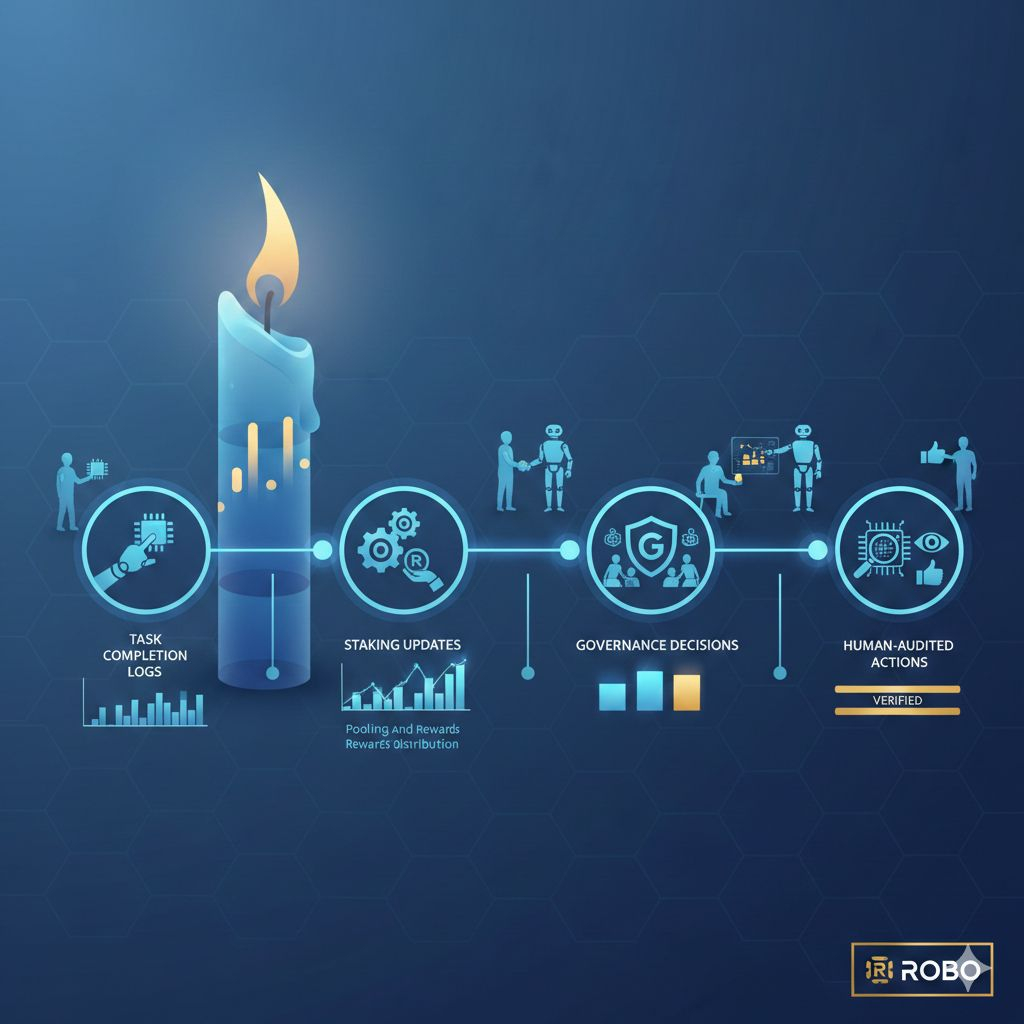
Participation in the network isn’t about speculation. Staking $ROBO allows contributors to coordinate robot fleets, validate task completion, and help govern the ecosystem. These aren’t abstract incentives — they are the tools that make accountability real. By giving humans the ability to interact with robots transparently, the network aligns machine efficiency with societal needs.
I personally find the governance layer compelling. Robo holders help shape fee structures, operational policies, and the rules that guide autonomous machines. This isn’t just a futuristic idea — it’s building the scaffolding for human-machine collaboration that affects everyday life.
Another point that resonates with me: transparency won’t make robots perfect. Mistakes will happen. But a robot that fails with a full record of what happened is fundamentally different from one that fails quietly inside a closed system. Understanding errors is where safety frameworks, insurance models, and public trust begin.
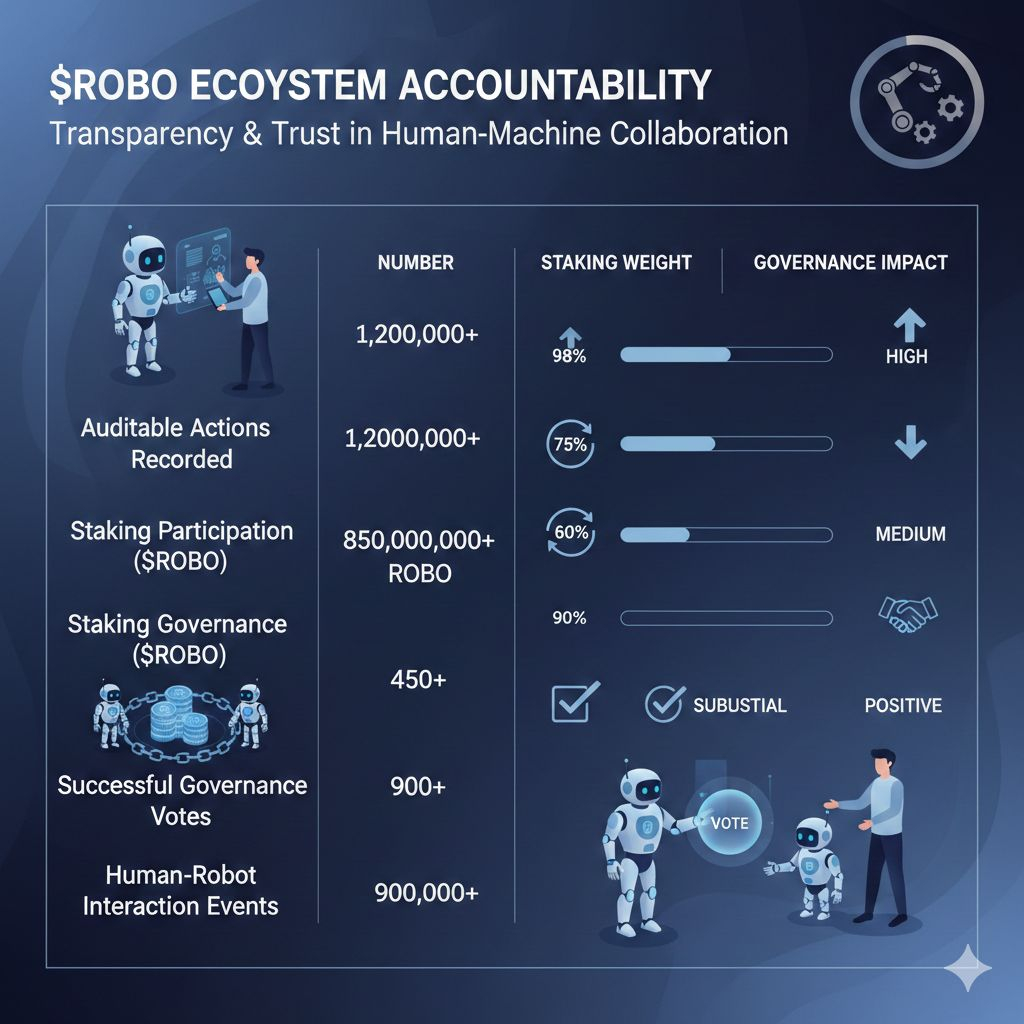
The broader vision is clear: $ROBO and Fabric aren’t selling the dream of autonomous machines. They are building infrastructure that makes robots accountable participants in the economy. As these systems scale, the network ensures that robotic labor can be deployed safely, efficiently, and ethically.
For me, this is what separates hype from meaningful technology. The next wave of robotics won’t be won by raw capability alone. It will be won by networks that make machines accountable, auditable, and aligned with human society.
And that’s why I’m watching $ROBO closely — because the future of robots isn’t just about them. It’s about us, the humans who will live, work, and trust these machines every day.