When I first heard about Fabric Protocol, I assumed it was just another AI-meets-crypto experiment. “General-purpose robots” and “agent-native infrastructure” sounded ambitious — but abstract.
The more I looked into it, the clearer it became: this isn’t really about robots.
It’s about ownership.
As machines begin to outperform humans across logistics, transport, inspection, manufacturing, and services, the central question isn’t can they work — it’s:
Who owns the value they create?
The Real Issue Isn’t Automation — It’s Concentration
Robotics is no longer theoretical. Costs are falling. Capabilities are rising. Physical intelligence is catching up to software intelligence.
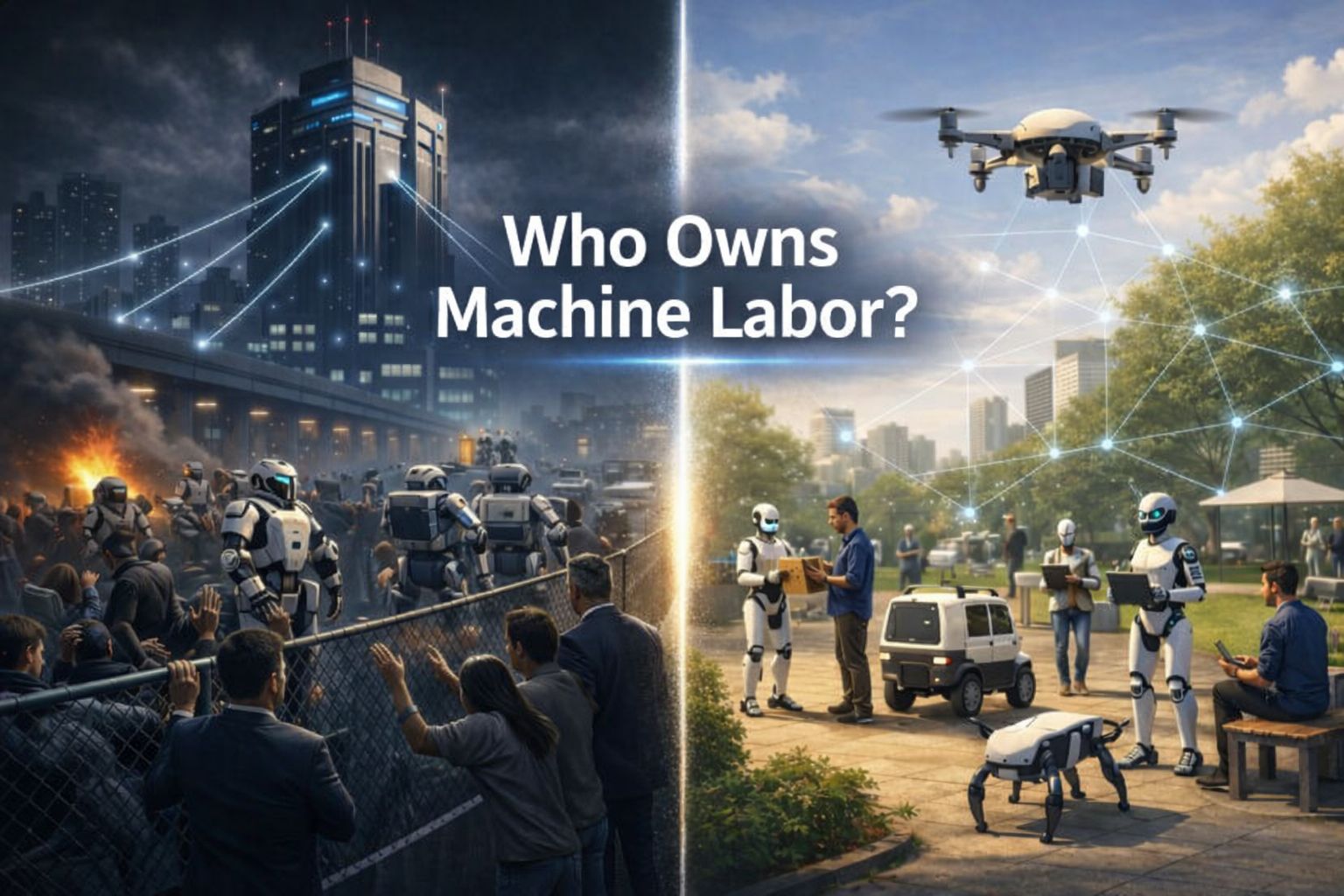
Today, the model is simple:
A company builds the robot
The company trains it
The company owns it
The company keeps all the revenue
That worked in software. Platforms scaled. Profits concentrated.
But robots don’t just generate data.
They generate real-world production.
Imagine autonomous taxis scaling globally. Efficient? Yes.
But if one company owns the fleet, it captures the entire economic upside while displacing millions of workers.
That’s not just a tech shift.
That’s an ownership shift.
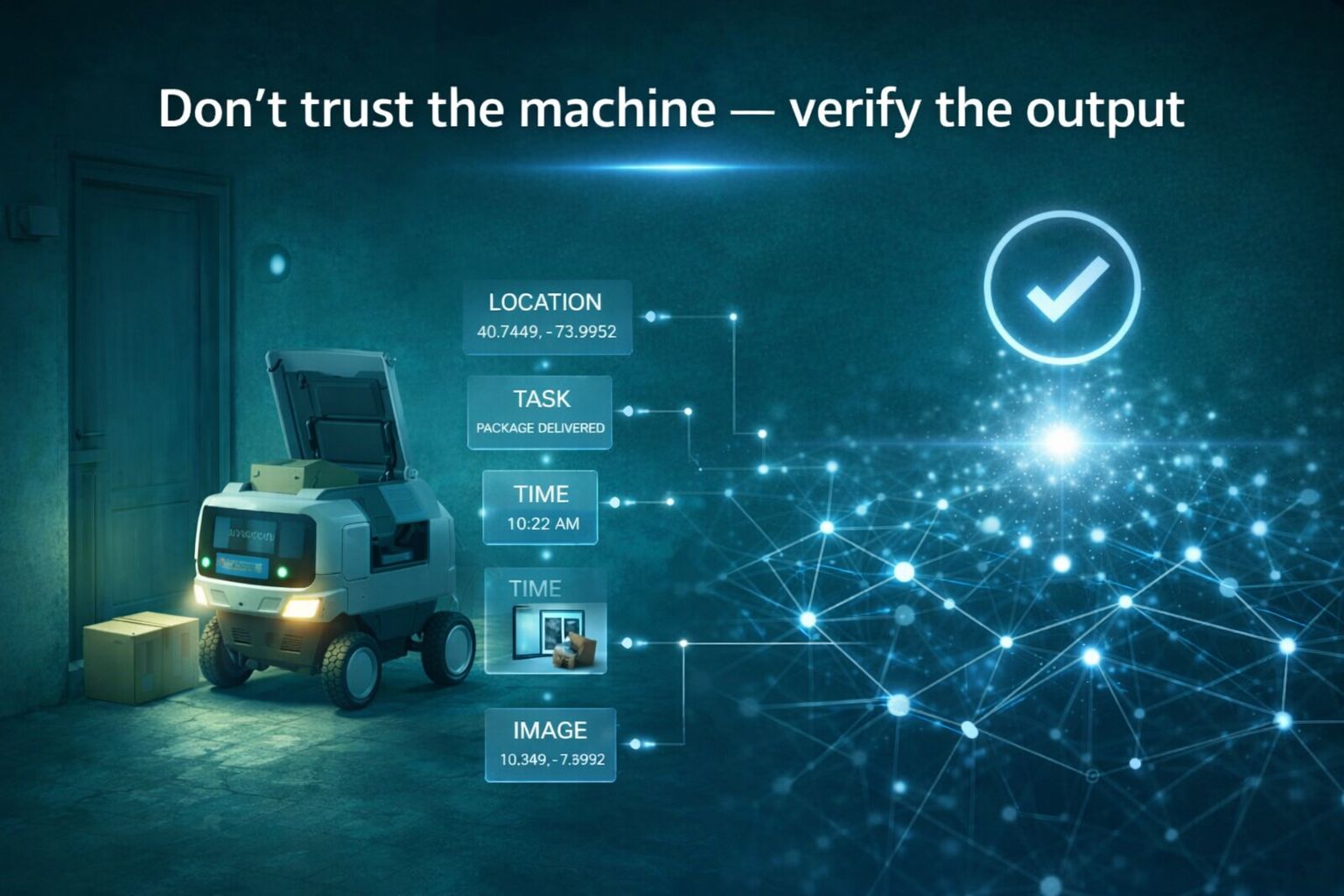
Fabric Protocol is built around the idea that if we don’t redesign ownership at the infrastructure layer, robotics will massively centralize economic power.
Turning Robots Into Market Participants
Fabric proposes something radical:
Instead of robots being closed corporate assets, they operate inside an open network where:
Work is verified
Data is shared
Rewards are distributed
Activity is recorded in a public registry
Fabric doesn’t “make money.”
It coordinates and verifies machine work using blockchain infrastructure.
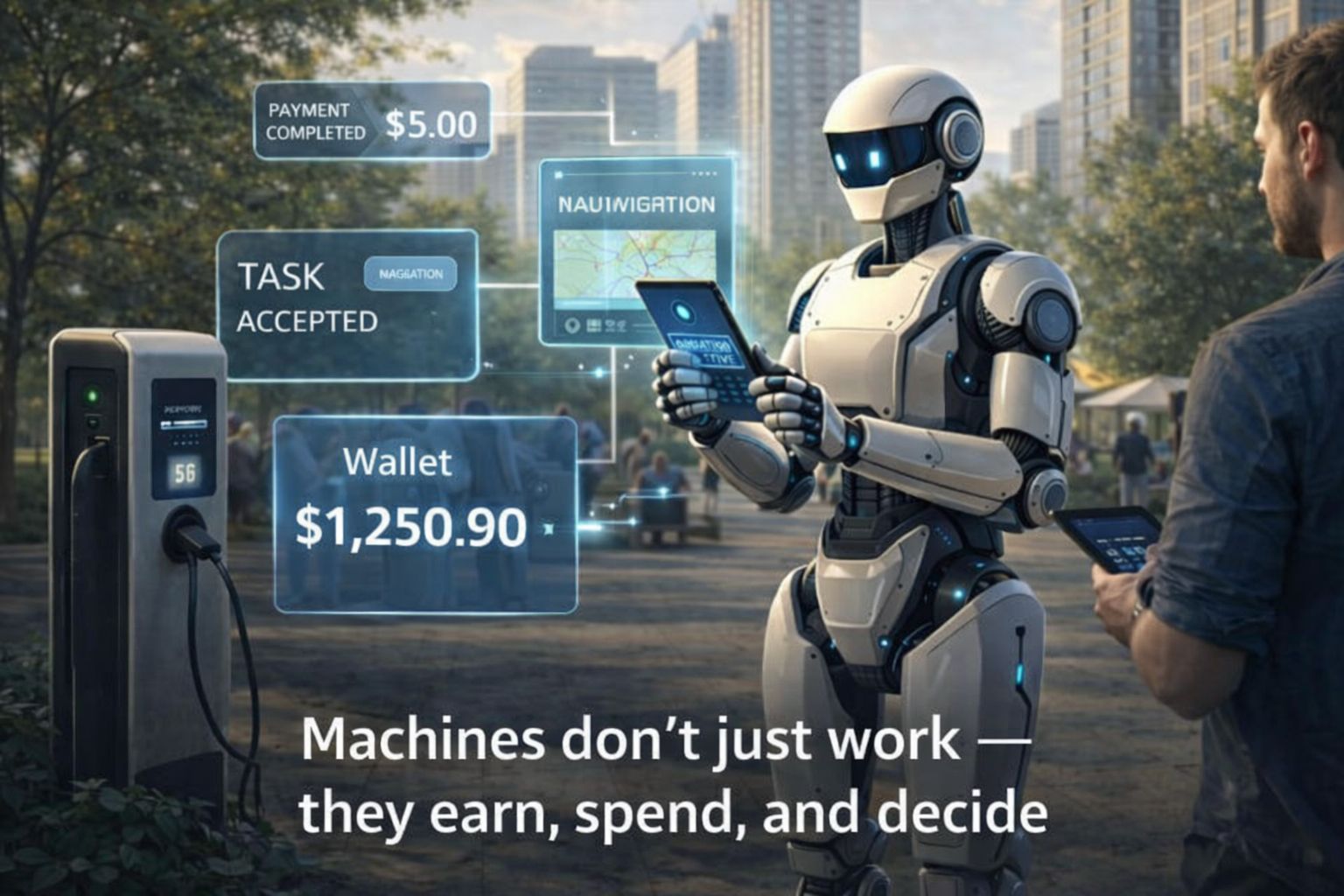
This creates a shared system of truth — essential in a world where machines act autonomously. When robots execute tasks in the physical world, verification becomes critical.
Trust cannot rely on a single machine.
It must be system-wide.
Verifiable Computing: Trusting the Outcome, Not the Actor
A key idea inside Fabric is verifiable computing.
Any robotic task — delivery, assembly, inspection — can be independently validated.
Instead of trusting one machine’s output, multiple validators confirm results.
In software, errors are inconvenient.
In robotics, errors can be dangerous.
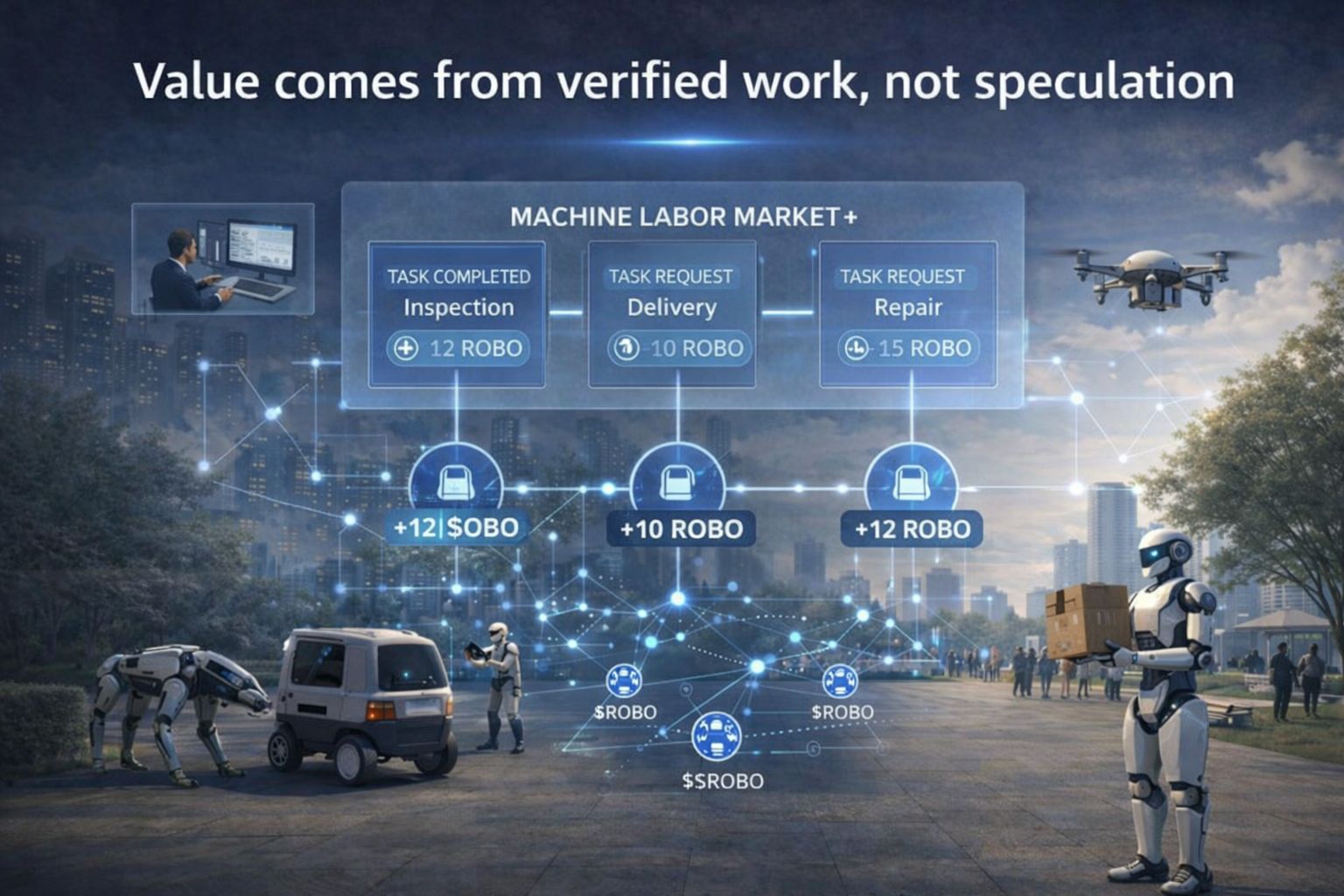
Verification transforms machine labor from “assumed correct” to “provably correct.”
That’s a foundational shift.
Agent-Native Infrastructure
Today’s infrastructure is human-first:
Bank accounts
Legal contracts
Identity systems
Robots don’t fit into that structure.
Fabric introduces agent-native infrastructure, meaning machines can:
Hold wallets
Own assets
Transact
Pay for services
This makes robots economic actors, not just tools.
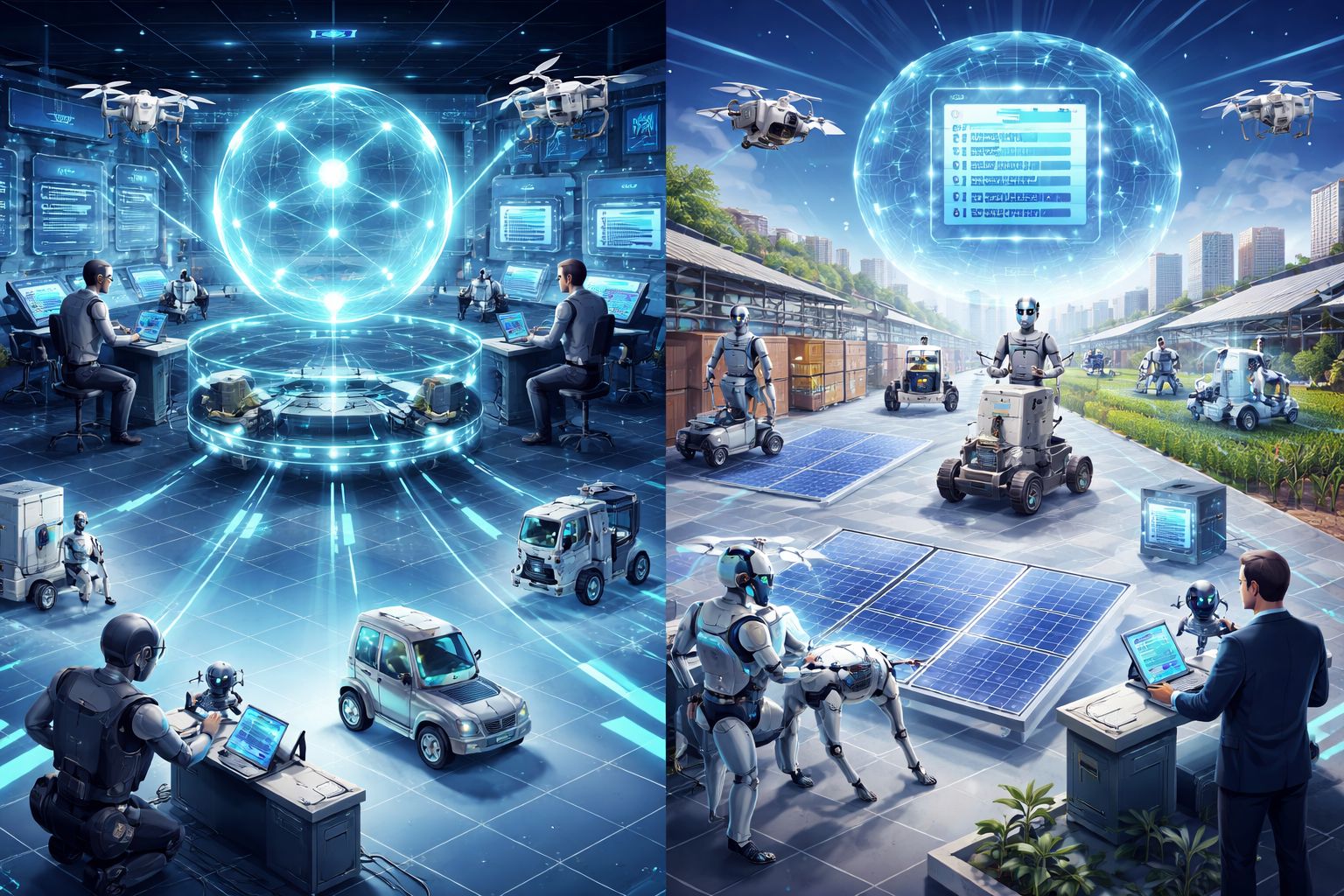
They don’t just execute instructions.
They participate in markets.
That’s a structural redesign of economic participation.
OM1: A Universal Robot Layer
One of the most overlooked barriers in robotics is fragmentation.
Different hardware.
Different software.
No shared standards.
Fabric introduces OM1, a universal robot operating system — conceptually similar to what Android did for smartphones.
Write once. Deploy anywhere.
If adoption occurs, skills can transfer between machines. Development costs drop. Innovation compounds.
An open robot OS layered on top of an open economic network is a powerful idea.
But adoption is everything.
Proof of Robotic Work
Unlike many crypto systems that reward staking or speculation, Fabric focuses on Proof of Robotic Work.
You earn when verified machine work is completed.
Real output.
Real verification.
Real economic distribution.
That reframes incentives away from financial engineering and toward physical productivity.
It starts to look less like DeFi — and more like a global machine labor market.
$ROBO: Pricing Machine Labor
The $ROBO token isn’t just a tradable asset.
It functions as:
Payment medium
Fee mechanism
Staking layer
Governance instrument
But most importantly:
It standardizes the pricing of machine work.
When a robot completes a verified task, it earns $ROBO.
When it needs services, it spends $ROBO.
That creates a circular economic loop around machine productivity.
It’s not speculation-first.
It’s labor-priced.
Governance: Preventing Machine Monopolies
One of the greatest long-term risks in robotics is centralized control.
Who governs fleets of autonomous systems?
Fabric uses decentralized governance:
Transparent identities
Traceable actions
On-chain rule voting
It doesn’t eliminate risk — but it redistributes power.
Instead of blind trust in corporations, you get visible systems.
That’s an important distinction.
Why This Isn’t Just Another Robot + Blockchain Idea
There have been other projects attempting machine economics. For example, Robonomics explored IoT and blockchain integration.
Fabric differs by attempting vertical integration across:
Operating system
Economic layer
Verification layer
Governance layer
Most projects focus on one or two.
Fabric tries to combine all four.
That makes it ambitious.
And risky.
The Hard Questions
Vision alone isn’t enough. Real challenges remain:
Will manufacturers adopt a shared OS like OM1?
Will companies allow robots to operate in open markets?
Can decentralized verification scale for physical robotics?
Will there be enough real robotic activity to sustain the $ROBO economy?
These aren’t small uncertainties.
They determine whether Fabric becomes infrastructure — or an experiment.
The Bigger Picture: Structuring a Post-Human Labor Market
This isn’t really about crypto.
It’s about how we structure economic power in a world where:
Machines improve rapidly
Costs decline
Adoption accelerates
Machine labor will scale.
The question is simple:
Will it be concentrated —
or networked?
Fabric is betting on the second outcome.
It may succeed.
It may not.
But it’s asking the right question:
How do we design a world where machines are not just tools —
but economic actors that don’t automatically become monopolies?
That question will outlast any single protocol.
And that’s why Fabric is worth paying attention to.