
There’s a difference between building a fast blockchain and building one that actually feels fast when money is moving. Most chains advertise throughput. Very few are engineered around what traders actually care about: execution quality under pressure. Fogo is trying to live in that second category.
At its core, Fogo is a high-performance Layer-1 built using the Solana Virtual Machine. That immediately makes it compatible with the SVM ecosystem developers don’t have to relearn everything from scratch. But the real pitch isn’t compatibility. It’s speed, latency, and execution consistency. The idea is simple: make on-chain trading fast enough that serious participants don’t feel like they’re sacrificing quality compared to centralized exchanges.
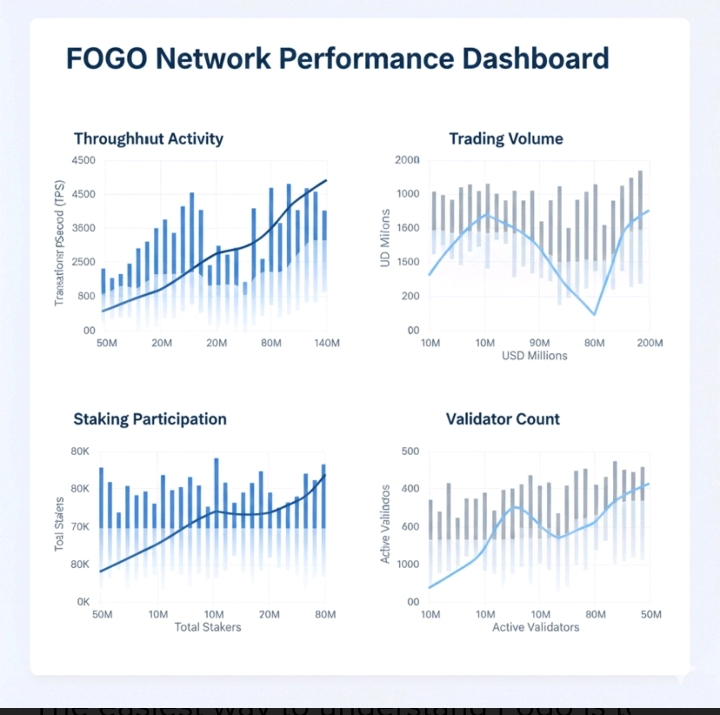
From a market participant’s perspective, this matters more than marketing buzzwords. If you’ve traded volatile conditions on-chain, you know the pain: slippage spikes, delayed confirmations, failed transactions, unpredictable gas behavior. For casual users that’s annoying. For active traders or market makers, it’s capital inefficiency. Fogo is positioning itself as infrastructure built specifically to reduce that friction.
What makes this interesting in the current cycle is the shift in what the market values. We’ve already had our yield farming waves and meme liquidity explosions. Now capital is rotating back into infrastructure but not generic infrastructure. The focus is turning toward performance. Professional traders, funds, and algorithmic players increasingly want on-chain execution that doesn’t feel like a downgrade from centralized venues. If that demand continues, chains optimized for execution not just for general usage start to look attractive.
That said, technology alone doesn’t make a winning investment. Token structure always matters. FOGO carries a large total supply with a meaningful portion already circulating, but there are multi-year vesting schedules for contributors and ecosystem allocations. That’s normal for a new Layer-1, but it creates future supply pressure. If ecosystem growth doesn’t outpace unlock velocity, price can compress regardless of technical performance. I’ve seen it happen repeatedly across cycles. Good tech doesn’t automatically defend against dilution.
Liquidity tells another part of the story. Right now, FOGO trades actively on centralized exchanges. Volume is real, derivatives markets exist, and speculation is alive. But on-chain liquidity is still early. That gap is important. When exchange activity significantly outweighs ecosystem usage, it means the market is trading the idea before fully using the product. That’s not necessarily bearish it’s common in early stages but it means the thesis is still in development.
If I were tracking this seriously, I’d watch wallet growth that isn’t tied to airdrops, consistent transaction volume rather than one-day spikes, and especially whether meaningful trading protocols begin settling volume there. Stablecoin liquidity depth will be critical. Order flow is the ultimate validator of an execution-focused chain. Without it, the narrative weakens.
Competition is intense. Solana already dominates the SVM space with liquidity, tooling, and network effects. Any SVM-based Layer-1 needs more than incremental improvement to pull capital away. It has to offer a noticeably better experience for a specific use case. Fogo’s bet is that ultra-low latency and performance optimization will be that differentiator. Whether that edge is strong enough to overcome Solana’s gravity is still an open question.
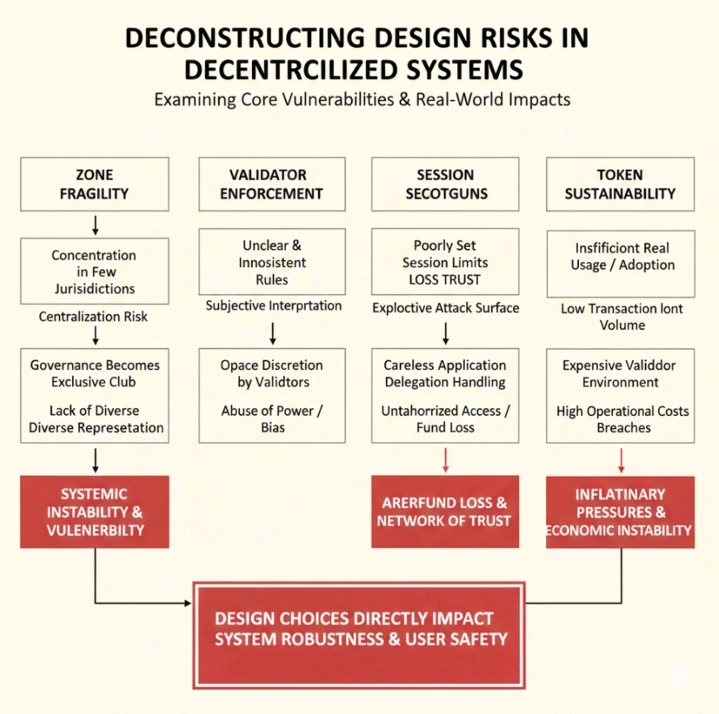
There are real risks. Execution risk performance in production often looks different than performance in benchmarks. Adoption risk developers tend to follow liquidity. Narrative risk performance stories can fade quickly if not reinforced by real growth. And of course, token dilution risk over time. None of these are deal-breakers, but they require active monitoring.
In a strong bull market, a project like Fogo can outperform dramatically. Performance narratives catch attention quickly, and traders rotate aggressively into infrastructure with asymmetric upside. In sideways conditions, it likely behaves as a volatility asset tradable, but sentiment-driven. In a bear market, only real adoption survives. Chains without sticky users and liquidity fade quietly.
So what is Fogo, really? It’s not a blind long-term hold without evaluation. It’s not pure hype either. It’s a calculated bet on execution infrastructure on the idea that latency and performance will matter more as crypto markets mature.
For me, that places it in the asymmetric category. Small enough to carry risk, strong enough conceptually to justify attention. The real signal will come from whether on-chain liquidity begins to match exchange speculation. When that happens, it shifts from narrative to structure.
