

When I first heard that a new Layer 1 was being built around the Solana Virtual Machine, my reaction wasn’t excitement.
It was confusion.
Not because the idea didn’t make sense but because we’re already living in a world where performance-focused chains exist. Solana itself isn’t exactly struggling for throughput. So when I see another L1 built on the same execution philosophy, my first instinct is to ask: what problem is this actually solving?

That’s where Fogo caught my attention.
Not immediately. Not loudly. Just slowly.
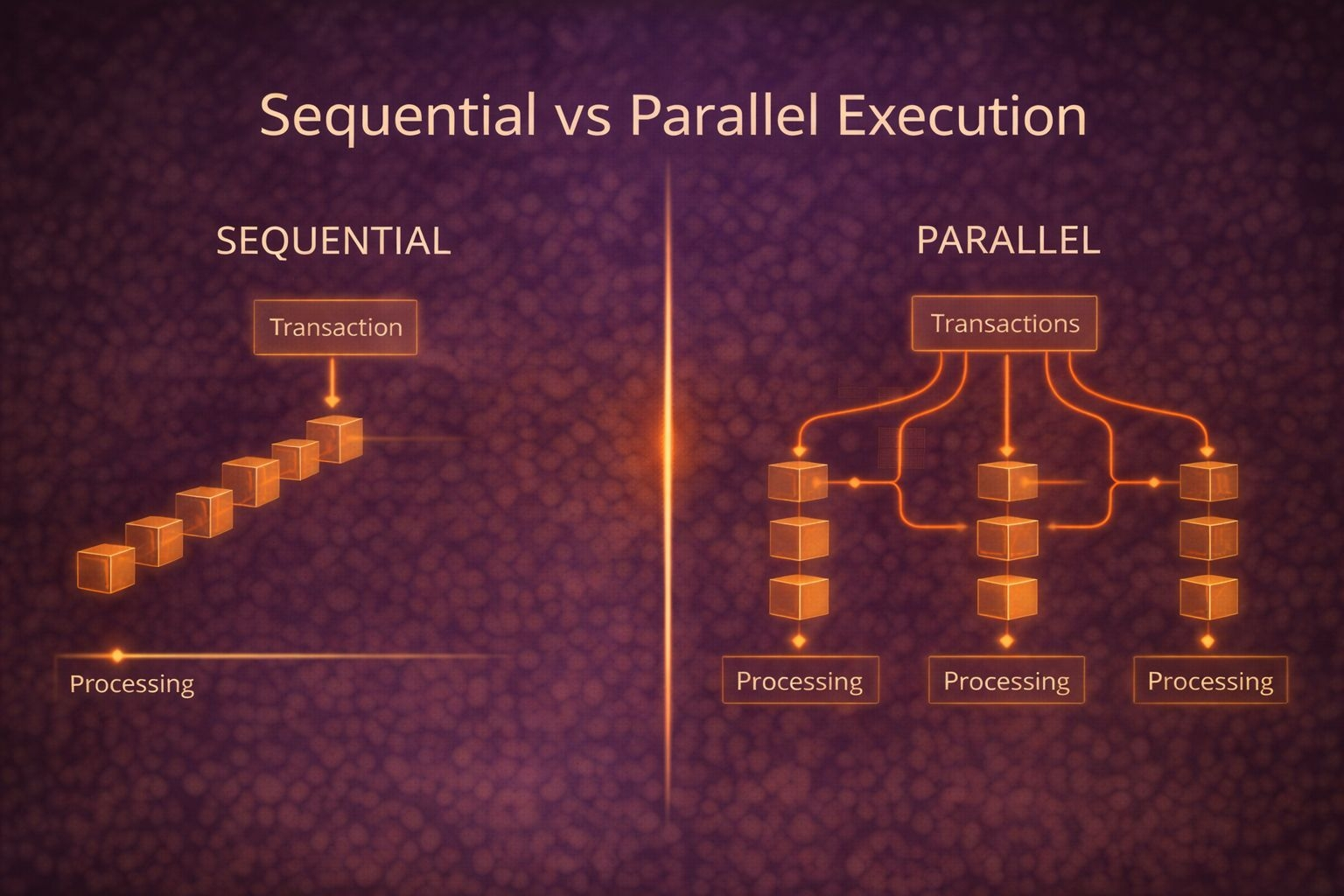
The Solana Virtual Machine isn’t a branding choice. It represents a very specific way of thinking about execution. Parallel processing. Account-based state management. The idea that transactions which don’t conflict shouldn’t have to wait in line.
Compared to EVM-based systems which still largely process transactions sequentially that’s a different mental model.
And that difference matters more than most people realize.
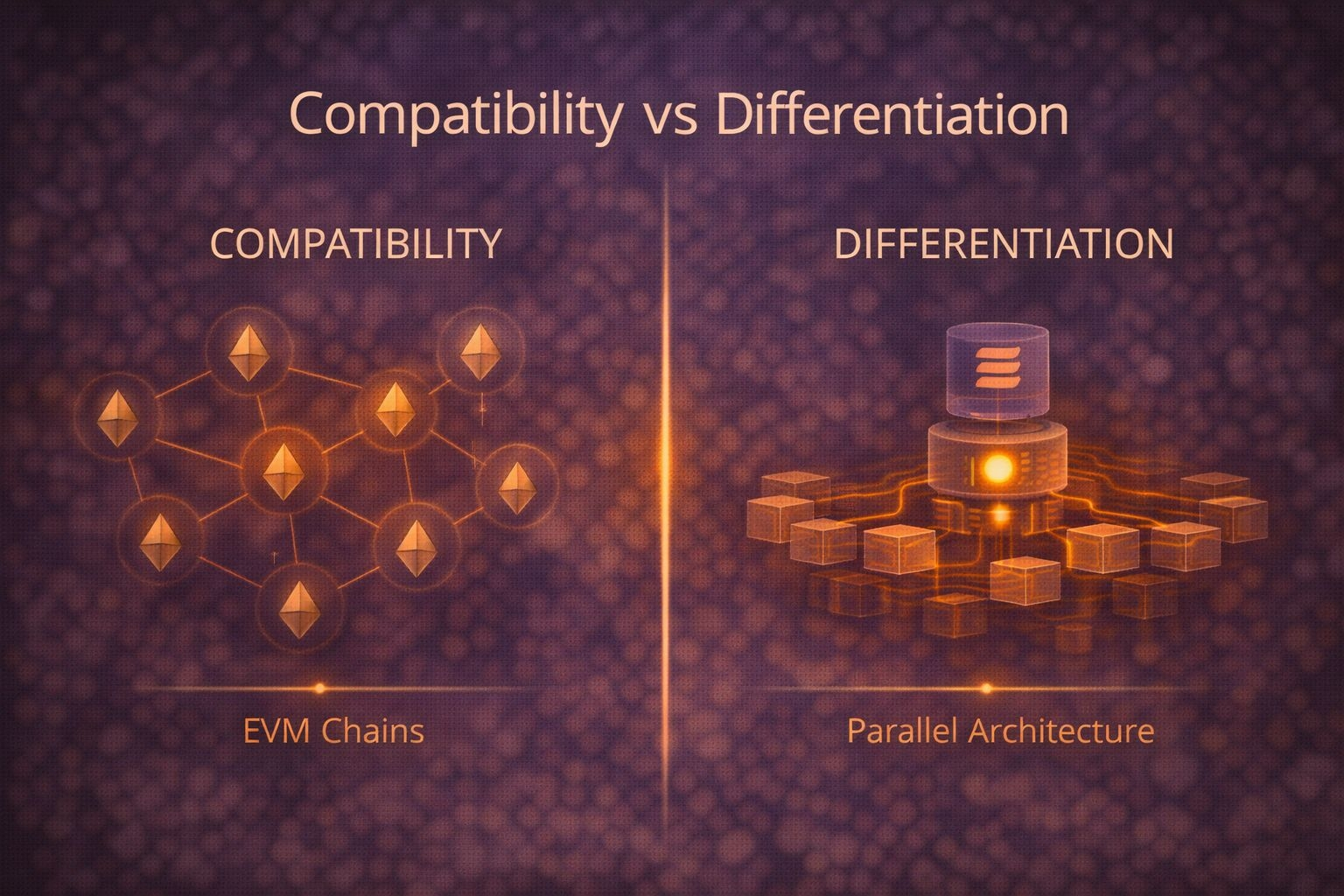
For years, most new chains defaulted to EVM compatibility. It made sense. Developer familiarity, portability of contracts, access to existing tooling. It lowered friction and accelerated ecosystem growth.
But it also created sameness.
Many EVM chains feel interchangeable now. Same contracts. Same user flows. Same fee mechanics. Slightly different branding.
Fogo doesn’t take that path.
By anchoring itself to the Solana Virtual Machine, it’s not trying to replicate Ethereum’s ecosystem. It’s betting that execution architecture itself is the differentiator.
That’s a stronger claim than it sounds.
Parallel execution isn’t just about higher theoretical throughput. It changes how applications are designed. Systems that depend on rapid state updates trading platforms, real-time financial infrastructure, certain gaming mechanics behave differently when latency and concurrency are handled at the protocol level.
In theory, this gives Fogo an environment optimized for responsiveness.
But theory isn’t the same as lived experience.
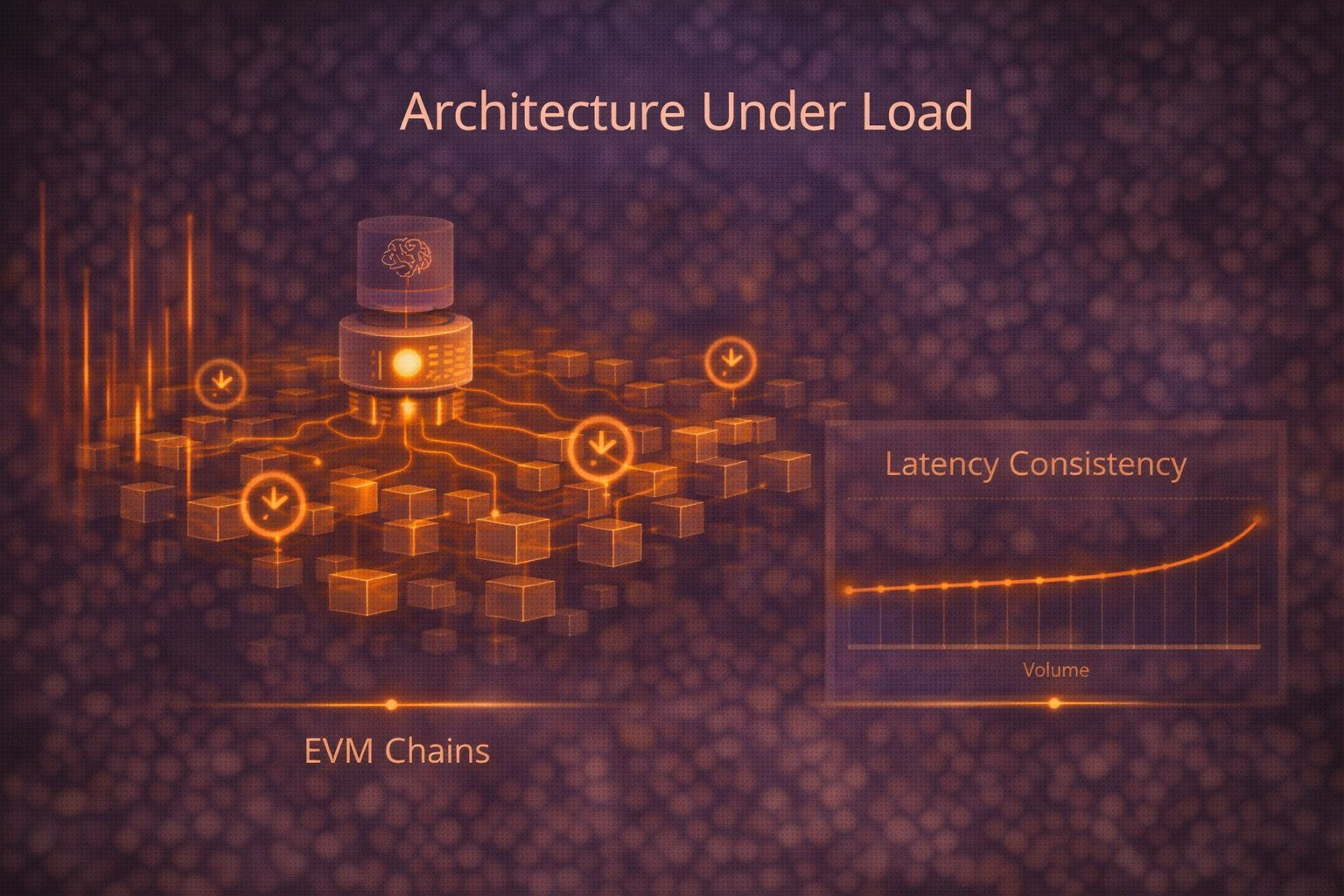
High-performance claims in crypto tend to sound impressive during calm periods. The real question is what happens when traffic surges. Does latency remain predictable? Do fees remain stable? Do validators hold up without becoming overly centralized due to hardware demands?
That’s where any performance narrative faces its first real test.
What I find interesting about Fogo is that it doesn’t seem to oversell itself as “the fastest.” Instead, it feels like it’s making a quieter argument: that execution philosophy matters, and that parallelism isn’t just an optimization it’s foundational.
That’s a more thoughtful starting point.
There’s also a cultural layer to consider.
SVM-based ecosystems tend to attract developers comfortable with Rust and lower-level optimization. That’s a different builder profile than Solidity-heavy ecosystems. It can create tighter alignment around performance-focused applications, but it can also narrow the initial developer pool.
That’s a trade-off Fogo seems willing to accept.
Instead of chasing immediate ecosystem breadth through compatibility it appears to prioritize depth in execution characteristics. That’s riskier in the short term, but potentially more differentiated in the long term.
Still, differentiation alone doesn’t guarantee adoption.
Solana itself already offers a high-throughput environment. So Fogo needs more than shared architecture. It needs operational clarity. Governance design Validator incentives. Stability under load. Reasons for builders to choose this environment over others with similar execution models.
That’s where the conversation gets practical.
Does Fogo offer better performance consistency?
Does it create a more controlled validator environment?
Does it attract specific use cases that benefit uniquely from its design?
Those answers won’t come from whitepapers. They’ll come from usage.
Another thing I’m watching is how the network behaves when stressed. Parallel execution can improve throughput, but it also introduces complexity. Conflict detection, resource allocation, and hardware demands all matter at scale.
Performance is easy to advertise. It’s harder to sustain.
Right now, my honest view is this: building around the Solana Virtual Machine is a deliberate and credible architectural choice. It signals that Fogo isn’t trying to copy Ethereum or chase compatibility as a shortcut.
It’s choosing a side in the execution debate.
Whether that choice translates into a meaningful edge depends on real-world deployment. If developers build applications that feel noticeably more responsive, and users experience consistent low-latency interactions even during heavy traffic, then the architecture will speak for itself.
If not, it risks blending into a crowded landscape of “high-performance” narratives.
I’m not dismissing Fogo.
But I’m not convinced by architecture alone anymore.
Crypto has matured past the point where execution models automatically inspire confidence. We’ve seen fast chains stall. We’ve seen stable systems struggle under unexpected demand.
So for now, I see Fogo as an interesting architectural experiment one that prioritizes parallelism and responsiveness from the ground up.
That’s worth watching.
Not because it promises speed.
But because it’s explicit about how it intends to achieve it.
And in a market full of vague performance claims, that clarity stands out.


