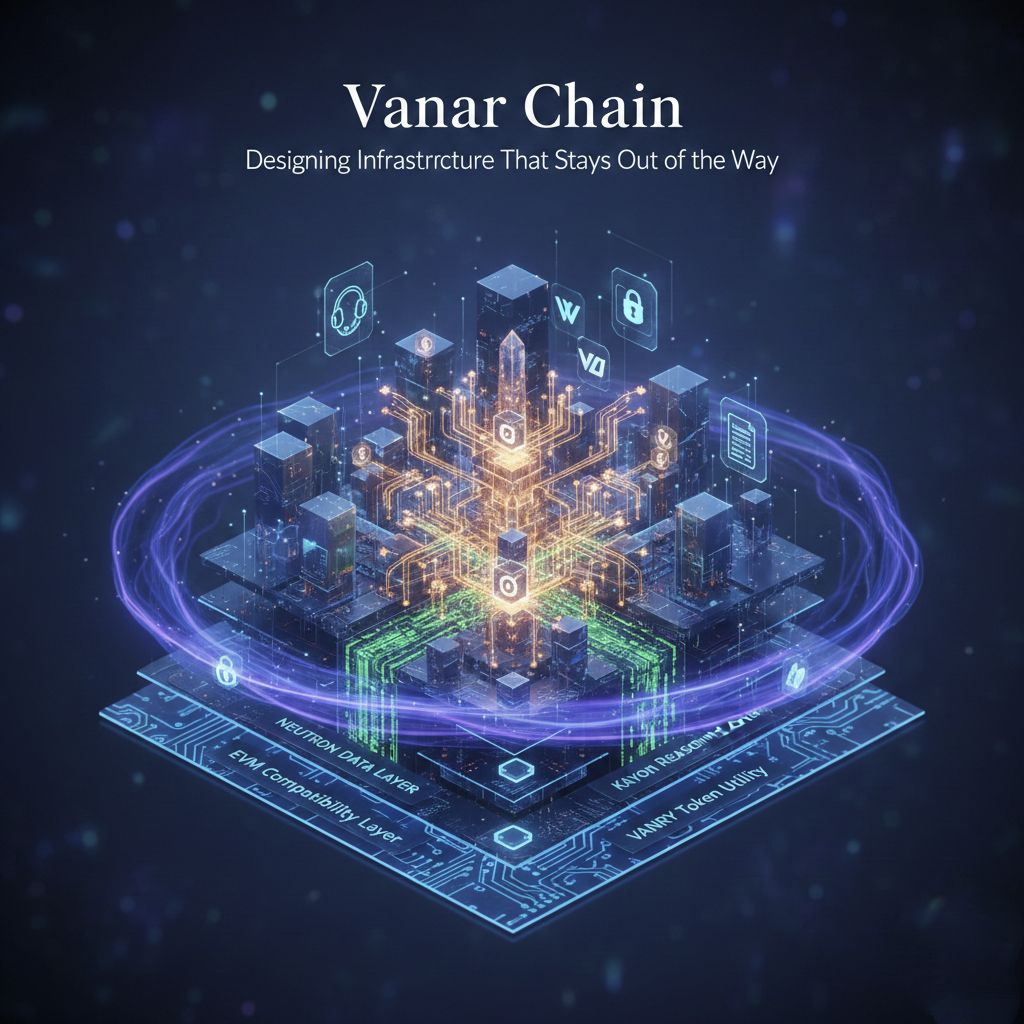
I’ve been looking at Vanar Chain for some time now, not from a trading angle, but from a systems perspective. When you strip away headlines and positioning, what remains is architecture. And architecture tells you more about intent than marketing ever will.
Most Layer-1 networks still feel like technology demonstrations. They showcase throughput, consensus models, or theoretical scalability. But when you imagine a real user — a gamer buying an in-game asset, a brand issuing digital collectibles, or a company recording digital ownership — the experience is rarely seamless. Wallet management is confusing. Fees fluctuate. Integrations require workarounds. The technology functions, but it doesn’t fade into the background.
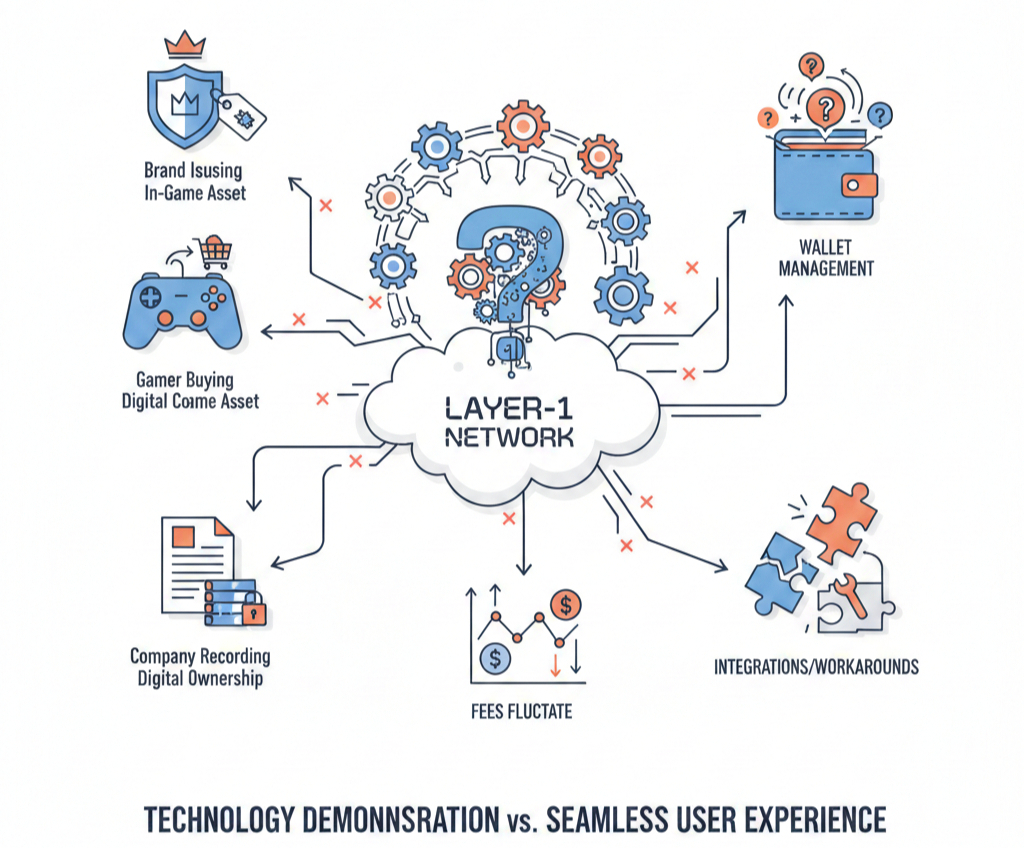
Vanar appears to be targeting that exact friction.
Rather than chasing novelty, it leans into compatibility. As an EVM-compatible Layer-1, it lowers the barrier for developers who already operate within the Ethereum tooling ecosystem. That choice may sound ordinary, but it’s practical. Reinventing standards increases isolation. Compatibility reduces cost, onboarding time, and operational uncertainty. From an infrastructure standpoint, those are meaningful advantages.
What stands out more to me, however, is how Vanar approaches data.
Through its Neutron layer, the chain focuses on structuring and compressing data into more efficient on-chain formats. In simple terms, it is attempting to make blockchain storage more deliberate — not just recording events, but organizing information in a way that remains usable. Many applications today depend heavily on off-chain storage, which creates fragmentation and long-term dependency risks. Strengthening on-chain data handling is less visible work, but it addresses a real structural weakness across the ecosystem.
Then there is Kayon, the reasoning layer integrated into the network’s stack. Instead of treating AI as an external plug-in, Vanar embeds logic capabilities closer to the protocol level. That opens the door to automated verification, rule-based compliance checks, or conditional asset management directly within the chain environment.
It’s an ambitious direction. It also adds complexity. Embedding intelligence into infrastructure demands careful execution. But conceptually, it aligns with how digital systems are evolving — toward automation and embedded logic rather than manual oversight.
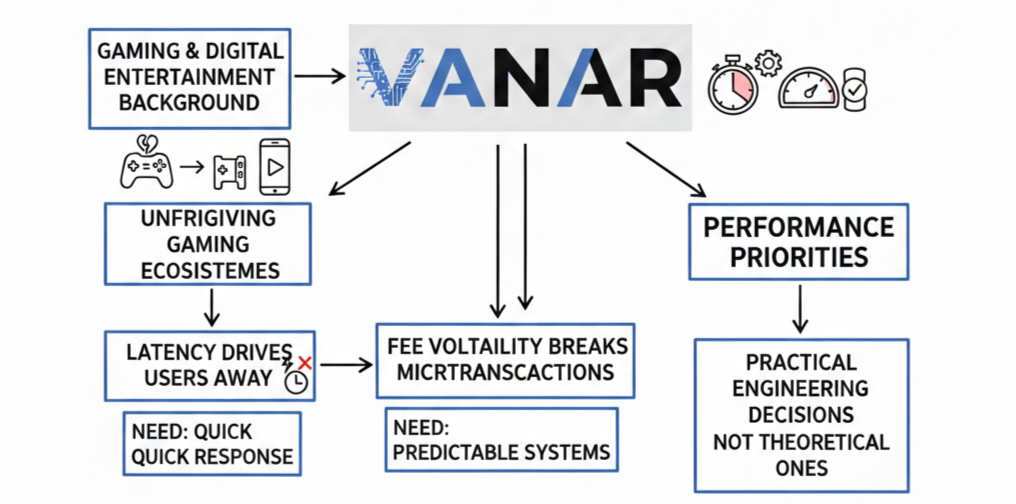
Vanar’s background in gaming and digital entertainment also explains its performance priorities. Gaming ecosystems are unforgiving. Latency drives users away. Fee volatility breaks microtransactions. Systems must respond quickly and predictably. That kind of environment forces practical engineering decisions, not theoretical ones.
Short sentence.
Predictability matters more than peak numbers.
For brands and institutions, cost stability and consistent execution are more important than occasional bursts of performance. If infrastructure behaves inconsistently, it becomes unusable regardless of how advanced it appears on paper.
The VANRY token functions in a familiar way — transaction fees, validator incentives, staking. Nothing revolutionary there. What feels more grounded is that its long-term relevance appears tied to infrastructure usage and service integration rather than abstract monetary storytelling. Usage creates utility. Utility sustains systems.
Recent updates have focused on strengthening AI integrations, identity layers, and data indexing capabilities. These are incremental improvements rather than dramatic shifts. And often, incremental refinement is what separates experimental networks from durable ones.
Of course, challenges remain. Integrating AI at the protocol level introduces technical risk. Competing Layer-1 ecosystems already have network effects. Real adoption requires more than architecture; it requires sustained developer engagement and user retention. Many chains fail not because their design is flawed, but because activity never scales.
Still, when I analyze Vanar Chain, I see a project attempting to build infrastructure that disappears behind applications. It is not trying to dominate narratives about the future of money. It is trying to make blockchain usable inside products people already understand.
That ambition is quieter.
And possibly more realistic.
Whether Vanar succeeds will depend on consistent delivery rather than bold claims. But the direction is clear: build systems that function reliably, integrate intelligently, and stay out of the user’s way.
In the long run, that kind of discipline may matter more than hype cycles ever did.