

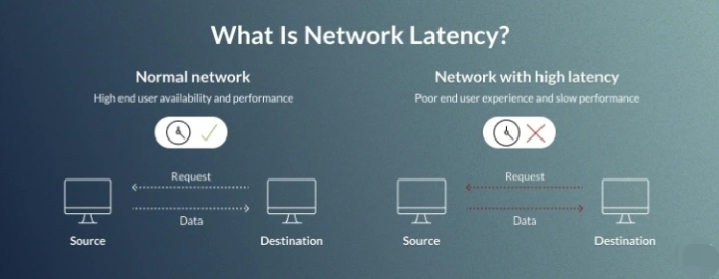
Fogo’s design stands out to me because it doesn’t try to win the usual crypto debates. It’s not chasing buzzwords or ecosystem size. Instead, it asks a sharper question: why do blockchains feel unstable precisely when they’re supposed to function like a trading venue? The issue isn’t average speed — it’s what happens under stress. Confirmation timing stretches, ordering gets messy, and coordination starts to wobble right when precision matters most.
Fogo frames the bottleneck clearly: it’s not just compute power, it’s coordination across geography and uneven hardware. The slowest participants end up dictating tempo. Once you accept that reality, you have to choose — either tolerate that drag in the name of pure global symmetry, or redesign the critical path. Fogo chooses redesign.
The validator zone model reflects that mindset. Only one zone actively participates in consensus during an epoch, while others stay synced but idle in block production and voting. That shrinks the quorum that must move in tight lockstep. Instead of pretending distance doesn’t matter, it localizes the fast path — then rotates zones over time so performance isn’t permanently concentrated in one region. Distribution still exists, but it’s expressed across time rather than inside every block.
That rotation is key. Without it, “fast” would just mean centralized. With it, Fogo is trying to balance physics and fairness — though whether that trade feels acceptable depends on your philosophy about decentralization.
Performance enforcement is another clear signal of intent. Fogo doesn’t appear interested in tolerating a wide spectrum of client performance. It leans toward a canonical high-performance path — Firedancer as the end state, Frankendancer as transition — with architectural decisions aimed at reducing jitter and variance. The focus isn’t just higher throughput; it’s predictability. That’s a venue mentality: execution quality is the product.
There’s an obvious trade-off here. A dominant client reduces variance but increases systemic risk. A critical bug could affect most of the network. Fogo’s bet seems to be that disciplined engineering and operational rigor can offset the lack of diversity. That’s not the default crypto answer — but it’s consistent with its thesis that inconsistent validators can’t sit on the critical path if timing matters.
The curated validator model extends that logic. If a handful of underperforming nodes can degrade performance, then participation needs standards. In traditional markets, that’s normal — venues impose requirements to protect execution quality. In crypto culture, it’s contentious because permissionless access is often treated as sacred. Fogo flips that priority: if your goal is real-time financial behavior, performance discipline may matter more than openness.
But that creates governance risk. Curation introduces potential capture and politics. The only way it remains credible is through transparent criteria and consistent enforcement. Markets punish uncertainty, especially when rules shift under pressure.
Short block times and “real-time” branding draw attention, but the deeper optimization is about tail latency — the messy edge cases. What breaks on-chain trading isn’t 400ms vs 40ms blocks; it’s unpredictable behavior during congestion. Reliability is a distribution issue. Being fast in calm conditions doesn’t count. Staying steady during volatility does.
Through that lens, Sessions isn’t just UX polish. Scoped permissions and paymasters aim to remove repetitive signing and fee friction, making interaction smoother during time-sensitive actions. It’s practical — traders don’t want ritualized approval flows. But paymasters introduce their own dependency layer. If they’re centralized or policy-driven, they become part of the trust model. That’s manageable, but it’s not neutral.
On token structure, Fogo’s transparency around allocations and unlocks is notable. Allowing meaningful float early can create pressure, but it avoids artificial scarcity and “fake float” optics. Real supply, real price discovery — uncomfortable, but cleaner for serious participants.
Put together, the design feels cohesive. Localize consensus for speed. Rotate zones to maintain broader distribution. Standardize clients to compress variance. Curate validators to protect execution quality. Smooth interaction through Sessions so apps feel like products, not ceremonies.
The risks are equally coherent. Zone rotation adds complexity. Single-client dominance increases systemic exposure. Validator curation creates governance pressure points. Paymasters add intermediated rails. None of these are fatal — but they are the stress points where the model proves itself or doesn’t.
If you want to judge whether it works, don’t look at marketing or idle benchmarks. Watch what happens during volatility. Does confirmation stay steady when demand spikes? Do execution-sensitive apps gravitate there because users can feel the difference? Does governance remain consistent when enforcement is unpopular? Do Sessions become more open over time, or concentrate power?
If those answers trend in the right direction, Fogo could evolve into infrastructure people trust for time-sensitive settlement. If not, it risks becoming just another “fast” chain that looked compelling — until it had to absorb real pressure.
