
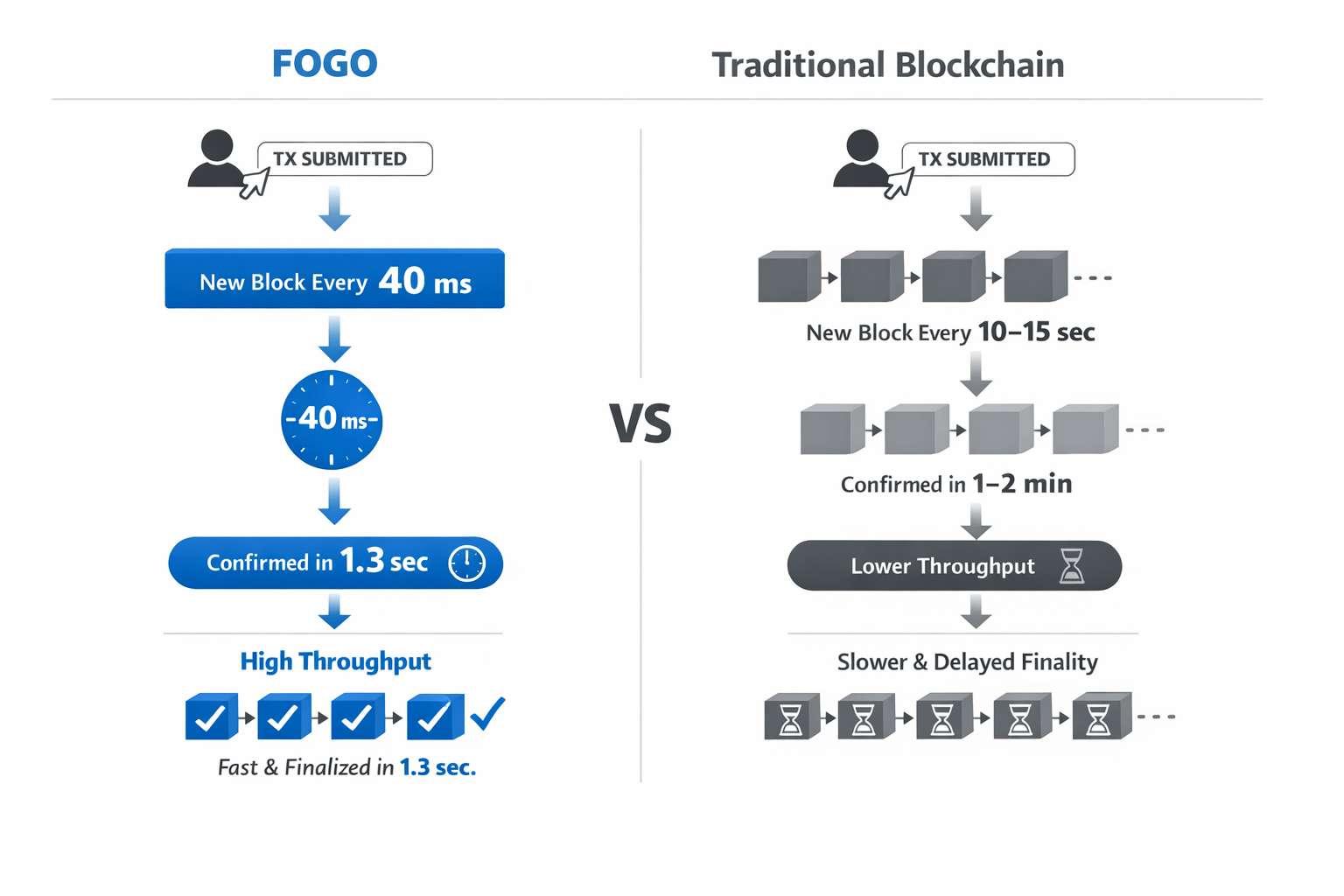
When people talk about how fast blockchain works it can be really confusing. With @Fogo Official the numbers are simple to understand. Think about when you're browsing the internet or clicking a button on a website. Fogo is making blocks of blockchain about every 40 milliseconds. That is 0.04 seconds. It is finishing these blocks in about 1.3 seconds. This is a lot faster, than waiting for seconds or minutes for something to happen with blockchain. Fogo blockchain is really fast it is producing blocks of Fogo blockchain very quickly. Those are surprising numbers when you compare them to a lot of older companies. They show that the people in charge made some careful decisions. These decisions are meant to make decentralized systems work better and be, like the traditional financial systems that people are used to. They want to make it so that decentralized systems can respond quickly like traditional finance systems do.
Fogo is basically a blockchain that works on the Solana Virtual Machine. This means it uses the system that a lot of developers are already used to. So when developers want to move their applications to Fogo they do not have to start from scratch. They can just bring their applications over to Fogo without having to rewrite all the code. The main thing that Fogo is trying to do is make things faster and more efficient. Fogo wants to reduce the time it takes to do things and be able to handle things at the same time. This way things like decentralized exchanges and lending markets and order books and other parts of DeFi will feel more like they are happening now. Fogo is really focused, on making DeFi primitives feel more immediate. That is done by making it easier for people to agree and for the validators to work together and by setting up the network to work fast which is something that a lot of traditional blockchains do not do. The network is made to be very efficient. This is what the blockchain people are trying to do with the validators and the network. They want the blockchain to be fast and to work well.
When you think about block time it is helpful to think like a person who builds trading systems. In regular markets orders are matched quickly in just a fraction of a second. On blockchains you have to wait a long time hundreds of milliseconds just to find out if a transaction has been added to a block. Fogo has block times of 40 milliseconds and the point of this is not just to say it is fast but to make systems that need to work in time on the blockchain actually work like they should. This is important for systems that require real-time responsiveness, on the blockchain and Fogos 40 millisecond blocks can make a difference. That has implications for things like perpetuals trading real-time auctions and automated market makers.
When we talk about perpetuals trading real-time auctions and automated market makers latency can make a difference. Perpetuals trading and real-time auctions and automated market makers are all, about speed. So when latency is high it can really hurt these things, perpetuals trading and automated market makers.
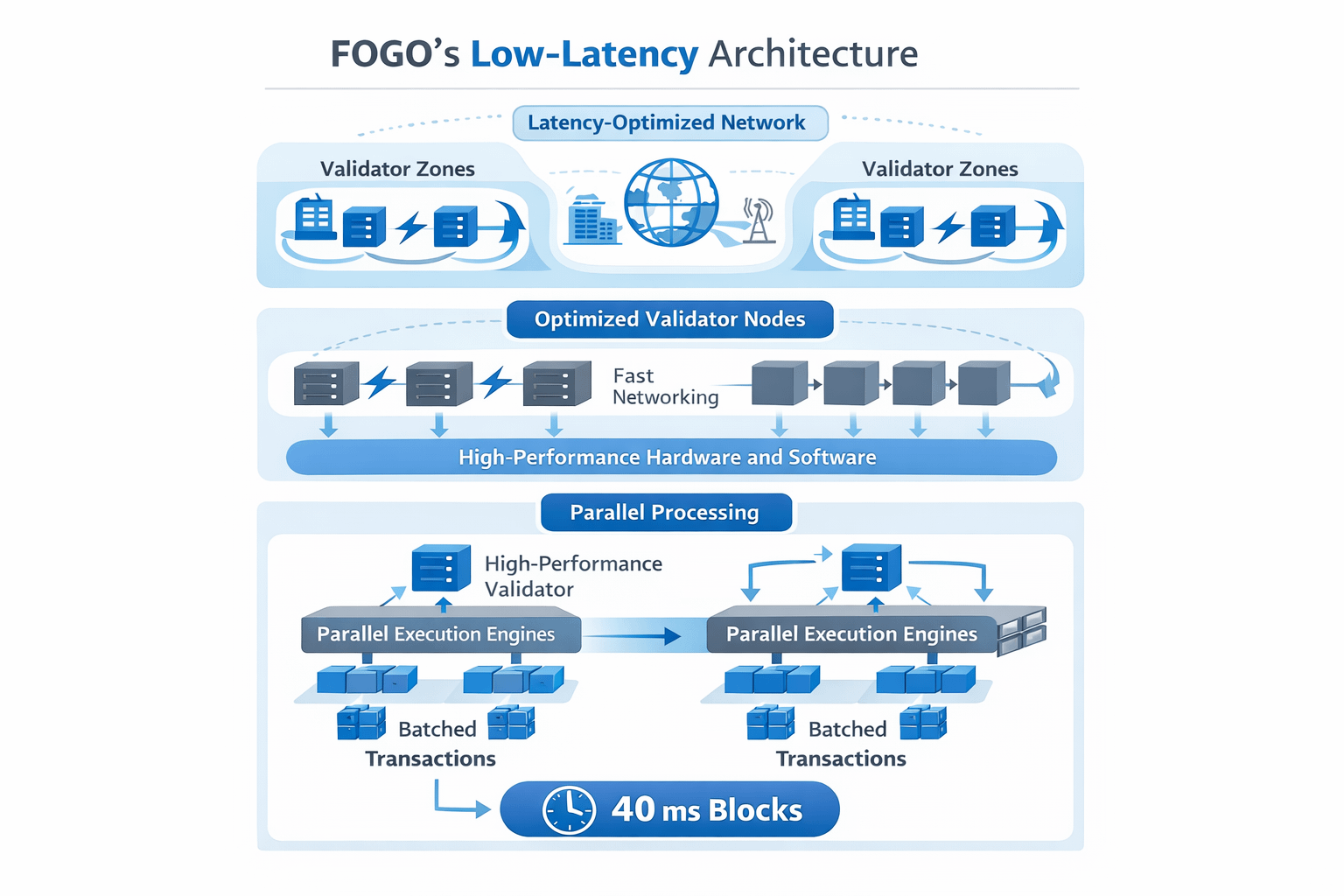
The way these numbers work is because of the choices made when building the system. The chain uses a kind of client that is really good at networking and doing lots of things at the same time. This client is what the chain is centered around. The chain also sets up the nodes in a way that helps reduce delays in the network this is sometimes called -local or zoned consensus. The chain does this by using a number of very good validators instead of a large number of different clients.
This helps the network to be more consistent and not have many problems with speed, which is something that can happen with traditional systems that are open to everyone, like the traditional permissionless systems. The chain and its numbers are what make this system work in this way. These things help get blocks out the door.
Fogo still has a lot of challenges to deal with. It is easy to make blocks every 40 milliseconds when you are testing it in a controlled environment. It is a different story when you have to do this all the time with a lot of people using it and things happening that you do not expect. A lot of blockchains seem to work well when you are just testing them. When you have a lot of users and a lot of things going on at the same time they start to have problems. Fogo needs to show that it can keep working even when a lot of people are using it and decentralized applications are using the system, for real economic things. Fogo has to prove that its speed is good when things get really busy.
There are also risks when it comes to the market and people using the token. When the main network was launched and the token was listed the tokens value went up and down a lot. The value even went down because not many people were buying and selling and some people were selling their tokens. This kind of thing is not surprising for tokens that are fast and, on Layer 1. It shows that just being good technically is not enough to get people to use the token or to make the system grow over time. The token needs to be easy to buy and sell developers need to be interested. People need to be using the apps that are not controlled by one company. The native token needs people to actually use it and the ecosystem needs to be active for it to really work.
So there is a decision to make between having a system that is decentralized and one that works really fast. Fogos system is set up to use nodes that are chosen and optimized which can make it work faster but it also makes you wonder if the system will still be decentralized over time. It also raises questions about how the system will handle security and making decisions as it gets bigger. All blockchains have to think about these things when they are getting bigger. It is especially important, for Fogos blockchain because it wants to be a place where big institutions can do DeFi trades.
At a human level, the idea behind Fogo’s 40 ms block times is simple: make the experience of using decentralized applications feel quicker and more reliable, closer to what traders and developers expect from traditional systems. The practical impact of that depends on adoption, real‑world stress tests, and how the ecosystem evolves. It’s a promising technical direction, but like all emerging protocols, it carries uncertainties that only time, usage, and broad community participation will clarify.
