


On Vanar consumer chain, nothing broke.
That was the problem.
A Virtua loop rolled into week three without a single moment worth clipping. Same entry flow. Same claim path. Same ordering. Finality closing the loop like muscle memory. Inventory state advancing deterministically... no drama, no variance, no “maybe it’s just my client.”
Even the chat was calm.
Too calm.
The first few days of a campaign, everyone leans in. Screenshots. Threads. “Got mine.” VGN activations feel electric when they’re fresh because people are still listening for the machinery. Waiting to see if the moment stutters. Waiting to see if state actually settles.
By week three, nobody listens.
They just expect.
Because Vanar doesn’t give you reset points. Sessions overlap. State keeps moving.
I was watching a live scene where the drop logic had already been burned in. Campaign-based minting kept resolving clean—commit, receipt, done. Fees stayed boring. The brand activation layer did its job without asking for attention. No retry loops. No “claim again” rituals. No soft-fail confusion where you can pretend the system didn’t mean it.
And someone typed:
“Is this it?”
Not complaining. Not angry. Just… flat.
That’s when adoption stress shows up wearing a different mask.
Not a bug report.
Boredom.
Reliability under repetition on Vanar doesn’t feel like an achievement. It feels like background law. Every deterministic resolution starts reading as automatic. Every state advance starts reading as expected. Trust turns into a debt you only notice when a beat feels different.
No one claps for the 100th clean resolve. They just assume it.
So it gets audited by feeling.
The 100th inventory update isn’t compared to a spec. It’s compared to the 99th. Did the item settle into the same slot order? Did the Virtua scene transition at the same beat? Did the reward commit with the same rhythm... same “done” before anyone could think to refresh?
Users don’t say it like that. They just hesitate a fraction longer before clicking again.
I’ve seen this inside Vanar's persistent loops where nothing technically regressed. Same execution cadence. Same close-the-loop finality. Persistent assets behaving like they always did—still portable, still callable, still present as valid inputs when the session flow pulls them back in. Same asset, same wallet, different scene... still resolves like it belongs.
And then one interaction feels… off.
First I blamed the client. Then I realized everyone felt it at the same moment.
Not slower. Or maybe it was slower. That’s the ugly part, you can’t prove it fast enough to stop the feeling from spreading.
Novelty forgives imperfection. Consistency doesn’t forgive drift.
A micro-delay that would’ve been shrugged off on day one becomes suspicious on day twenty-one. Not because it’s worse. Because boredom sharpens perception. When there’s no hype left to distract you, all you have is pattern recognition. They start looking for ordering. For timing. For any hint the loop isn’t identical.
And patterns get judged hard.
Vanar was built for this phase... living-with-it phase—not just launch-day noise. Deterministic state. Persistent inventory that doesn’t forget what version birthed it. Predictable execution paths that don’t improvise because attention cooled.
But people do.
Someone re-runs a flow they’ve completed ten times already. Not because it failed. Because it felt slightly different. Someone scrolls back in chat to compare timestamps. Not to accuse. Just to verify. A few seconds later, someone else does the same thing, without admitting that’s why.
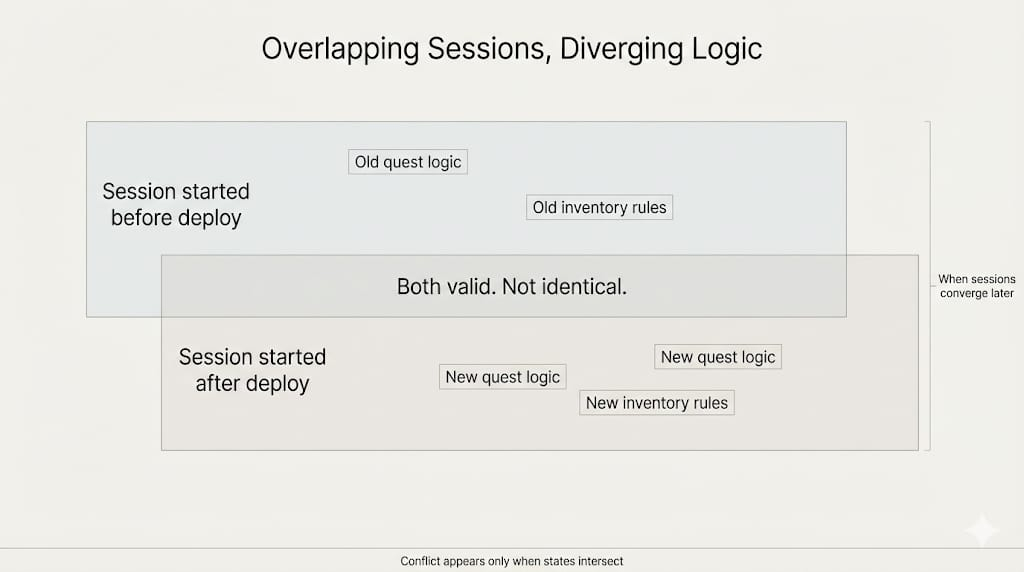
Nothing is wrong.
That’s where it starts costing you.
Designing for boredom isn’t adding fireworks. It’s surviving when fireworks stop mattering. When adoption stabilizes into habit, reliability becomes the product... quiet sameness, under repetition, under public indifference.
And repetition has no patience for inconsistency.
I watched a VGN activation wrap its final week with fewer comments than its first hour. Engagement didn’t collapse. It flattened. The same people showed up. Claimed. Left. No celebration. No “W.” Just routine, state advanced, receipts logged, moment forgotten.
That flattening is where Vanar actually gets tested.
Can the 300th interaction feel identical to the third when nobody’s impressed anymore, when they’re just waiting for the first reason to pay attention again? Can campaign-based minting keep landing clean when the only thing anyone sees is the outcome and the outcome is already boring?
Boredom doesn’t shout.
It stares.
You don’t see it in dashboards. You see it in how quickly people move on after a state update. In how little they say about it. In how nobody praises the fact that nothing went wrong... because at scale, nothing going wrong isn’t a win. It’s the toll you pay to stay invisible.
And if Vanar slips there—even once—it won’t feel like failure.
It’ll feel like permission. Like boredom was right to look closer.
