

When I look at a blockchain, I don’t start with hype. I start with data. Because charts don’t lie, marketing sometimes does.
Vanar is one of those networks that looks quiet on the surface but powerful underneath. And when you actually open the explorer and study the mainnet stats, the story becomes much more interesting than any promotional thread.
The first thing that caught my attention was the average block time sitting around three seconds. That number might look small, but it defines user experience. In Web3, speed is perception. If a block confirms in three seconds consistently, it changes how applications feel. It means smoother transactions. It means less waiting. It means developers can build logic that feels almost real-time without sacrificing decentralization. Consistency at this level is not accidental. It’s engineering discipline.
Then I looked at the transaction count. Over forty-four million transactions processed. Not projected. Not theoretical. Processed. That tells me the network is not an experiment anymore. It has been used. Every transaction represents interaction: token transfers, contract calls, deployments, value movement. What impressed me more than the number itself was the curve. The cumulative growth is steady. No artificial spikes followed by collapse. That kind of chart signals organic usage rather than short-term incentive farming.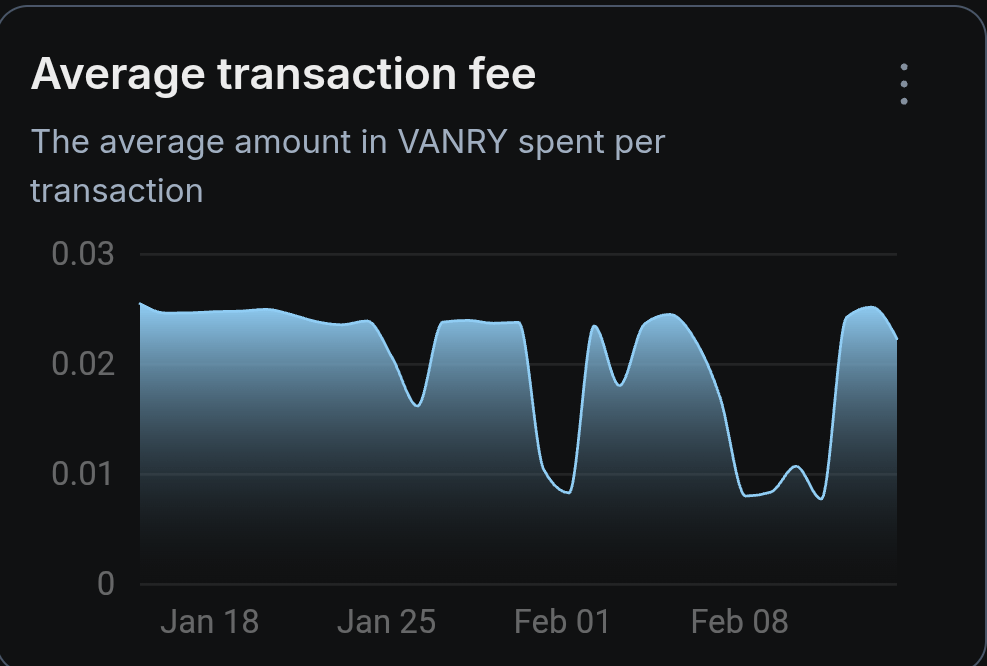
Account growth adds another layer to the story. Nearly ninety thousand total accounts and still climbing gradually. In blockchain ecosystems, sustainability matters more than sudden explosions. Slow, consistent onboarding usually means real users, not bots chasing rewards. Even when daily active accounts fluctuate, the transaction success rate remains extremely high, almost touching one hundred percent most of the time. That detail is crucial. A chain that maintains a strong success rate during activity swings demonstrates network stability. Reliability is invisible when it works, but it becomes everything when it fails. On Vanar, it works.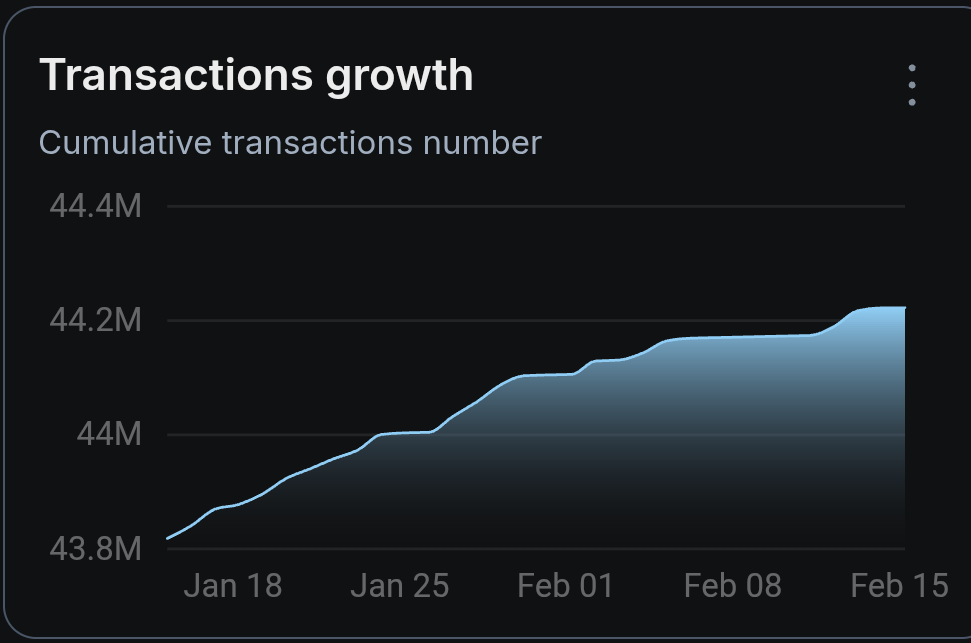
Fees are another point I analyze carefully. The average transaction fee stays relatively low and controlled. In a market where users constantly complain about unpredictable gas costs, predictability becomes a competitive advantage. Stable gas price ranges and a consistent gas limit per block show that the network is optimized rather than stressed. Builders can deploy contracts without worrying about sudden congestion destroying usability. That confidence changes developer behavior.
Gas usage growth also reveals something important. The cumulative gas used keeps rising steadily. That means the chain is actually being utilized. Blocks are not empty. Computational demand exists. At the same time, the average block size oscillates in a healthy range. This balance tells me the chain is not overloaded, but it is not underutilized either. It is operating in a zone where capacity meets demand efficiently. In blockchain design, that balance is extremely difficult to achieve.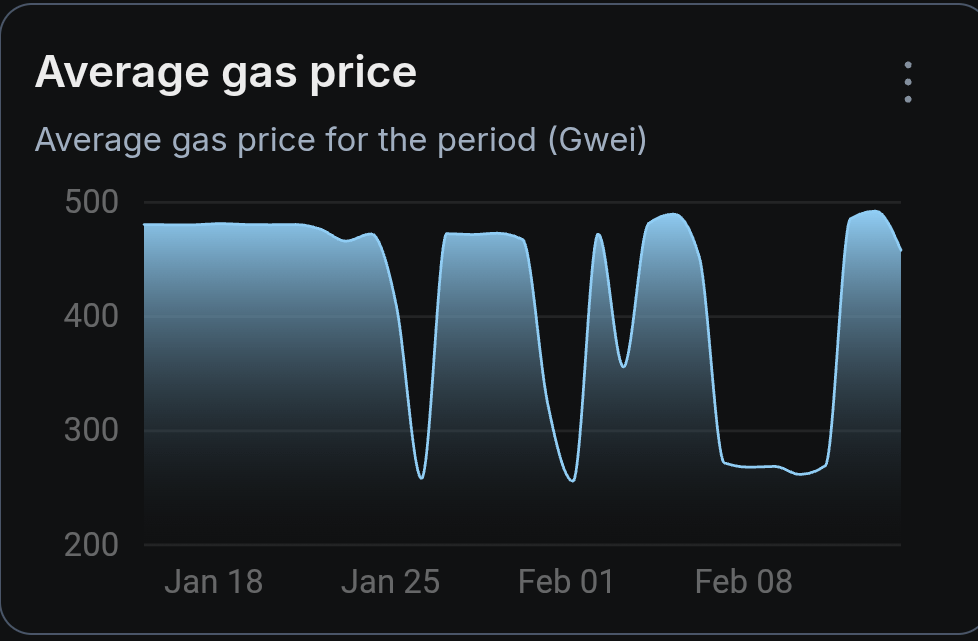
When I studied the smart contract data, I noticed gradual but consistent contract growth. New contracts may not appear every single day, but the upward steps show developers are building. Verified contracts increasing over time is even more important. Verification reflects transparency. It signals that builders are confident enough to publish and validate their code publicly. That culture matters. Ecosystems grow where trust compounds.
Token transfers exceeding ten million VANRY movements show economic circulation. Circulation means participation. Participation creates liquidity. Liquidity attracts more developers. Developers create products. Products bring more users. This cycle is how an infrastructure chain transforms into a living ecosystem. You can actually see early stages of that cycle forming.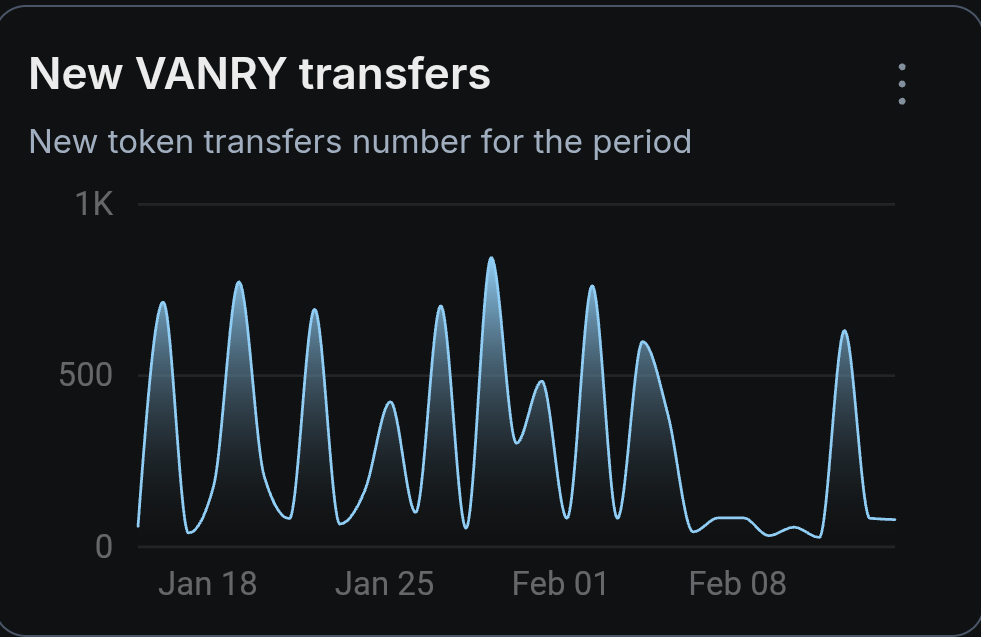
What stands out most to me is that Vanar is strengthening fundamentals quietly. There is no artificial narrative pressure. The metrics show discipline. Nearly twenty million blocks produced. Over forty-four million transactions executed. Three-second block time maintained. High transaction success rate sustained. These are not marketing slides. These are operational achievements.
In Web3, many projects chase extreme TPS numbers for headlines. But practical scalability is different from theoretical scalability. Real scalability is when performance remains stable under real usage. Vanar demonstrates that stability. Speed combined with reliability creates trust. And trust is the foundation for long-term adoption.
From my perspective as a serious content creator who studies blockchain ecosystems deeply, Vanar is entering its compounding phase. The charts are not explosive. They are structured. The growth is not chaotic. It is progressive. Infrastructure strength builds quietly before ecosystem expansion becomes visible. That pattern has repeated across successful networks in the past.
Vanar today looks like a chain focused on efficiency, predictability, and technical stability. That combination may not always create noise, but it creates resilience. And in blockchain, resilience outlasts hype.
When I evaluate networks, I ask one question: can this infrastructure survive cycles? Looking at the data, Vanar is not only surviving. It is steadily reinforcing itself block by block, transaction by transaction. And that, in my view, is where real value begins.
