
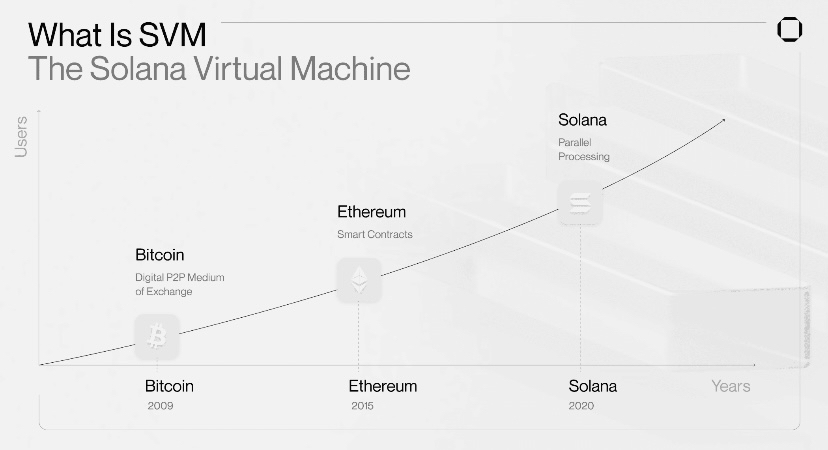
In the current generation of blockchain infrastructure, performance is no longer measured only by theoretical throughput or advertised transactions per second. Real performance emerges when applications operate under real user pressure, and this is where Fogo distinguishes itself. Built on the Solana Virtual Machine (SVM), Fogo introduces an execution model that shifts responsibility from the chain alone to the architecture of the applications built on top of it. This shift transforms performance from a passive benefit into an active design requirement.
At its core, Fogo leverages parallel execution, a model that allows multiple transactions to be processed simultaneously instead of sequentially. Unlike traditional blockchain systems where transactions are executed one after another in a single pipeline, the SVM enables concurrent execution by requiring each transaction to declare which accounts it will read and write. This explicit declaration allows the runtime to identify independent transactions and process them in parallel without risking data conflicts. The result is a system capable of significantly higher efficiency and lower latency when applications are designed correctly.
However, the most important insight is that parallel execution is not automatic. It does not guarantee performance by default. Instead, it exposes architectural weaknesses in application design. When developers create applications that rely heavily on shared writable state, they unintentionally introduce contention points. These shared writable accounts act as locks, forcing transactions to wait for one another even when the runtime is capable of parallel execution. In such cases, the application itself becomes the bottleneck, not the blockchain.
This is where Fogo’s philosophy becomes particularly important. Rather than masking architectural inefficiencies, Fogo’s execution model reveals them clearly. It encourages developers to adopt modern concurrency-friendly design patterns. Every writable account becomes a concurrency decision. Every shared state element becomes a potential performance limiter. As a result, developers must think carefully about how state is structured, partitioned, and accessed.
One of the most effective strategies in SVM-based environments like Fogo is aggressive state separation. Instead of storing all user activity in a single global account, well-designed applications isolate user-specific data into individual accounts. This ensures that one user’s actions do not interfere with another’s. Similarly, market-specific or asset-specific data is stored separately, allowing independent markets to operate concurrently without slowing each other down. This design approach transforms throughput scalability from theoretical capability into practical reality.
Another critical concept is separating operational state from reporting state. Many applications attempt to update global counters, leaderboards, or analytics data during every transaction. While this approach simplifies reporting, it introduces unnecessary shared writes that force serialization. On Fogo, best-practice architecture treats reporting data differently. Instead of updating global metrics with every transaction, reporting information can be derived from event logs, updated periodically, or stored in sharded structures. This allows operational transactions to execute independently while maintaining accurate analytics.
This architectural discipline becomes even more important in high-frequency environments such as trading platforms. Trading applications naturally generate concentrated activity, which increases the risk of contention. If an entire order book relies on a single shared writable state object, the system effectively becomes sequential, regardless of the underlying blockchain’s capabilities. On Fogo, advanced designs partition order books, isolate settlement paths, and minimize shared mutation points. This allows trading activity to scale efficiently even during periods of high demand.
The same principles apply to gaming, real-time applications, and decentralized finance protocols. Applications that isolate player state, user balances, or interaction zones perform significantly better than those relying on global shared state. Reads are generally inexpensive and scalable, but writes must be carefully controlled. By minimizing unnecessary shared writes, developers allow the runtime to fully utilize parallel execution.
Fogo’s architecture also changes how developers think about scalability. Traditional blockchains often attempt to solve scalability purely at the infrastructure level through faster block times or larger blocks. While these improvements provide incremental benefits, they do not address fundamental architectural constraints within applications themselves. Fogo addresses scalability at both levels. The runtime provides high-performance infrastructure, but the execution model ensures that applications must adopt scalable architectural patterns to fully benefit from it.
This approach has long-term implications for the blockchain ecosystem. It encourages the development of more efficient, modular, and scalable applications. Developers are incentivized to design systems that scale naturally with user growth instead of relying on infrastructure upgrades alone. This results in applications that remain responsive and efficient even as adoption increases.
Another important advantage of Fogo’s SVM-based model is predictability. Because transactions explicitly declare their account access patterns, the runtime can schedule execution with high confidence. This reduces unexpected delays and improves overall system reliability. Applications designed with proper state separation maintain consistent performance even during periods of heavy usage.
For developers, this model introduces new responsibilities but also new opportunities. While concurrency-friendly design requires more careful planning and testing, it enables applications to achieve levels of performance that would be impossible in sequential execution environments. Applications can scale horizontally, processing many independent user actions simultaneously without degradation.
From an ecosystem perspective, this creates a more robust and sustainable foundation. Networks built on parallel execution models like Fogo can support complex applications such as high-frequency trading platforms, large-scale gaming environments, real-time financial systems, and advanced decentralized services. These applications require both high throughput and low latency, which Fogo’s architecture is specifically designed to provide.
Fogo also highlights an important truth about blockchain performance: speed is not just a property of the network, but a property of the entire system. Infrastructure provides the capability, but architecture determines whether that capability can be realized. This alignment between infrastructure and application design is essential for achieving true scalability.
As blockchain technology continues to evolve, execution models like the SVM represent a significant advancement. They move beyond simplistic performance metrics and focus on real-world usability and scalability. By encouraging proper architectural design, Fogo ensures that performance gains are meaningful and sustainable.
Ultimately, Fogo represents a new generation of blockchain infrastructure where performance is not merely advertised but demonstrated. Its parallel execution model rewards well-designed applications and exposes inefficient ones. This creates an ecosystem where scalability is achieved through intelligent design rather than superficial optimization.
For builders, this represents both a challenge and an opportunity. It requires a shift in thinking from sequential logic to concurrent architecture. But those who embrace this model gain access to one of the most powerful execution environments available today.
For users, it means faster, more responsive applications that maintain performance even under heavy demand.
For the blockchain industry, it represents a critical step forward toward truly scalable decentralized systems.
Fogo is not just a faster blockchain. It is a system that demands better architecture, rewards thoughtful design, and enables the next generation of high-performance decentralized applications.
