 Most blockchains begin with a promise. They promise speed, lower fees, scalability, and a new digital economy. But once users arrive and activity increases, many networks begin to show their limits. Transactions slow down. Fees fluctuate. Developers adjust their applications around infrastructure weaknesses instead of focusing on innovation. This is the environment Fogo is entering, and it is approaching it from a different mindset.
Fogo is not positioning itself as another chain chasing attention. It is building around one central idea: performance must hold under real demand. That sounds simple, yet it is one of the hardest problems in blockchain infrastructure. Handling a small number of transactions is easy. Handling sustained activity without compromising reliability is where real engineering begins.
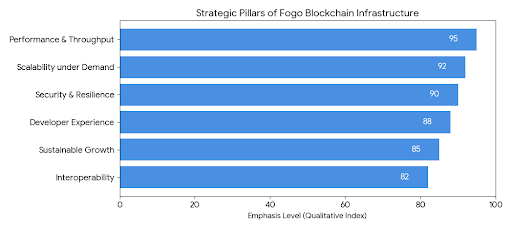
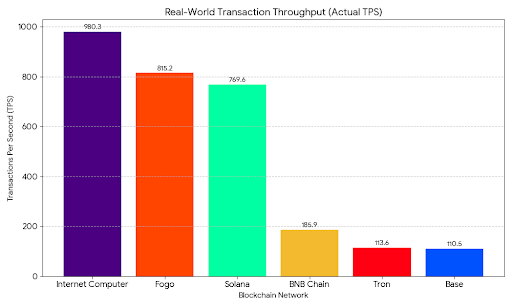
The foundation of Fogo revolves around throughput and consistency. In practical terms, that means the network is structured to process a high volume of transactions while maintaining stable execution. Instead of forcing applications to slow down when traffic rises, Fogo is designed to expand with usage. This approach shifts the burden away from developers and places it where it belongs: at the infrastructure level.
For developers, infrastructure determines possibility. When a network is unpredictable, builders hesitate. They design lighter applications, reduce on-chain logic, or limit features to avoid congestion risks. Fogo creates room for ambition. Builders can deploy applications that demand constant interaction without worrying that sudden growth will break their system.
The importance of this becomes clear when examining decentralized finance. DeFi protocols rely on rapid execution. Trades, lending positions, liquidations, and automated strategies require speed. Delays introduce risk. High fees discourage participation. A network optimized for high throughput provides a more stable environment for these systems to operate.
But DeFi is only one part of the equation. Gaming presents a different challenge. Real-time interaction is critical. Players expect immediate feedback. Blockchain gaming cannot succeed if every action feels delayed. Fogo’s emphasis on efficient processing supports the type of interactive experiences that modern users expect. This opens space for more advanced on-chain gaming mechanics.
Beyond finance and gaming, data-driven Web3 services are expanding. Identity systems, content platforms, analytics tools, and digital asset management solutions all require consistent performance. These applications are not experimental toys. They are tools people rely on. For such systems to scale, the base layer must remain dependable regardless of traffic conditions.
Another strength of Fogo lies in its balanced approach to growth. Some networks prioritize rapid expansion, sometimes at the expense of stability. Others focus heavily on security but sacrifice speed. Fogo aims to integrate performance and reliability from the beginning. Instead of optimizing for one metric while ignoring another, it builds with a broader perspective.
Interoperability also plays a key role. The blockchain ecosystem is not isolated. Users move assets between networks. Liquidity flows across chains. Developers integrate multiple infrastructures into one application. Fogo acknowledges this reality. Rather than isolating itself, it positions its infrastructure to function within a larger digital environment. This increases its relevance and long-term adaptability.
Developer experience often determines ecosystem strength. Even the most advanced network will struggle if it is difficult to build on. Fogo reduces friction by providing an environment where deployment feels streamlined. Builders can focus on refining their products instead of constantly navigating infrastructure complexity. This accessibility encourages experimentation and continuous iteration.
The network’s economic design is equally important. Infrastructure must incentivize participation without distorting activity. If rewards dominate utility, speculation overshadows usage. Fogo’s direction appears aligned with sustainable growth, where real applications drive demand rather than temporary excitement.
Community formation around Fogo adds another layer of strength. Infrastructure does not grow in isolation. It grows when developers contribute, users engage, and supporters advocate. Early adopters play a crucial role in testing, improving, and promoting the ecosystem. Their involvement strengthens network effects and builds credibility.
Organic growth differs from hype-driven expansion. When interest forms gradually through demonstrated performance, it tends to last longer. Fogo’s development appears to follow this steady path. Instead of relying solely on marketing momentum, it emphasizes infrastructure readiness.
Scalability is often misunderstood. It is not only about raw transaction numbers. It is about maintaining user experience while volume increases. A network that handles high throughput but suffers from unpredictable confirmation times still creates friction. Fogo’s focus on consistency ensures that growth does not translate into instability.
Security remains foundational. Speed without resilience is fragile. As more value moves through a network, the stakes rise. Fogo integrates performance within a secure framework, recognizing that reliability is non-negotiable for long-term adoption.
As Web3 adoption accelerates globally, infrastructure demands will intensify. Millions of users interacting with decentralized applications require networks capable of handling continuous load. Systems designed during early experimental phases often struggle under such conditions. Fogo benefits from building in a more mature stage of the industry, learning from previous limitations.
Institutional interest in blockchain technology continues to expand. Enterprises evaluating decentralized solutions prioritize stability. They look for predictable costs and dependable execution. Infrastructure that demonstrates sustained performance becomes more attractive in these discussions. Fogo’s performance-centered model aligns with these expectations.
Liquidity growth will test every network. As decentralized applications attract capital, transaction volume rises. If infrastructure cannot absorb this increase, activity migrates elsewhere. Fogo’s architecture prepares for such scenarios, aiming to retain activity rather than push it away during peak periods.
Another important aspect is adaptability. Blockchain technology evolves quickly. New standards, integration requirements, and application models emerge regularly. A network must remain flexible enough to evolve without compromising its core principles. Fogo’s design supports this adaptability, allowing upgrades and expansion over time.
User experience ultimately determines adoption speed. If interacting with applications feels smooth, users remain engaged. If fees spike or confirmations lag, frustration grows. By strengthening the base layer, Fogo indirectly improves every application built on top of it. This cascading effect enhances ecosystem cohesion.
Developer retention is equally crucial. Networks often attract builders initially but lose them due to performance issues or limited support. A stable and efficient infrastructure increases loyalty. When developers see their applications performing reliably, they are more likely to expand within the same ecosystem.
Partnership opportunities also grow as infrastructure proves itself. Service providers, analytics platforms, and cross-chain protocols prefer integrating with networks that demonstrate stability. Fogo’s performance-driven structure enhances its credibility as a long-term partner.
The broader market is entering a phase where narratives alone are insufficient. Users have experienced multiple cycles. They recognize the difference between infrastructure built for speculation and infrastructure built for utility. Fogo’s focus on real-world readiness positions it within this evolving mindset.
Over time, the most successful blockchains may be those that become almost invisible. Users interact with applications without considering the underlying network. Achieving this level of seamlessness requires deliberate engineering. Fogo’s commitment to efficiency moves it closer to that goal.
Growth will not happen overnight. Sustainable ecosystems expand step by step. Each new application strengthens network activity. Each integration increases relevance. Fogo’s steady development path reflects an understanding that long-term value requires patience.
The shift toward performance-centered infrastructure is becoming more evident across the industry. As decentralized systems handle larger volumes of value and data, technical reliability will determine which networks lead the next phase. Fogo’s emphasis on scalability and execution places it within that competitive landscape.
Market cycles will continue to influence perception, but infrastructure built with discipline tends to endure beyond short-term volatility. Fogo’s strategy suggests an awareness of this dynamic. Instead of chasing rapid headlines, it concentrates on strengthening the core.
In the coming years, blockchain adoption may expand into sectors not yet fully explored. Supply chain tracking, digital identity, decentralized communication, and tokenized assets will all require strong foundational networks. Infrastructure capable of handling diverse use cases will stand out. Fogo’s balanced design allows for such expansion.
As more developers test the network under real conditions, performance metrics will translate into practical trust. Usage data will speak louder than marketing claims. If Fogo continues delivering consistent execution, its ecosystem will deepen naturally.
The evolution of blockchain technology is moving toward maturity. Early experimentation is giving way to practical application. Networks that adapt to this shift will shape the next era of Web3. Fogo is aligning itself with that direction, focusing on execution, usability, and sustainable growth.
Infrastructure may not always capture headlines, but it determines outcomes. When performance is reliable, innovation accelerates. When scalability is built in, adoption expands. Fogo’s commitment to these principles positions it as a serious participant in the broader blockchain landscape.
As the ecosystem develops, its strength will be measured by how well it handles growth, maintains consistency, and supports builders. If those elements remain aligned, Fogo can become more than just another network. It can serve as a stable foundation for the next wave of decentralized applications.
The blockchain space does not need more promises. It needs systems that work under real pressure. Fogo’s direction suggests a clear understanding of that requirement. Through disciplined engineering and a focus on performance, it is shaping itself as infrastructure designed not just for today’s activity, but for tomorrow’s scale.