
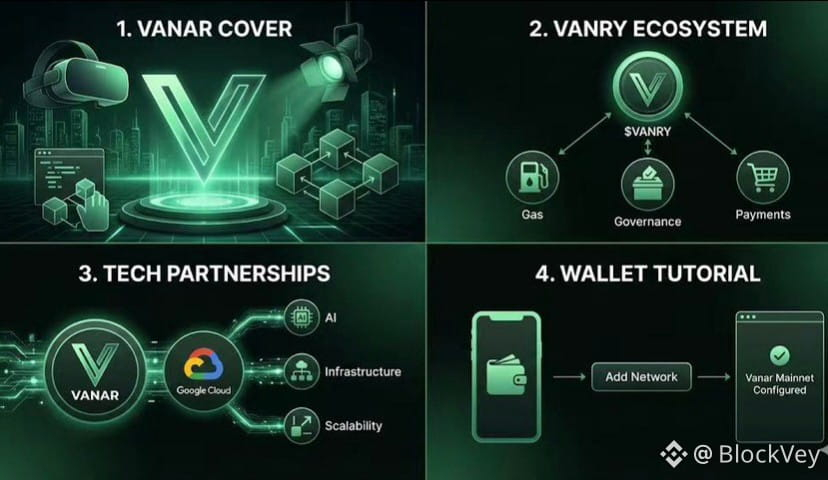
 #The blockchain industry has spent years chasing one primary goal: speed. Faster transactions, lower fees, and scalable infrastructure became the benchmarks of progress. Yet speed alone never solved blockchain’s biggest limitation — understanding. A blockchain could execute a smart contract in milliseconds, but it could not explain what the contract does, why it matters, or how it interacts with other systems. This created a fundamental gap between execution and intelligence. Vanar v1.4 changes that reality. It introduces a shift from passive infrastructure to active reasoning, transforming blockchain from a digital filing cabinet into an intelligent system capable of interpreting and interacting with data.
Traditional blockchains function as execution engines. They store transactions, validate contracts, and maintain consensus. However, they cannot interpret intent. When developers deploy a smart contract, the chain executes it without context. Users, auditors, and systems must manually interpret contract logic, which slows adoption and increases risk. Vanar v1.4 introduces reasoning capability directly into the blockchain layer. This means the network can understand contract structure, analyze interactions, and provide meaningful insights rather than simply processing instructions blindly.
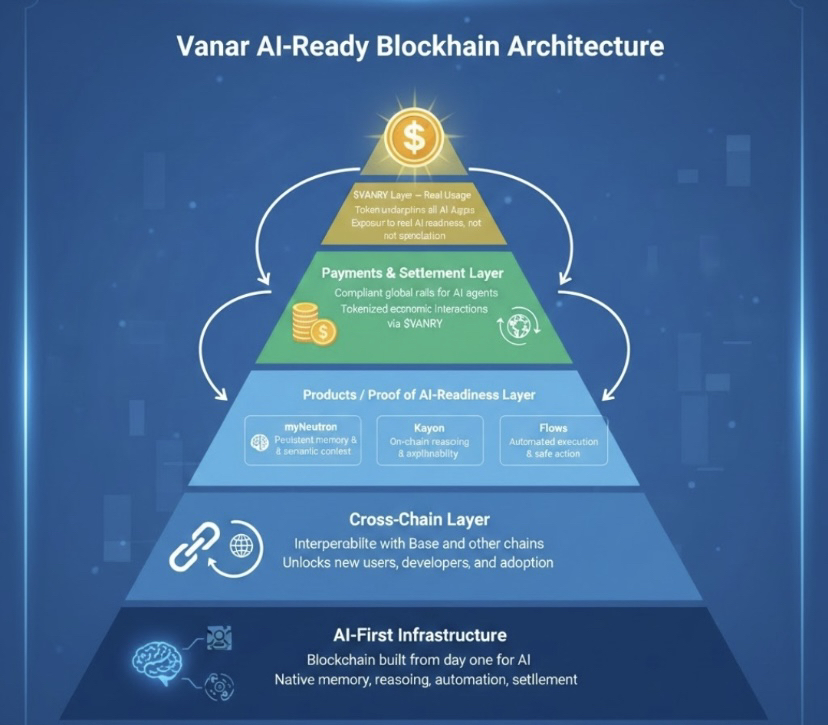
This change dramatically improves workflow efficiency for developers, enterprises, and users. Instead of manually reviewing thousands of lines of smart contract code, developers can interact with the chain and receive contextual responses. The blockchain becomes interactive. It no longer acts as passive storage but as an intelligent layer that can explain, validate, and assist decision-making. This reduces errors, accelerates development cycles, and enhances overall reliability.
The impact on enterprise adoption is especially significant. Businesses require clarity, auditability, and operational transparency. Traditional blockchains provide raw data but not understanding. Vanar v1.4 bridges this gap by enabling intelligent interpretation. Enterprises can deploy contracts, track activity, and receive explanations instantly. This reduces operational friction and builds confidence in blockchain infrastructure as a reliable foundation for business operations.
Security also benefits from this evolution. Smart contract vulnerabilities often arise from misunderstandings or hidden logic flaws. Vanar’s reasoning layer allows deeper analysis of contract behavior, identifying potential risks before they become critical problems. Instead of reacting after failures occur, systems can proactively evaluate contract intent and structure. This represents a shift from reactive security to proactive intelligence.
Another major advantage lies in user accessibility. One of blockchain’s biggest barriers has been complexity. Most users cannot read or interpret smart contract code. Vanar v1.4 simplifies interaction by enabling understandable communication between users and blockchain systems. This removes technical barriers and makes blockchain more accessible to mainstream users, accelerating adoption across industries.
Vanar’s architecture reflects a broader transition occurring across technology. Artificial intelligence is becoming integrated into infrastructure itself, not just applications built on top. By embedding reasoning capability at the protocol level, Vanar creates a foundation where intelligence is native, not optional. This opens new possibilities for automation, analytics, and adaptive systems that respond dynamically to real-world needs.

Performance remains critical, and Vanar maintains high-speed execution alongside its intelligence layer. The combination of speed and reasoning creates a powerful advantage. Fast execution ensures efficiency, while reasoning ensures clarity and usability. This balance positions Vanar as more than just another Layer 1 blockchain. It becomes intelligent infrastructure designed for the next generation of decentralized systems.
The introduction of reasoning capability changes how developers approach blockchain design. Instead of building tools around limitations, developers can leverage intelligent infrastructure directly. This reduces complexity, improves productivity, and accelerates innovation. Workflows become faster, safer, and more intuitive.
Vanar v1.4 represents a fundamental shift in blockchain evolution. The industry is moving beyond speed alone toward intelligence-driven infrastructure. Chains that only execute instructions are becoming obsolete. The future belongs to systems that can understand, interpret, and assist.
Blockchain was once defined by decentralization. Then it was defined by speed. Now, with Vanar v1.4, it is defined by intelligence.
Vanar does not just execute the future. It understands it.
